
COMING SOON Awaiting UAE License
PRODUCTS SOLD ON PEPTIDESLABUAE.COM ARE FOR RESEARCH PURPOSES ONLY AND ARE NOT FOR HUMAN OR VETERINARY USE.
$33.50 – $140.50Price range: $33.50 through $140.50
Buy AOD9604 Peptide in UAE – In Stock & Ready to Ship
AOD9604 is a widely researched peptide known for its role in metabolic regulation and fat metabolism studies. Each batch is independently verified at ≥99% purity and comes with a full Certificate of Analysis (COA) and HPLC testing documentation — giving UAE research teams the confidence they need when sourcing peptides for serious work.
For research use only. Not intended for human or veterinary use.

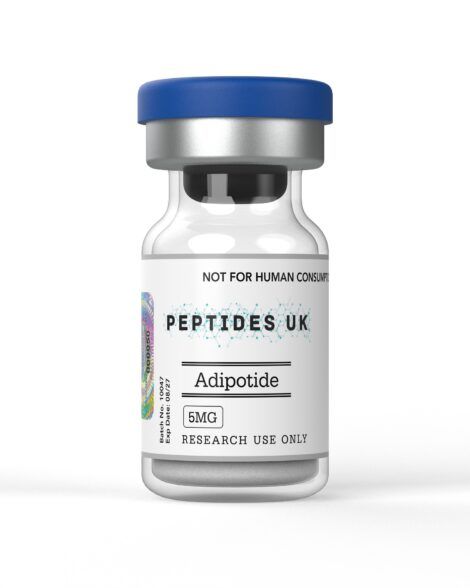
AOD9604 is a synthetic peptide fragment derived from the C-terminus of human growth hormone, studied in metabolic research for its targeted influence on fat metabolism, lipolysis regulation, and adipose tissue biology — making it one of the most focused fat metabolism research peptides available in pre-clinical science. Researchers and institutions across the UAE, Dubai, Abu Dhabi and the wider GCC can source verified, research-grade AOD9604 with fast international dispatch and full batch documentation included.
✅ ≥99% Purity — HPLC Verified
✅ Batch-Specific Certificate of Analysis (CoA) Included
✅ Sterile Lyophilised Powder | GMP Manufactured
✅ Fast International Dispatch to UAE & GCC
AOD9604 (Advanced Obesity Drug 9604) is a synthetic peptide corresponding to amino acids 177–191 of human growth hormone (hGH), with an additional tyrosine residue added at the N-terminus to improve stability. It was originally developed by researchers at Monash University in Australia as part of an investigation into which specific region of the growth hormone molecule was responsible for its fat metabolism effects — separate from its growth-promoting properties.
What makes AOD9604 particularly interesting as a research tool is this specificity: it was designed to retain the lipolytic activity of growth hormone — the ability to stimulate fat breakdown — without the insulin-like or growth-promoting effects associated with full hGH. This makes it a highly targeted compound for studying fat metabolism pathways in isolation from the broader growth hormone signalling system. Research interest in AOD9604 from institutions across the UAE and GCC has grown alongside the expanding regional focus on metabolic health and obesity-related research.
In controlled laboratory and pre-clinical research settings, AOD9604 has been studied across several focused metabolic and adipose tissue research applications:
Lipolysis Research: AOD9604’s primary research focus is its influence on lipolysis — the process by which fat cells break down stored triglycerides into fatty acids for energy use. Studies examine how AOD9604 activates fat breakdown pathways in adipocyte models and what signalling mechanisms mediate this effect.
Adipose Tissue Biology: Research has used AOD9604 to examine fat cell behaviour, differentiation, and lipid metabolism in cell culture models — making it a relevant tool for laboratories studying the molecular biology of adipose tissue and how it responds to metabolic signals.
Fat Metabolism Pathway Studies: Studies have examined AOD9604’s influence on key fat metabolism enzymes and signalling molecules, exploring the specific intracellular pathways through which the peptide exerts its lipolytic effects in adipocyte models.
Anti-Lipogenic Research: Alongside its lipolytic properties, research has examined AOD9604’s influence on lipogenesis — the process of new fat synthesis — with studies exploring whether the peptide reduces fat accumulation in adipocyte models independently of its fat breakdown effects.
Growth Hormone Fragment Research: AOD9604 is used as a research tool for studying which specific regions of the growth hormone molecule are responsible for particular biological effects — contributing to a broader understanding of growth hormone structure-activity relationships.
Cartilage and Bone Biology: Some pre-clinical research has examined AOD9604 in models of cartilage repair and bone metabolism, exploring whether this growth hormone fragment influences tissue repair pathways beyond its primary metabolic research applications.
Obesity and Metabolic Syndrome Models: AOD9604 has been incorporated into pre-clinical obesity research models examining body composition changes, fat mass distribution, and metabolic rate parameters under controlled dietary and treatment conditions.
All applications listed are research-based only. AOD9604 is not approved for human therapeutic use.
AOD9604 has developed a focused and well-documented pre-clinical research profile centred on fat metabolism and adipose biology:
Research originating from Monash University established AOD9604’s lipolytic activity in adipocyte models, documenting its ability to stimulate fat breakdown through beta-3 adrenergic receptor-related pathways — providing a mechanistic foundation for its continued use as a fat metabolism research tool. Pre-clinical animal model studies have reported reductions in fat mass and body weight parameters in obese animal models treated with AOD9604, with research examining changes in adipose tissue distribution and metabolic markers under controlled experimental conditions. Studies examining AOD9604’s selectivity have consistently documented its lack of growth-promoting or insulin-like activity — confirming it as a targeted lipolytic research tool without the broader receptor engagement associated with full growth hormone. Anti-lipogenic research has explored AOD9604’s effects on fat synthesis pathways in adipocyte models, with studies suggesting it may influence both fat breakdown and fat accumulation processes simultaneously in cellular settings. Cartilage research has produced some pre-clinical data examining AOD9604 in osteoarthritis models, generating interest in whether this growth hormone fragment has utility beyond pure metabolic research in tissue repair contexts. Its well-defined structure as a specific growth hormone fragment, combined with its selective metabolic activity profile, has made AOD9604 a practical and focused research tool for metabolic laboratories.
| Feature | AOD9604 | HGH Fragment 176-191 | Full hGH | Semaglutide |
|---|---|---|---|---|
| Origin | hGH fragment (177-191 + Tyr) | hGH fragment (176-191) | Full growth hormone | Synthetic GLP-1 analogue |
| Primary Focus | Lipolysis / fat metabolism | Lipolysis | Broad growth & metabolism | Glucose / appetite |
| Growth Promoting | No | No | Yes | No |
| Insulin-Like Activity | Minimal | Minimal | Yes | No |
| Receptor Target | Beta-3 adrenergic related | Similar | GHR | GLP-1R |
| Research Selectivity | High (fat metabolism) | High (fat metabolism) | Broad | High (GLP-1) |
| Parameter | Specification |
|---|---|
| Full Name | AOD9604 (Advanced Obesity Drug 9604) |
| Origin | Human Growth Hormone Fragment (177–191 + Tyr) |
| Purity | ≥99% (HPLC Verified) |
| Form | Sterile Lyophilised Powder |
| Solubility | Sterile water, 0.1% acetic acid |
| Storage (powder) | -20°C, protect from light |
| Storage (reconstituted) | 2–8°C, use within 2–4 weeks |
Every order of AOD9604 dispatched to the UAE and GCC includes:
Can I buy AOD9604 peptide in the UAE?
Yes. We supply research-grade AOD9604 with international dispatch to the UAE, Dubai, Abu Dhabi, Sharjah and across the GCC. All orders include full batch documentation and are packaged to maintain peptide integrity throughout transit. This compound is supplied strictly for laboratory research use only.
What is the difference between AOD9604 and HGH Fragment 176-191?
AOD9604 and HGH Fragment 176-191 are closely related but not identical. AOD9604 corresponds to amino acids 177–191 of growth hormone with an additional tyrosine residue added at the N-terminus for improved stability, while HGH Fragment 176-191 represents a slightly different sequence without this modification. Both are studied for lipolytic properties derived from the same region of the growth hormone molecule, but AOD9604’s additional tyrosine residue affects its stability and research profile compared to the unmodified fragment.
Why was AOD9604 developed separately from full growth hormone?
Full human growth hormone has multiple biological effects — including growth promotion, insulin-like activity, and fat metabolism — mediated through different regions of the molecule. AOD9604 was developed specifically to isolate the fat metabolism activity of hGH from its growth-promoting effects, allowing researchers to study lipolytic pathways independently without the confounding influence of the broader growth hormone receptor signalling associated with full hGH.
What is lipolysis and why is it studied in metabolic research?
Lipolysis is the cellular process by which stored fat — in the form of triglycerides in adipose tissue — is broken down into glycerol and fatty acids, which can then be used for energy. Understanding how lipolysis is regulated at the molecular level is central to metabolic research examining obesity, body composition, and energy balance. AOD9604 is used as a research tool to study which signalling pathways drive lipolysis in fat cell models and how these can be experimentally modulated.
What purity is required for AOD9604 metabolic research?
A minimum of ≥98% is considered research grade, though ≥99% is strongly preferred for sensitive metabolic assays, adipocyte studies, and lipolysis measurements where compound purity directly affects result accuracy. All our AOD9604 is independently verified to ≥99% purity.
How is AOD9604 reconstituted for laboratory use?
Allow the vial to reach room temperature before opening. Add sterile water or 0.1% acetic acid slowly down the vial wall and swirl gently without shaking. Aliquot immediately if longer-term storage at -80°C is required to preserve peptide integrity and avoid freeze-thaw degradation across multiple experiments.
How quickly is AOD9604 delivered to UAE?
Orders are dispatched promptly via tracked international courier. Delivery to the UAE typically takes 3–5 working days, with packaging designed to maintain peptide stability throughout transit.
Research Disclaimer: AOD9604 is supplied exclusively for legitimate scientific research purposes conducted within licensed laboratory environments. This product is not intended for human consumption, self-administration, or any therapeutic application. It must be handled by qualified researchers in compliance with applicable UAE regulations and institutional ethics guidelines. Handling should only be performed by qualified laboratory professionals in controlled research settings with appropriate institutional authorisations in place. By purchasing, you confirm that this compound will be used solely for approved in-vitro or pre-clinical research purposes.
Receive News
