
COMING SOON Awaiting UAE License
PRODUCTS SOLD ON PEPTIDESLABUAE.COM ARE FOR RESEARCH PURPOSES ONLY AND ARE NOT FOR HUMAN OR VETERINARY USE.
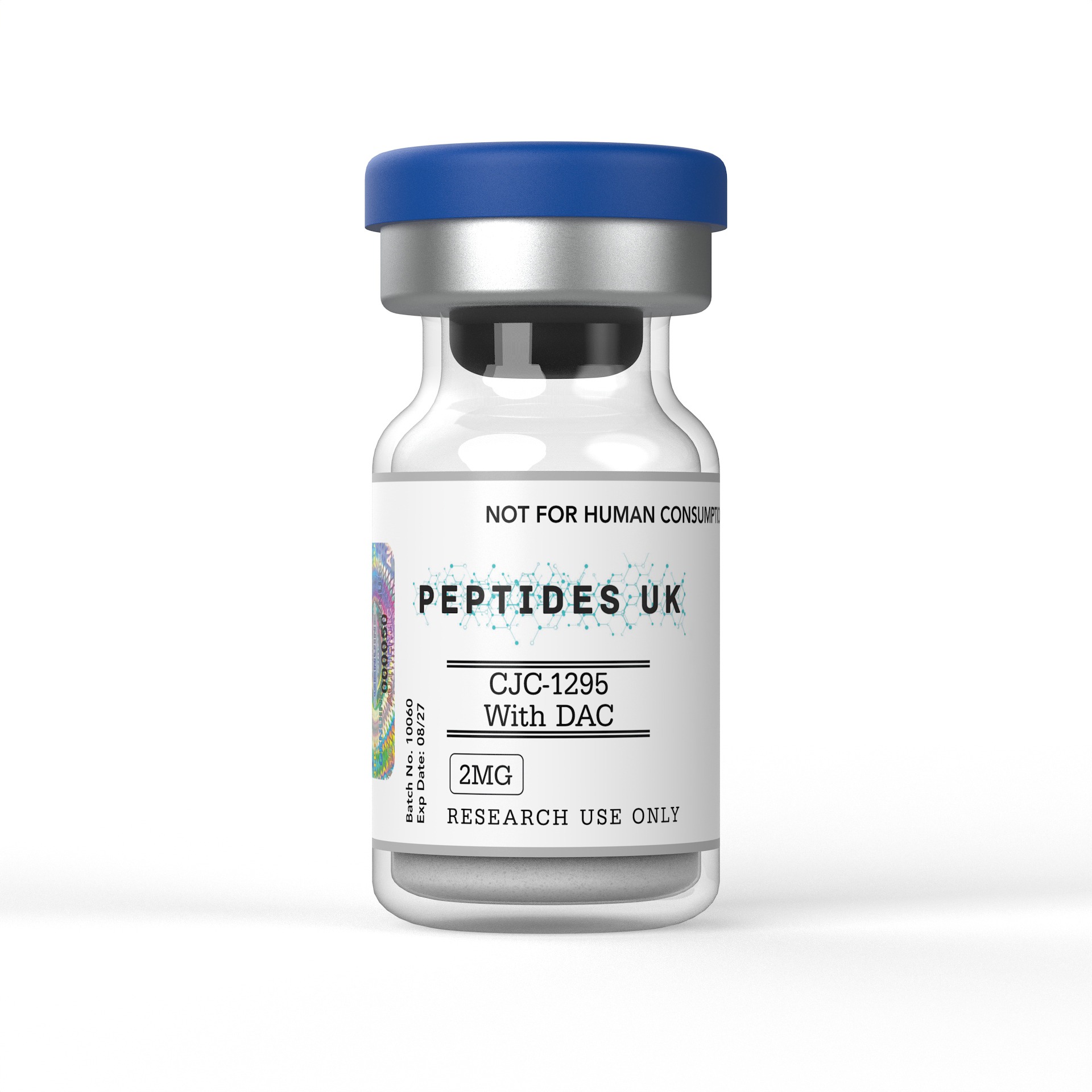
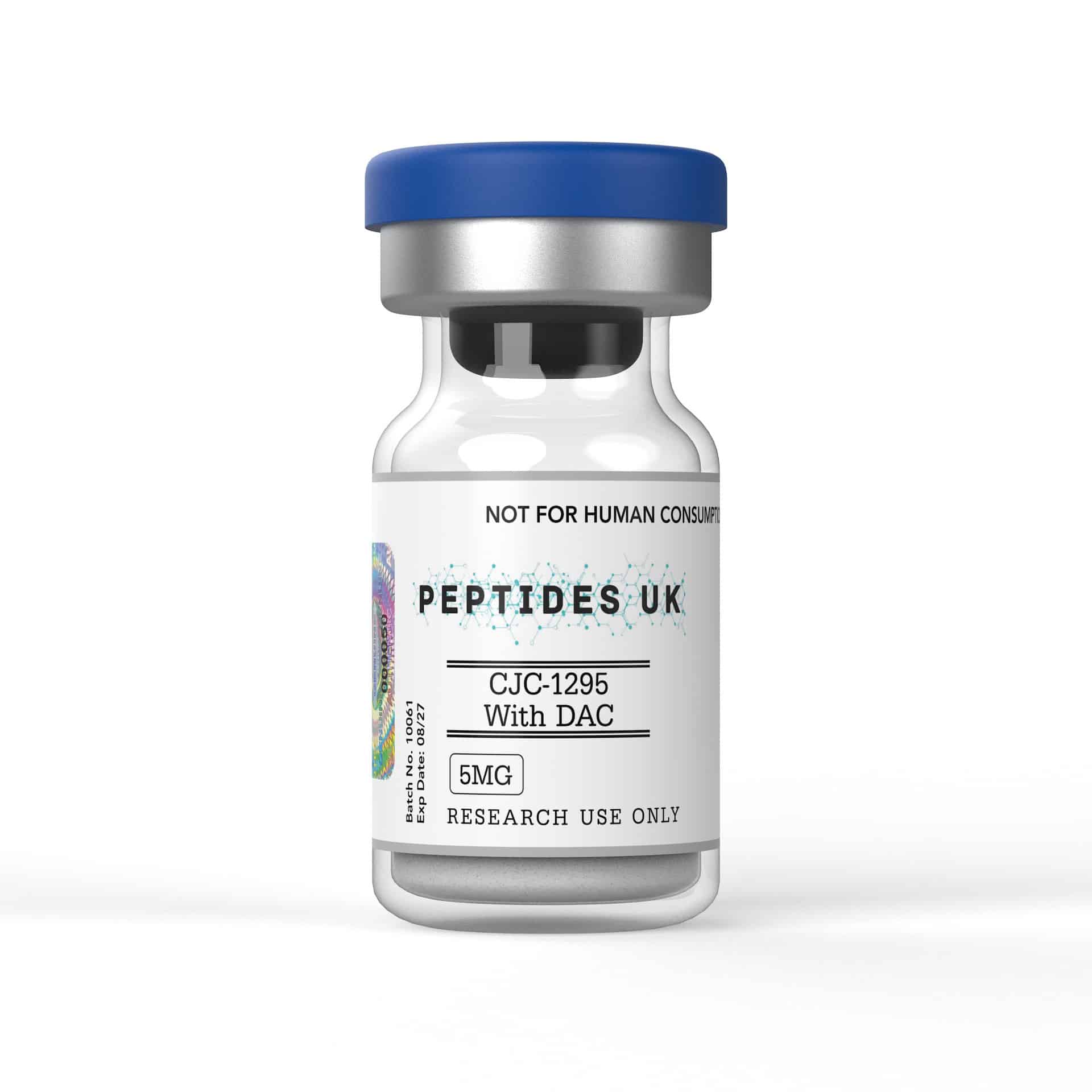
$80.50 – $132.50Price range: $80.50 through $132.50
Buy CJC-1295 With DAC Peptide in UAE – In Stock & Ready to Ship
CJC-1295 With DAC is a widely researched peptide known for its role in sustained growth hormone release and extended half-life receptor studies. Each batch is independently verified at ≥99% purity and comes with a full Certificate of Analysis (COA) and HPLC testing documentation — giving UAE research teams the confidence they need when sourcing peptides for serious work.
For research use only. Not intended for human or veterinary use.

CJC-1295 with DAC (Drug Affinity Complex) is a synthetic long-acting analogue of growth hormone releasing hormone (GHRH) and one of the most strategically engineered GH axis research compounds available to laboratories in the UAE — combining the receptor-binding profile of modified GHRH(1-29) with a maleimidoproprionic acid Drug Affinity Complex that enables covalent binding to circulating albumin, extending its half-life from minutes to days and producing sustained, prolonged growth hormone axis stimulation that is impossible to achieve with native GHRH or unmodified analogues. Researchers and institutions across the UAE, Dubai, Abu Dhabi, and the wider GCC can source verified, research-grade CJC-1295 with DAC with fast international dispatch and full batch documentation included.
✅ ≥99% Purity — HPLC & Mass Spectrometry Verified
✅ Batch-Specific Certificate of Analysis (CoA)
✅ Sterile Lyophilised Powder | GMP Manufactured
✅ Fast International Dispatch to UAE & GCC
CJC-1295 with DAC is a synthetically modified analogue of GHRH(1-29) — the biologically active N-terminal 29 amino acid fragment of growth hormone releasing hormone that retains full GHRH receptor binding activity — incorporating four amino acid substitutions that improve metabolic stability over native GHRH, combined with a maleimidoproprionic acid (MPA) Drug Affinity Complex attached to the lysine residue at position 29. The DAC component is the defining and most pharmacologically significant feature of this compound — it is a reactive chemical linker designed to form a stable covalent bond with the lysine-240 residue of circulating serum albumin after administration, effectively hitching CJC-1295 to the body’s most abundant plasma protein and inheriting albumin’s long circulating half-life of approximately 19 days.
This albumin-binding strategy transforms GHRH pharmacokinetics fundamentally. Native GHRH has a circulating half-life of only a few minutes — rapidly inactivated by dipeptidyl peptidase IV (DPP-IV) cleavage at the His-Ala N-terminus and other proteolytic degradation. CJC-1295 without DAC addresses the DPP-IV vulnerability through amino acid substitutions but still has a half-life measured in hours. CJC-1295 with DAC addresses both proteolytic vulnerability and rapid clearance simultaneously — producing a GHRH analogue with a half-life measured in days rather than minutes, enabling sustained GHRH receptor stimulation from a single administration that persists across an entire research protocol timeframe.
The biological consequence of this extended half-life in research models is the conversion of GHRH signalling from the pulsatile, episodic pattern of endogenous GHRH release to a sustained, tonic elevation of GH axis stimulation — producing what researchers have characterised as a prolonged GH release profile distinct from the sharp pulsatile GH peaks seen with short-acting secretagogues. This sustained GH axis stimulation profile, and the downstream IGF-1 elevation it produces, makes CJC-1295 with DAC a uniquely powerful research tool for studying the biological consequences of chronic versus acute GH axis activation — a research question that cannot be adequately addressed with short-acting GHRH analogues or GH secretagogues.
In laboratory settings, CJC-1295 with DAC research is centred on its capacity to produce sustained, long-duration GHRH receptor stimulation and the downstream biological consequences of prolonged GH axis activation. Research applications include:
Its unique capacity to produce days-long GHRH receptor stimulation from a single administration makes CJC-1295 with DAC an irreplaceable research tool for studying the biology of sustained GH axis activation — experimental territory that is inaccessible with any short-acting GH axis research compound. All applications are for research use only.
CJC-1295 with DAC has generated a focused but highly significant research literature centred on its novel pharmacokinetic profile and the biological consequences of sustained GHRH receptor stimulation.
Pharmacokinetic research has been foundational to characterising CJC-1295 with DAC — with studies documenting the albumin-binding mechanism of the DAC component and the dramatically extended half-life it confers. Research has confirmed that the MPA linker successfully forms a covalent bond with serum albumin following administration, and that the resulting albumin-bound CJC-1295 retains GHRH receptor binding capacity — demonstrating that the DAC strategy successfully extends circulating half-life while preserving the biological activity essential for GH axis stimulation. Studies comparing CJC-1295 with DAC to CJC-1295 without DAC have directly quantified the pharmacokinetic advantage of the albumin-binding modification, establishing the DAC approach as a validated platform for long-acting peptide research tool design.
GH and IGF-1 elevation research has characterised the sustained GH axis stimulation produced by CJC-1295 with DAC — with studies documenting prolonged elevation of growth hormone and downstream IGF-1 levels in pre-clinical models following single administration. Unlike the sharp, transient GH peaks produced by short-acting secretagogues like GHRP-6 or CJC-1295 without DAC, CJC-1295 with DAC produces a sustained GH elevation that persists across days — with IGF-1 remaining elevated throughout this period as the liver responds to continuous GH receptor stimulation. This sustained IGF-1 elevation profile has been central to research examining the downstream anabolic, metabolic, and tissue biology consequences of chronic GH axis activation.
GHRH receptor biology research has used CJC-1295 with DAC to study how prolonged continuous GHRH receptor stimulation influences receptor regulation — examining questions of receptor desensitisation, downregulation, and the homeostatic mechanisms through which the somatotroph cell adapts to sustained rather than pulsatile GHRH input. These studies have contributed important insights into GHRH receptor pharmacology and the biology of GH axis regulation under conditions of chronic stimulation that would be impossible to study with short-acting GHRH analogues.
Combination research with GHRP compounds has examined the synergistic interaction between CJC-1295 with DAC and GHS-R1a agonists — with studies characterising how sustained GHRH receptor priming by CJC-1295 with DAC amplifies the GH release produced by co-administered GHRP compounds. This synergistic combination — sustained GHRH receptor activation providing tonic GH axis priming alongside pulsatile GHS-R1a stimulation — has been used in research protocols designed to achieve maximum GH axis activation and study its downstream biological consequences.
Body composition and metabolic research has examined the downstream effects of CJC-1295 with DAC-driven sustained GH and IGF-1 elevation on body composition parameters — including effects on fat mass, lean tissue, and metabolic markers in pre-clinical models. These studies have characterised how the biological consequences of chronic GH axis activation compare to the effects of pulsatile GH stimulation in terms of anabolic signalling, lipolytic activity, and metabolic biology outcomes.
| Compound | Type | Half-Life | GH Release Profile | IGF-1 Effect | Key Research Use |
|---|---|---|---|---|---|
| CJC-1295 with DAC | Albumin-binding GHRH analogue | ~6–8 days | Sustained — days-long elevation | Prolonged elevation | Chronic GH axis, long-acting GHRH pharmacology |
| CJC-1295 without DAC | Stabilised GHRH(1-29) analogue | ~30 minutes | Pulsatile — hours | Transient elevation | Acute GHRH pharmacology, pulse research |
| Native GHRH(1-44) | Endogenous neuropeptide | ~minutes | Pulsatile — very short | Transient | Reference GHRH biology |
| Tesamorelin | Stabilised GHRH analogue | ~26 minutes | Pulsatile | Moderate elevation | Visceral fat, GH axis research |
| Sermorelin | GHRH(1-29) analogue | ~minutes | Pulsatile — short | Transient | Short-acting GHRH reference |
| GHRP-6 | GHS-R1a agonist | ~15–60 minutes | Pulsatile — acute | Via GH elevation | GH axis + ghrelin pathway |
| Ipamorelin | GHS-R1a agonist | ~2 hours | Pulsatile — selective | Via GH elevation | Selective GH pulse research |
| MK-677 | Non-peptide GHS | ~24 hours | Sustained — oral | Sustained elevation | Oral chronic GH axis research |
| Parameter | Detail |
|---|---|
| Type | Long-Acting Albumin-Binding GHRH Analogue |
| Base Sequence | Modified GHRH(1-29) — four amino acid substitutions |
| DAC Modification | Maleimidoproprionic acid — covalent albumin binding |
| Molecular Weight | ~3647 Da |
| Receptor Target | GHRH receptor (pituitary somatotrophs) |
| Half-Life | ~6–8 days (albumin-bound) |
| GH Release Profile | Sustained — days-long elevation per administration |
| Key Advantage | Long-acting GHRH stimulation impossible with short-acting analogues |
| Purity | ≥99% |
| Verification | HPLC & Mass Spectrometry |
| Form | Lyophilised Powder |
| Solubility | Sterile water or suitable laboratory buffer |
| Storage | -20°C, protected from light and moisture |
| Intended Use | Research use only |
Every order dispatched to the UAE and GCC includes:
Yes. We supply research-grade CJC-1295 with DAC with international dispatch to the UAE, Dubai, Abu Dhabi, Sharjah and across the GCC. All orders include full batch documentation and are packaged to maintain peptide integrity throughout transit. This compound is supplied strictly for laboratory research use only.
The Drug Affinity Complex (DAC) is a maleimidoproprionic acid chemical linker attached to the lysine-29 residue of the CJC-1295 peptide backbone. After administration, the maleimide group of the DAC reacts with the free thiol group on cysteine-34 of circulating serum albumin — forming a stable, covalent thioether bond that permanently attaches CJC-1295 to albumin for the duration of that albumin molecule’s circulating life. Since serum albumin has a circulating half-life of approximately 19 days and is the most abundant protein in blood plasma, this albumin hitchhiking strategy dramatically extends the circulating half-life of CJC-1295 from the minutes seen with native GHRH to approximately 6–8 days — fundamentally transforming its pharmacokinetic profile and enabling the sustained GH axis stimulation that defines its research utility.
CJC-1295 without DAC — sometimes called Modified GRF(1-29) or Mod GRF — is the same four-substitution stabilised GHRH(1-29) backbone without the albumin-binding maleimide linker. Without DAC, CJC-1295 has a half-life of approximately 30 minutes — significantly longer than native GHRH due to the amino acid substitutions protecting against DPP-IV cleavage, but still producing a pulsatile, relatively short-duration GH release profile. With DAC, the half-life extends to days — producing sustained, tonic GH axis stimulation from each administration. In research terms, CJC-1295 without DAC is used when studying acute pulsatile GHRH pharmacology, while CJC-1295 with DAC is the compound of choice when studying the biology of chronic, sustained GH axis activation. The two compounds are complementary tools addressing different experimental questions about GHRH receptor biology and GH axis physiology.
Endogenous GH secretion is inherently pulsatile — characterised by discrete secretory bursts driven by episodic hypothalamic GHRH release, interspersed with periods of low GH levels modulated by somatostatin tone. This pulsatile pattern is not merely incidental — research has established that the pulsatile nature of GH secretion influences how target tissues respond to GH signalling, with pulsatile and sustained GH exposure producing distinct patterns of GH receptor regulation, JAK2/STAT5 signalling activity, and downstream gene expression in liver and other GH-responsive tissues. CJC-1295 with DAC’s capacity to convert GH secretion from pulsatile to sustained makes it a uniquely valuable research tool for studying how GH signal timing and duration influence GH receptor biology, IGF-1 production, and the tissue-level anabolic and metabolic consequences of GH axis activation.
The combination of CJC-1295 with DAC and a GHS-R1a agonist such as Ipamorelin or GHRP-2 exploits the same dual-pathway GH axis synergy documented for native GHRH and GHRP compounds — where GHRH receptor activation through the cAMP pathway and GHS-R1a activation through the calcium mobilisation pathway converge synergistically on somatotroph GH secretion. With CJC-1295 with DAC providing sustained background GHRH receptor priming, the pulsatile GH release triggered by co-administered GHRP compounds is significantly amplified compared to either compound alone. This combination approach has been used in research protocols designed to achieve maximal GH axis activation and study the downstream biological consequences of combined sustained GHRH priming plus pulsatile GHS-R1a stimulation — a pharmacological paradigm not achievable with either compound class alone.
GHRH receptor desensitisation under conditions of continuous rather than pulsatile stimulation is an important research question for CJC-1295 with DAC studies. Research has examined how sustained GHRH receptor activation influences receptor internalisation, downregulation, and the capacity of somatotrophs to continue responding to GHRH stimulation over extended periods. Studies have characterised the homeostatic adaptations of the GH axis to prolonged CJC-1295 with DAC administration — including changes in somatostatin tone and GH axis feedback dynamics — providing important mechanistic insights into how the somatotroph system regulates itself under conditions of tonic versus pulsatile GHRH input. These receptor biology findings have broader implications for understanding GHRH receptor pharmacology and GH axis homeostasis.
Allow the vial to reach room temperature before opening. Add sterile water or appropriate laboratory buffer slowly down the vial wall and swirl gently without shaking. Prepare at your protocol’s required concentration. Aliquot and store at -80°C to minimise freeze-thaw degradation and maintain peptide integrity between experimental sessions. Avoid repeated freeze-thaw cycles and exposure to elevated temperatures. Due to the DAC modification, handle with standard peptide care protocols to preserve the integrity of the albumin-binding linker.
Orders are dispatched promptly via tracked international courier. Delivery to the UAE typically takes 3–5 working days, with packaging designed to maintain peptide stability and integrity throughout transit.
CJC-1295 with DAC is supplied exclusively for legitimate scientific research conducted within licensed laboratory environments. This product is not intended for human consumption, self-administration, or any therapeutic or veterinary application. It must be handled solely by qualified researchers in compliance with applicable UAE regulations and institutional ethics guidelines. By purchasing, you confirm this compound will be used exclusively for approved in vitro or pre-clinical research purposes.
Receive News
