
COMING SOON Awaiting UAE License
PRODUCTS SOLD ON PEPTIDESLABUAE.COM ARE FOR RESEARCH PURPOSES ONLY AND ARE NOT FOR HUMAN OR VETERINARY USE.
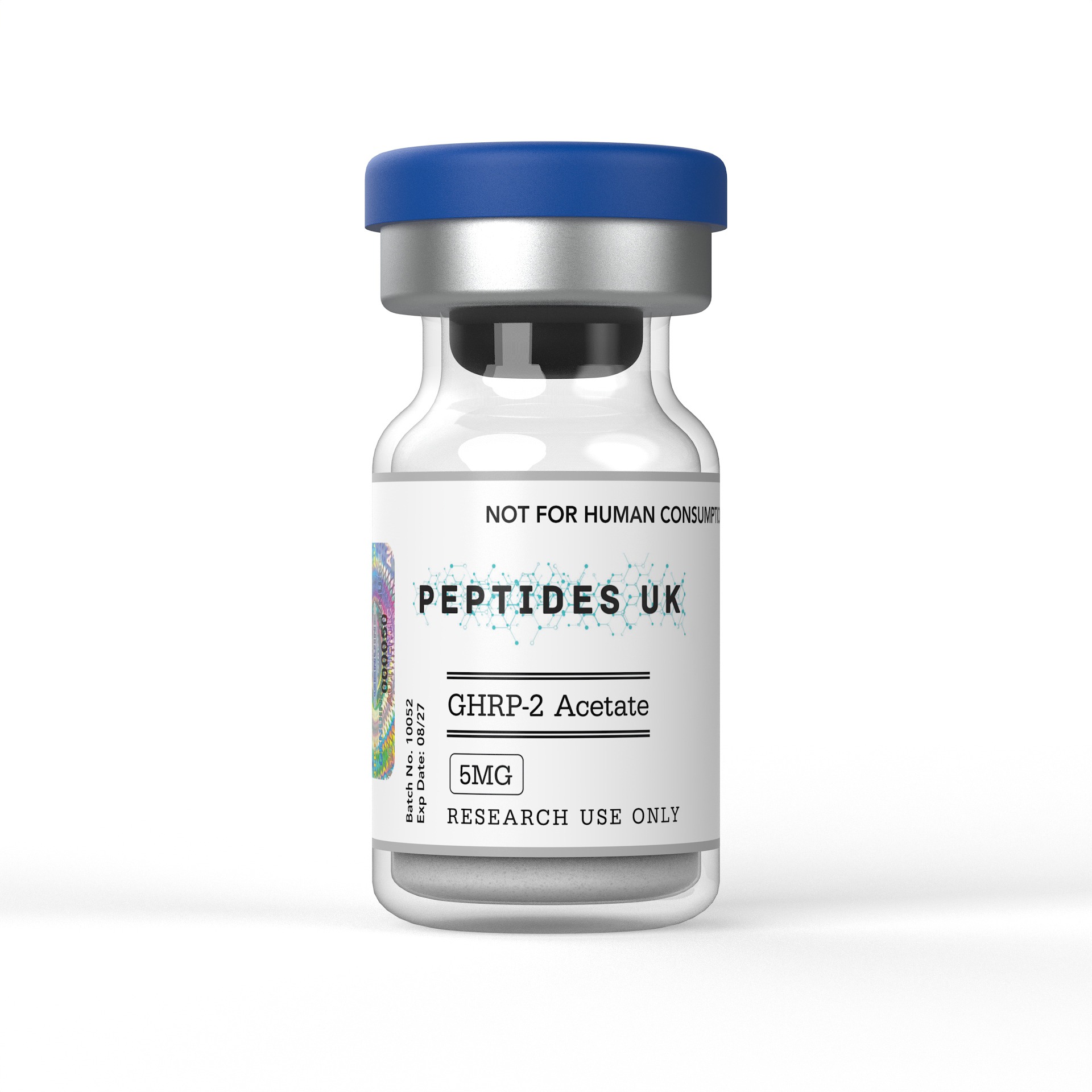
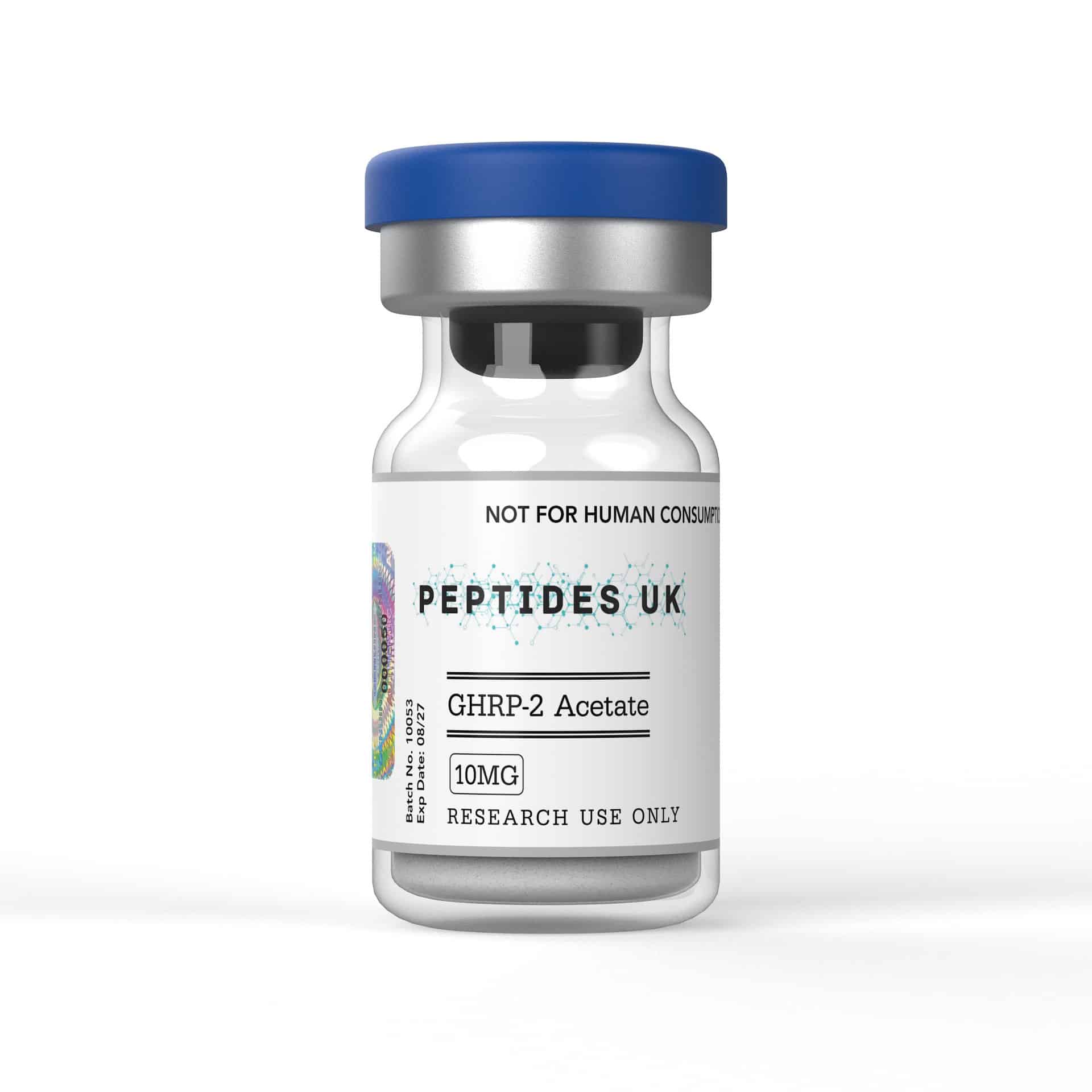
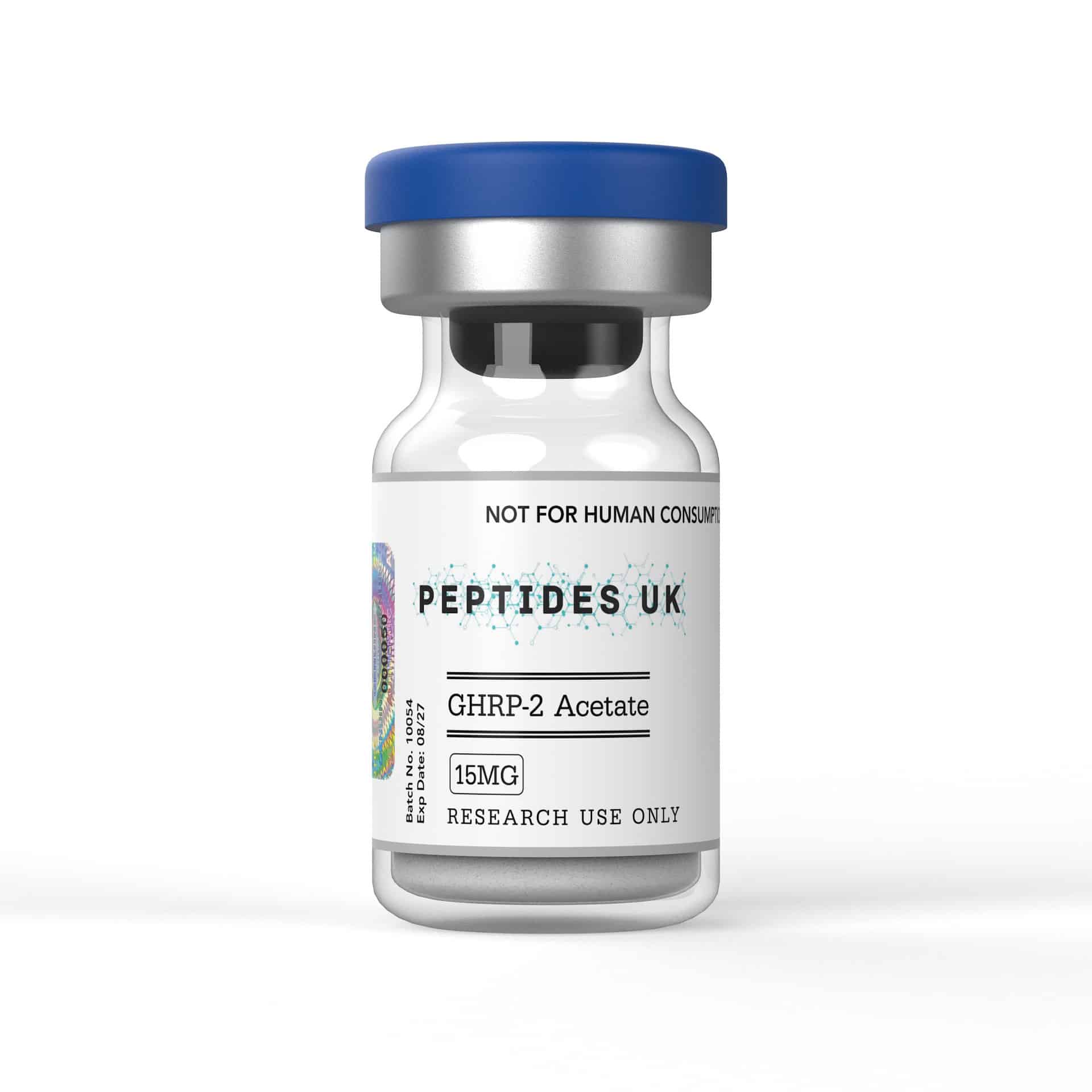
$40.50 – $106.00Price range: $40.50 through $106.00
Buy GHRP-2 Peptide in UAE – In Stock & Ready to Ship
GHRP-2 (Growth Hormone Releasing Peptide-2) is a widely researched peptide known for its role in growth hormone stimulation and pituitary receptor studies. Each batch is independently verified at ≥99% purity and comes with a full Certificate of Analysis (COA) and HPLC testing documentation — giving UAE research teams the confidence they need when sourcing peptides for serious work.
For research use only. Not intended for human or veterinary use.

GHRP-2 (Growth Hormone Releasing Peptide-2) is a synthetic hexapeptide and one of the most potent ghrelin receptor agonists available to laboratories in the UAE — acting on the growth hormone secretagogue receptor (GHS-R1a) to produce among the strongest pulsatile growth hormone release of any synthetic secretagogue, making it a key research tool for studying GH axis biology, somatotroph cell pharmacology, IGF-1 signalling, and the upper limits of GHS-R1a-mediated GH secretion. Researchers and institutions across the UAE, Dubai, Abu Dhabi, and the wider GCC can source verified, research-grade GHRP-2 with fast international dispatch and full batch documentation included.
✅ ≥99% Purity — HPLC & Mass Spectrometry Verified
✅ Batch-Specific Certificate of Analysis (CoA)
✅ Sterile Lyophilised Powder | GMP Manufactured
✅ Fast International Dispatch to UAE & GCC
GHRP-2 is a synthetic hexapeptide — D-Ala-D-2-Nal-Ala-Trp-D-Phe-Lys-NH2 — and a second-generation member of the growth hormone releasing peptide family, developed as a refined successor to GHRP-6 with improved GHS-R1a binding affinity, greater GH release potency, and a cleaner receptor selectivity profile. Like GHRP-6, it was developed as part of the broader research programme into synthetic growth hormone secretagogues that ultimately led to the discovery of ghrelin — the endogenous stomach-derived hormone and natural ligand for GHS-R1a — establishing the ghrelin axis as a distinct and physiologically important regulator of GH secretion alongside the classical GHRH pathway.
GHRP-2 acts as a high-affinity agonist at GHS-R1a — stimulating growth hormone release from anterior pituitary somatotroph cells through the phospholipase C/IP3 calcium mobilisation pathway, producing potent pulsatile GH secretion that is synergistic with GHRH-mediated cAMP-dependent GH release. What distinguishes GHRP-2 from its predecessor GHRP-6 in research terms is its significantly cleaner receptor selectivity — GHRP-2 engages GHS-R1a with high affinity while producing comparatively minimal off-target receptor activity, meaning its biological effects in research models are more closely attributable to GHS-R1a pharmacology rather than broader peptide receptor interactions. This selectivity makes GHRP-2 particularly valuable for research designs that require a potent GH-releasing stimulus with a well-defined and interpretable receptor engagement profile.
The compound’s potency and selectivity profile — stronger GH release than GHRP-6 with fewer confounding off-target effects — has made GHRP-2 a preferred research tool in studies where maximum GHS-R1a-driven GH axis stimulation is required and where the appetite-stimulating and broader ghrelin pathway effects associated with GHRP-6 would complicate experimental interpretation.
In laboratory settings, GHRP-2 research is centred on its potent and selective GHS-R1a agonism and the downstream consequences of maximal growth hormone axis stimulation. Research applications include:
Its combination of high GHS-R1a binding affinity, potent GH-releasing capacity, and cleaner receptor selectivity profile makes GHRP-2 the preferred research compound when maximal, well-attributed GH axis stimulation is the experimental goal. All applications are for research use only.
GHRP-2 has been extensively studied across GH axis pharmacology, pituitary biology, metabolic research, and comparative secretagogue science, accumulating a substantial body of pre-clinical and translational research literature.
GH axis potency research has consistently documented GHRP-2 as producing among the strongest GH release responses of the synthetic hexapeptide secretagogue class — with studies characterising dose-dependent pulsatile GH secretion of greater magnitude than GHRP-6 at equivalent molar doses. Research examining GHRP-2’s GHS-R1a binding kinetics has characterised its high receptor affinity and the calcium-dependent intracellular signalling cascade linking GHS-R1a activation to somatotroph GH secretion, providing detailed mechanistic understanding of GHS-R1a-driven GH release that has informed the broader secretagogue research field.
GHRH synergy research has documented the same potent synergistic amplification of GH release seen with GHRP-6 — with GHRP-2 and GHRH co-administration producing GH secretion substantially greater than either compound alone. Studies have used this synergy to examine the interaction between the cAMP and calcium mobilisation pathways in somatotroph GH secretion, providing mechanistic insights into how the two major hypothalamic GH-stimulating systems cooperate. The strong and consistent GH response to GHRP-2 plus GHRH combination has made this pairing a standard positive control paradigm in GH axis research protocols.
IGF-1 axis research has examined the downstream consequences of GHRP-2-stimulated GH release on hepatic IGF-1 production and circulating IGF-1 levels in pre-clinical models — characterising how acute and repeated GH axis stimulation by GHRP-2 translates to IGF-1 axis activation and the tissue-level anabolic and growth-promoting effects of GH-IGF-1 signalling. These studies have provided important pre-clinical context for understanding how GHS-R1a agonist-driven GH release connects to downstream growth biology.
Receptor selectivity research has used GHRP-2’s cleaner pharmacological profile to isolate and characterise GHS-R1a-specific biological effects — with studies designed to attribute observed outcomes specifically to GHS-R1a pharmacology by comparing GHRP-2’s effects to broader-acting secretagogues like GHRP-6. This comparative research approach has helped delineate which biological effects of the ghrelin secretagogue class are GHS-R1a-specific versus mediated by broader receptor interactions.
Metabolic and body composition research has examined the downstream metabolic consequences of GHRP-2-driven GH axis activation — characterising effects on lipolysis, lipid oxidation, nitrogen retention, and body composition parameters in pre-clinical models consistent with GH-mediated metabolic biology. These studies have contributed to understanding how GHS-R1a agonist-driven GH release influences metabolic physiology beyond the pituitary.
| Compound | Type | GHS-R1a Affinity | GH Release Potency | Selectivity | Key Research Use |
|---|---|---|---|---|---|
| GHRP-2 | Synthetic hexapeptide | Very high | Very strong | High — clean profile | Max GH stimulation, receptor selectivity studies |
| GHRP-6 | Synthetic hexapeptide | High | Strong | Moderate — broader profile | GH axis + ghrelin pathway, cardioprotection |
| Ipamorelin | Synthetic pentapeptide | High | Moderate | Very high — most selective | Isolated GH axis, minimal off-target research |
| Hexarelin | Synthetic hexapeptide | Very high | Very strong | Moderate — CD36 engagement | GH axis + cardiac biology |
| CJC-1295 | GHRH analogue | N/A — GHRH-R | Sustained elevation | High at GHRH-R | Long-acting GH axis stimulation |
| MK-677 | Non-peptide GHS | High (oral) | Strong — sustained | Moderate | Oral GHS biology, chronic GH axis |
| Native Ghrelin | Endogenous peptide | Moderate | Moderate | Broad — peripheral | Reference ghrelin physiology |
| Parameter | Detail |
|---|---|
| Type | Synthetic Growth Hormone Releasing Hexapeptide — 2nd Generation |
| Sequence | D-Ala-D-2-Nal-Ala-Trp-D-Phe-Lys-NH2 |
| Molecular Weight | 817.9 Da |
| Receptor Target | GHS-R1a — high affinity agonist |
| Primary Mechanism | Potent pulsatile GH release via calcium mobilisation pathway |
| Key Advantage | Greater potency and cleaner selectivity than GHRP-6 |
| Purity | ≥99% |
| Verification | HPLC & Mass Spectrometry |
| Form | Lyophilised Powder |
| Solubility | Sterile water or suitable laboratory buffer |
| Storage | -20°C, protected from light and moisture |
| Intended Use | Research use only |
Every order dispatched to the UAE and GCC includes:
Yes. We supply research-grade GHRP-2 with international dispatch to the UAE, Dubai, Abu Dhabi, Sharjah and across the GCC. All orders include full batch documentation and are packaged to maintain peptide integrity throughout transit. This compound is supplied strictly for laboratory research use only.
GHRP-2 is considered second-generation relative to GHRP-6 because it was developed with the specific aim of improving on GHRP-6’s pharmacological profile — refining the peptide structure to increase GHS-R1a binding affinity, enhance GH release potency, and reduce off-target receptor engagement. The result is a compound that produces stronger GH axis stimulation than its predecessor while attributing that stimulation more cleanly to GHS-R1a pharmacology. In research terms this means GHRP-2 is better suited to studies where the experimental question centres specifically on GHS-R1a biology and GH axis stimulation, without the broader ghrelin pathway effects — including appetite stimulation and some cytoprotective actions — that accompany GHRP-6’s wider receptor profile.
The choice between GHRP-2 and GHRP-6 in research comes down to the experimental question. When the goal is maximum GH axis stimulation with a well-attributed, interpretable GHS-R1a-specific mechanism — such as GH secretion studies, IGF-1 axis research, or GH-dependent metabolic and tissue biology — GHRP-2’s greater potency and cleaner selectivity make it the better research tool. When the goal is studying the broader ghrelin receptor biology — including appetite regulation, cardioprotective mechanisms, and cytoprotective actions through peripheral GHS-R1a engagement — GHRP-6’s wider receptor profile becomes an asset rather than a limitation. The two compounds are complementary research tools covering different aspects of secretagogue biology.
Somatostatin is the primary inhibitory regulator of GH secretion, produced in the hypothalamus and acting on pituitary somatotrophs to suppress GH release. GHRP-2’s GH-releasing effects are modulated by the prevailing somatostatin tone — with studies documenting that GHRP-2-stimulated GH release is attenuated under conditions of high somatostatin activity and amplified when somatostatin tone is reduced. This interaction has made GHRP-2 a useful research tool for studying the balance between stimulatory (GHRH, ghrelin pathway) and inhibitory (somatostatin) regulation of GH secretion — providing a pharmacological probe for examining hypothalamic-pituitary GH axis regulatory dynamics in pre-clinical models.
In pharmacological research, receptor selectivity is critical for attributing observed biological effects to specific receptor mechanisms. GHRP-2’s relatively clean GHS-R1a selectivity — compared to GHRP-6’s broader receptor engagement — means that biological effects observed in GHRP-2-treated research models can be more confidently attributed to GHS-R1a pharmacology. This makes GHRP-2 particularly valuable in mechanistic research designs where the goal is characterising GHS-R1a-specific biology, and in comparative studies that use GHRP-2 alongside broader-acting secretagogues to delineate which effects are GHS-R1a-mediated versus arising from other receptor interactions.
Both GHRP-2 and Ipamorelin are valued in GH axis research for their selectivity advantages over GHRP-6, but they differ in potency and selectivity level. GHRP-2 produces stronger GH release than Ipamorelin but with moderately more off-target activity. Ipamorelin is the most GHS-R1a-selective synthetic secretagogue in the research toolkit — producing GH release with minimal cortisol, prolactin, or appetite effects — making it the preferred compound when absolute selectivity and clean experimental attribution are the priority. GHRP-2 occupies the middle ground — more potent than Ipamorelin and more selective than GHRP-6 — making it the preferred choice when strong GH axis stimulation is needed with a reasonably clean pharmacological profile.
Allow the vial to reach room temperature before opening. Add sterile water or appropriate laboratory buffer slowly down the vial wall and swirl gently without shaking. Prepare at your protocol’s required concentration. Aliquot and store at -80°C to minimise freeze-thaw degradation and maintain peptide integrity between experimental sessions. Avoid repeated freeze-thaw cycles and exposure to elevated temperatures.
Orders are dispatched promptly via tracked international courier. Delivery to the UAE typically takes 3–5 working days, with packaging designed to maintain peptide stability and integrity throughout transit.
GHRP-2 is supplied exclusively for legitimate scientific research conducted within licensed laboratory environments. This product is not intended for human consumption, self-administration, or any therapeutic or veterinary application. It must be handled solely by qualified researchers in compliance with applicable UAE regulations and institutional ethics guidelines. By purchasing, you confirm this compound will be used exclusively for approved in vitro or pre-clinical research purposes.
Receive News
