COMING SOON Awaiting UAE License
PRODUCTS SOLD ON PEPTIDESLABUAE.COM ARE FOR RESEARCH PURPOSES ONLY AND ARE NOT FOR HUMAN OR VETERINARY USE.
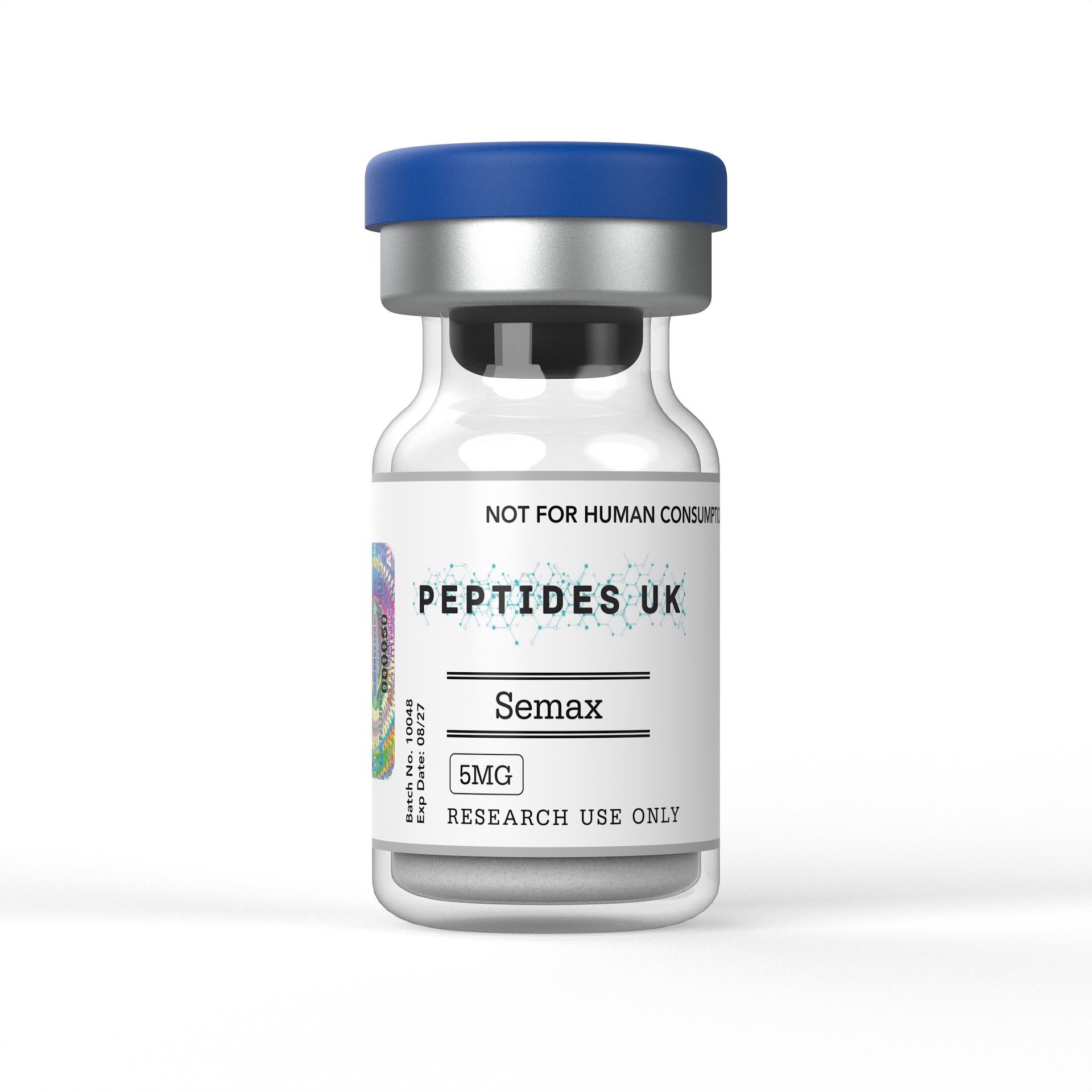
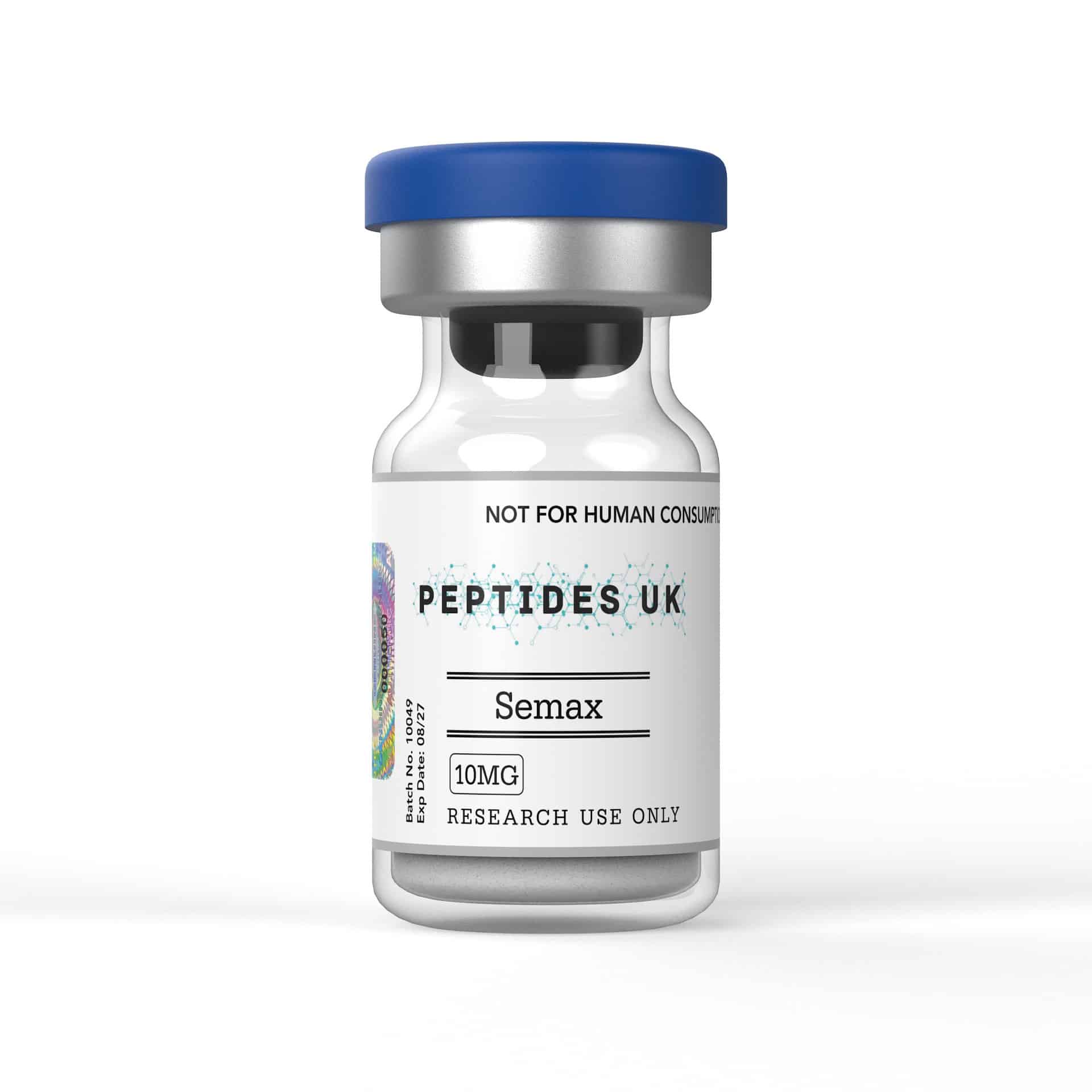
$23.00 – $40.50Price range: $23.00 through $40.50
Buy Semax Peptide in UAE – In Stock & Ready to Ship
Semax is a widely researched peptide known for its role in cognitive function and neuroprotective mechanism studies. Each batch is independently verified at ≥99% purity and comes with a full Certificate of Analysis (COA) and HPLC testing documentation — giving UAE research teams the confidence they need when sourcing peptides for serious work.
For research use only. Not intended for human or veterinary use.

Semax is a synthetic neuropeptide analogue derived from the ACTH(4-10) fragment — one of the most researched cognitive and neuroprotective peptides available to laboratories in the UAE — combining melanocortin receptor engagement with BDNF pathway stimulation to produce a research compound of significant interest for studying cognitive biology, neuroprotection, and brain-derived neurotrophic factor signalling. Researchers and institutions across the UAE, Dubai, Abu Dhabi, and the wider GCC can source verified, research-grade Semax with fast international dispatch and full batch documentation included.
✅ ≥99% Purity — HPLC & Mass Spectrometry Verified
✅ Batch-Specific Certificate of Analysis (CoA)
✅ Sterile Lyophilised Powder | GMP Manufactured
✅ Fast International Dispatch to UAE & GCC
Semax is a synthetic heptapeptide analogue of the adrenocorticotropic hormone fragment ACTH(4-10) — a sequence originally identified as carrying the core cognitive and neuroprotective biological activity of the parent ACTH molecule without its endocrine adrenal effects. Developed initially in the Soviet Union and extensively studied since the 1980s, Semax (Met-Glu-His-Phe-Pro-Gly-Pro) represents a refined research compound that combines the receptor engagement profile of the ACTH fragment with a proline-extended C-terminus that significantly improves metabolic stability compared to the native ACTH(4-10) sequence — providing an extended activity window in biological research systems that makes it practically useful for pre-clinical cognitive and neuroprotective research protocols.
The primary mechanism of research interest in Semax centres on its documented capacity to stimulate brain-derived neurotrophic factor (BDNF) expression and its interactions with the melanocortin receptor system — particularly MC4R — alongside emerging evidence of effects on the serotonergic and dopaminergic neurotransmitter systems. BDNF is widely regarded as one of the most important proteins in neuroscience for its roles in neuronal survival, synaptic plasticity, long-term potentiation, and the biological mechanisms underlying memory consolidation — making compounds that modulate BDNF expression important research tools across multiple neuroscience research areas.
The compound’s stability profile — enhanced versus native ACTH(4-10) — combined with its documented CNS penetration characteristics makes it a practical research tool for studying cognitive biology, neuroplasticity mechanisms, and neuroprotective pathways in pre-clinical models where sustained receptor engagement is required for meaningful experimental outcomes.
In laboratory settings, Semax research is centred on its BDNF-stimulating, melanocortin receptor-engaging, and neuroprotective properties. Research applications include:
Its improved metabolic stability versus native ACTH(4-10) — providing extended research utility in biological systems — makes Semax a practical research tool for studying cognitive and neuroprotective biology in extended pre-clinical protocols requiring consistent receptor engagement. All applications are for research use only.
Semax occupies a well-established and active research space within neuropeptide cognitive biology, BDNF research, and neuroprotection science:
BDNF pathway research has documented Semax-induced upregulation of brain-derived neurotrophic factor expression in hippocampal tissue in pre-clinical models — with studies reporting increased BDNF mRNA expression and elevated protein levels following Semax administration. Given BDNF’s central role in synaptic strengthening, neuronal survival, and the biological basis of memory consolidation, these findings have positioned Semax as a valuable research tool for studying neurotrophin-dependent cognitive biology and plasticity mechanisms.
Cognitive and memory research using Semax has characterised effects on learning acquisition, spatial memory performance, and attention-related behavioural parameters in pre-clinical models. Studies examining ACTH(4-10) analogues in cognitive paradigms have consistently reported effects on memory consolidation and retrieval — with the improved stability of Semax compared to the parent fragment providing more consistent research outcomes in extended cognitive protocols.
Neuroprotection research has examined Semax in models of ischaemic brain injury, with studies reporting reduced neuronal damage markers and improved functional outcomes in pre-clinical ischaemia models. This neuroprotective research interest is supported by Semax’s documented effects on neurotrophin expression and its anti-inflammatory actions in CNS tissue — making it a research compound of interest for studying the biological mechanisms of neuroprotection in stroke-related pre-clinical models.
Serotonergic and dopaminergic system research has characterised Semax’s effects on monoamine neurotransmitter levels in brain regions associated with mood regulation, motivation, and executive function — with studies documenting effects on serotonin and dopamine turnover in prefrontal cortical and limbic system regions. These findings have informed research examining the intersection of neurotrophin signalling and monoaminergic neurotransmitter biology.
Melanocortin receptor research has examined ACTH fragment pharmacology at MC4R — a receptor subtype with broad CNS distribution and documented roles in energy homeostasis, cognitive function, and stress response biology — providing mechanistic context for Semax’s observed effects in cognitive pre-clinical research models.
| Compound | Type | Primary Mechanism | Half-Life | Key Research Focus | Research Profile |
| Semax | ACTH(4-10) synthetic analogue | BDNF upregulation, MC4R, monoaminergic | Extended vs ACTH(4-10) | Cognition, neuroprotection, BDNF | Well-established |
| Selank | Tuftsin analogue | GABAergic, anxiolytic, BDNF | Extended vs tuftsin | Anxiety, cognition, immune | Well-documented |
| Native ACTH(4-10) | Endogenous peptide fragment | Melanocortin receptors | ~minutes | Reference ACTH fragment biology | Extensively studied |
| Dihexa | Angiotensin IV analogue | HGF/MET signalling, synaptogenesis | Extended | Synaptogenesis, cognitive biology | Growing |
| P21 Peptide | CNTF-derived peptide | BDNF pathway, TrkB | Extended | BDNF signalling, neuroprotection | Growing |
| BPC-157 | Gastric pentadecapeptide | Growth factor signalling, angiogenesis | Extended | Tissue repair, CNS cytoprotection | Well-documented |
| Parameter | Detail |
| Type | Synthetic ACTH(4-10) Neuropeptide Analogue |
| Sequence | Met-Glu-His-Phe-Pro-Gly-Pro |
| Mechanism | BDNF upregulation, MC4R engagement, monoaminergic modulation |
| Key Advantage | Enhanced metabolic stability vs native ACTH(4-10) |
| Purity | ≥99% |
| Verification | HPLC & Mass Spectrometry |
| Form | Lyophilised Powder |
| Solubility | Sterile water or suitable laboratory buffer |
| Storage | -20°C, protected from light and moisture |
| Intended Use | Research use only |
Every order dispatched to the UAE and GCC includes:
Yes. We supply research-grade Semax with international dispatch to the UAE, Dubai, Abu Dhabi, Sharjah and across the GCC. All orders include full batch documentation and are packaged to maintain peptide integrity throughout transit. This compound is supplied strictly for laboratory research use only.
Semax is a synthetic analogue of the ACTH(4-10) fragment — the core active sequence within the adrenocorticotropic hormone molecule responsible for its cognitive and neuroprotective effects, separated from the adrenal steroidogenic activity of full-length ACTH. Native ACTH(4-10) has a very short half-life due to rapid enzymatic degradation, limiting its research utility in extended pre-clinical protocols. Semax addresses this by incorporating a proline-extended C-terminus modification that significantly improves metabolic stability — providing an extended activity window while preserving the core biological activity of the ACTH fragment at melanocortin receptors and in BDNF pathway stimulation.
Brain-Derived Neurotrophic Factor (BDNF) is a neurotrophin protein widely regarded as one of the most important molecules in neuroscience — playing critical roles in neuronal survival, axonal growth, synaptic strengthening, long-term potentiation, and the biological mechanisms underlying memory formation and cognitive function. BDNF expression is associated with learning, adaptation to environmental enrichment, and resistance to neurodegenerative processes. Semax’s documented capacity to upregulate BDNF expression in hippocampal and cortical tissue makes it a particularly relevant research tool for studying neurotrophin-dependent cognitive biology and neuroprotective mechanisms — especially in research models examining the relationship between BDNF signalling and memory consolidation or neuronal resilience.
Semax has been examined in pre-clinical cognitive research across multiple paradigms — including spatial memory tasks, object recognition protocols, attention-related behavioural tests, and learning acquisition studies. Research using ACTH(4-10) analogues has consistently documented effects on memory consolidation parameters — with the improved metabolic stability of Semax providing more consistent receptor engagement in extended cognitive protocols compared to the native fragment. The compound’s effects on serotonergic and dopaminergic neurotransmitter systems — both important for attention, working memory, and executive function biology — have also been characterised in pre-clinical models, providing a broader mechanistic picture of its research relevance to cognitive biology.
Neuroprotection research with Semax has centred on pre-clinical models of ischaemic brain injury — where studies have reported reduced markers of neuronal damage and improved functional outcomes associated with BDNF pathway activation and anti-inflammatory effects in CNS tissue. The connection between BDNF signalling and neuronal survival makes Semax a research tool of interest for studying how neurotrophin-dependent pathways contribute to neuroprotective outcomes in injury models. Additionally, Semax’s effects on oxidative stress markers and neuroinflammation parameters have been characterised in pre-clinical studies — providing mechanistic context for its neuroprotective profile in research settings.
Semax and Selank are both synthetic neuropeptides developed from Soviet-era research programmes, and both are used in cognitive and neuroprotective research — but they have distinct mechanisms and primary research applications. Semax is derived from the ACTH(4-10) fragment and acts primarily through BDNF upregulation and melanocortin receptor engagement — making it most relevant for cognitive enhancement, neuroprotection, and neuroplasticity research. Selank is derived from the immunomodulatory peptide tuftsin and acts primarily through GABAergic modulation and its own BDNF-related effects — making it most relevant for anxiety biology, stress resilience, and anxiolytic mechanism research. The two compounds are complementary research tools covering different aspects of neuropeptide cognitive and stress biology.
Allow the vial to reach room temperature before opening. Add sterile water or appropriate laboratory buffer slowly down the vial wall and swirl gently without shaking. Prepare at your protocol’s required concentration. While Semax has improved metabolic stability compared to native ACTH(4-10), standard peptide handling protocols should be followed to preserve biological activity. Aliquot and store at -80°C to minimise freeze-thaw degradation and maintain peptide integrity between experimental sessions.
Orders are dispatched promptly via tracked international courier. Delivery to the UAE typically takes 3–5 working days, with packaging designed to maintain peptide stability and integrity throughout transit.
Semax is supplied exclusively for legitimate scientific research conducted within licensed laboratory environments. This product is not intended for human consumption, self-administration, or any therapeutic or veterinary application. It must be handled solely by qualified researchers in compliance with applicable UAE regulations and institutional ethics guidelines. By purchasing, you confirm this compound will be used exclusively for approved in vitro or pre-clinical research purposes.
Receive News
