
COMING SOON Awaiting UAE License
PRODUCTS SOLD ON PEPTIDESLABUAE.COM ARE FOR RESEARCH PURPOSES ONLY AND ARE NOT FOR HUMAN OR VETERINARY USE.
$131.00 – $399.50Price range: $131.00 through $399.50
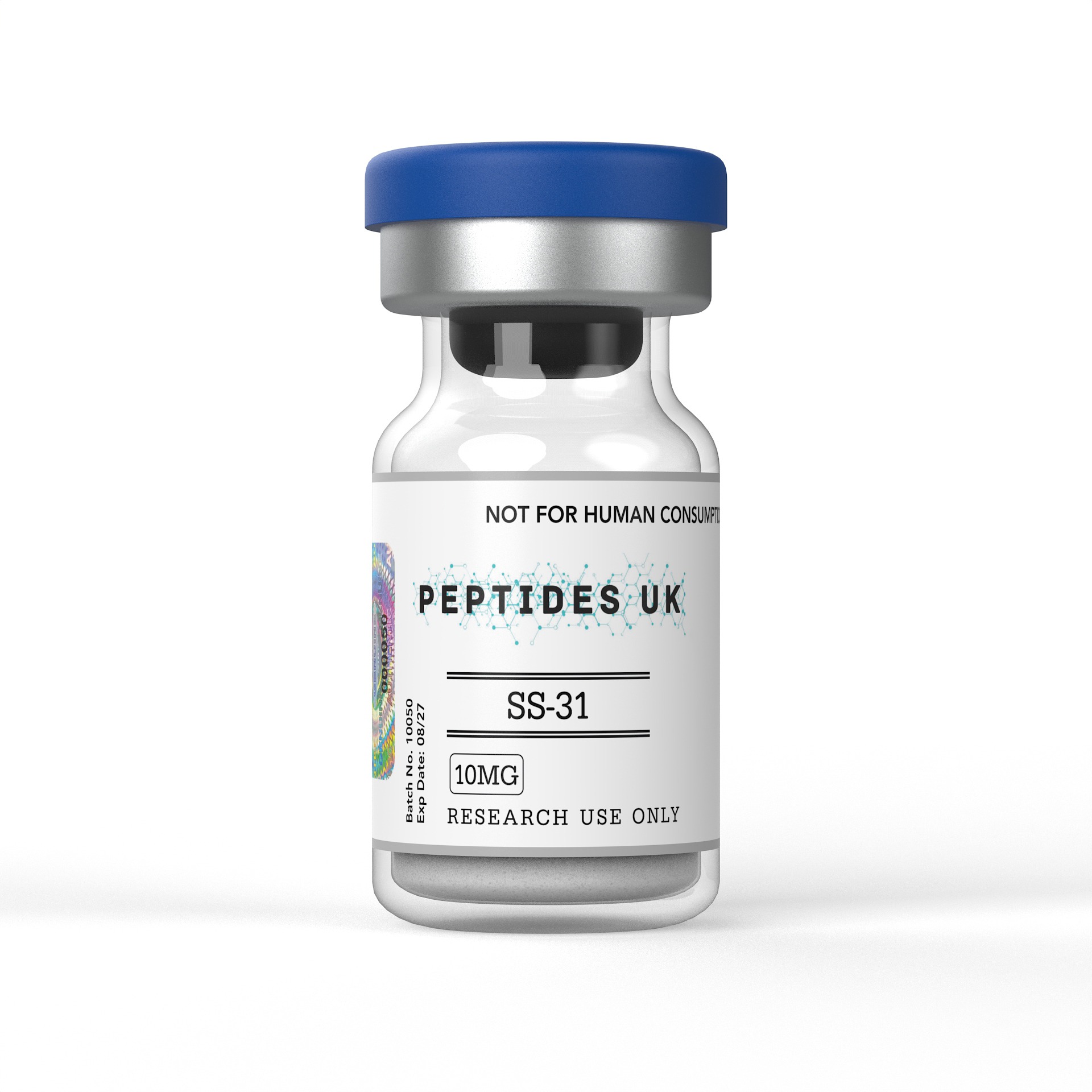
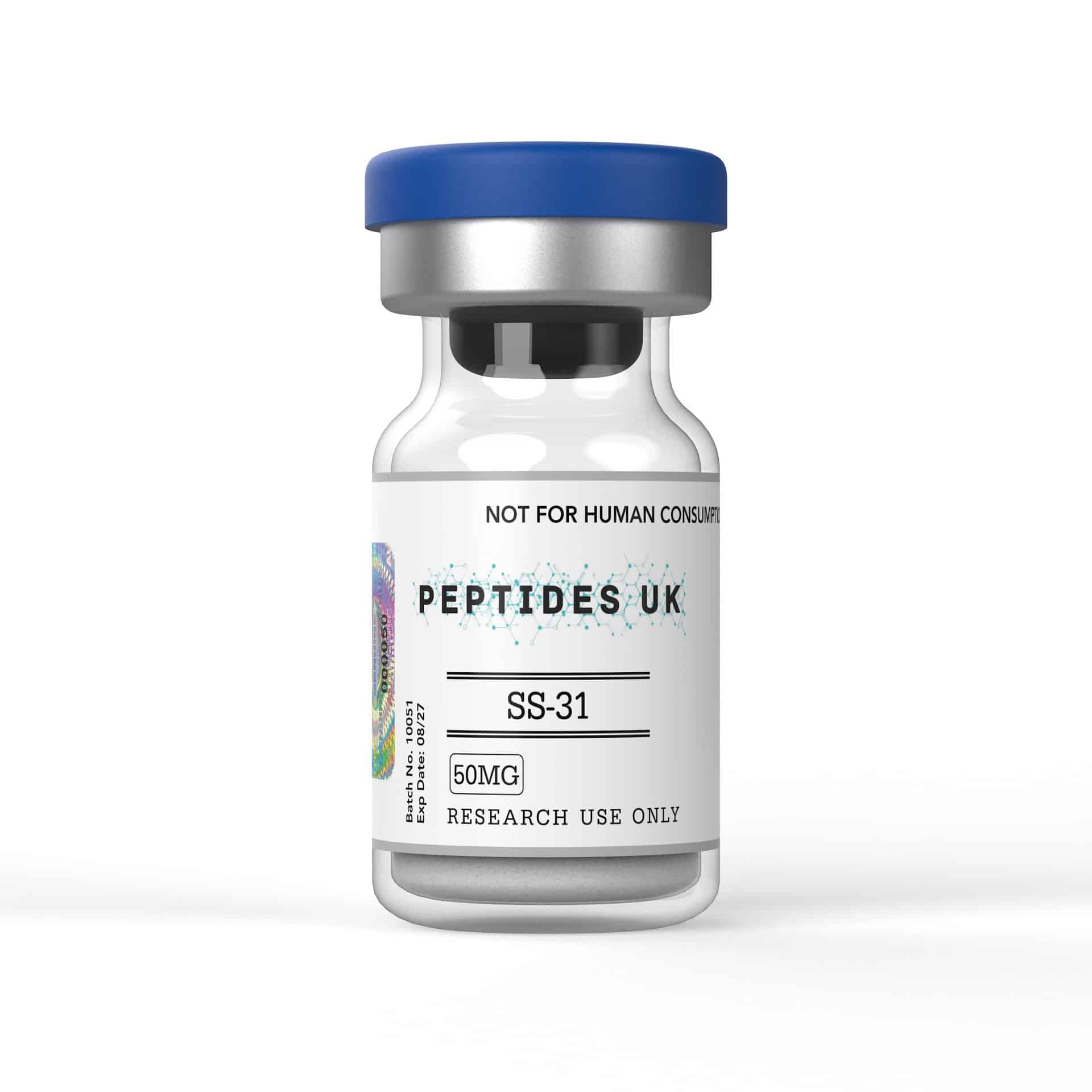
Buy SS-31 Peptide in UAE – In Stock & Ready to Ship
SS-31 (Elamipretide) is a widely researched peptide known for its role in mitochondrial protection and oxidative stress studies. Each batch is independently verified at ≥99% purity and comes with a full Certificate of Analysis (COA) and HPLC testing documentation — giving UAE research teams the confidence they need when sourcing peptides for serious work.
For research use only. Not intended for human or veterinary use.

SS-31 (Elamipretide) is one of the most specifically targeted mitochondria-protective peptides available to laboratories in the UAE — a tetrapeptide from the Szeto-Schiller peptide family that selectively concentrates in the inner mitochondrial membrane by binding cardiolipin, stabilising cristae architecture, protecting electron transport chain complexes, reducing mitochondrial reactive oxygen species production, and preserving ATP synthesis capacity under conditions of oxidative stress and ischaemic injury, making it the most important research tool for studying cardiolipin biology, mitochondrial membrane integrity, and bioenergetic dysfunction across cardiac, neural, renal, and skeletal muscle research models. Researchers and institutions across the UAE, Dubai, Abu Dhabi and the wider GCC can source verified, research-grade SS-31 with fast international dispatch and full batch documentation included.
✅ ≥99% Purity — HPLC & Mass Spectrometry Verified
✅ Batch-Specific Certificate of Analysis (CoA)
✅ Sterile Lyophilised Powder | GMP Manufactured
✅ Fast International Dispatch to UAE & GCC
SS-31, also known as Elamipretide, D-Arg-2′6′-Dmt-Lys-Phe-NH2, or MTP-131, is a synthetic aromatic-cationic tetrapeptide belonging to the Szeto-Schiller (SS) peptide family — a class of cell-permeable mitochondria-targeted peptides developed by Hazel Szeto and Peter Schiller through systematic study of how peptide physicochemical properties govern selective mitochondrial membrane accumulation. SS-31 is composed of four amino acids — D-Arg, 2′6′-dimethyltyrosine (Dmt), Lys, and Phe-NH2 — incorporating both D-amino acids and the non-natural aromatic residue Dmt, which together confer resistance to proteolytic degradation and contribute to the peptide’s unique mitochondrial targeting mechanism.
The defining characteristic of SS-31 that distinguishes it from all other mitochondria-targeted research compounds is its mechanism of selective inner mitochondrial membrane accumulation. Unlike most mitochondria-targeting strategies that exploit the large negative mitochondrial membrane potential to accumulate positively charged compounds in the mitochondrial matrix — a mechanism that requires intact membrane potential and becomes ineffective when potential collapses — SS-31 accumulates specifically in the inner mitochondrial membrane through direct high-affinity binding to cardiolipin, an unusual dimeric phospholipid found almost exclusively in the inner mitochondrial membrane where it plays essential structural and functional roles.
Cardiolipin is not merely a structural lipid — it is an essential organising scaffold for the electron transport chain (ETC) supercomplexes, a critical regulator of cytochrome c binding and electron transfer efficiency, and a key determinant of cristae membrane curvature that governs the spatial organisation of ATP synthase. SS-31’s high-affinity cardiolipin binding positions it precisely at the site of ETC function — allowing it to stabilise cardiolipin-protein interactions, preserve cristae architecture, facilitate electron transfer through cytochrome c, and reduce electron leak to oxygen that generates mitochondrial ROS. This cardiolipin-binding mechanism operates independently of membrane potential — remaining effective even in depolarised, damaged mitochondria where membrane potential-dependent targeting strategies fail.
In laboratory settings, SS-31 research is centred on its cardiolipin-binding mitochondrial membrane protection and the downstream bioenergetic and cytoprotective consequences in models of oxidative stress, ischaemia-reperfusion injury, and mitochondrial dysfunction. Research applications include:
Its cardiolipin-binding membrane potential-independent mitochondrial targeting mechanism — positioning it precisely at the ETC interface regardless of mitochondrial health status — makes SS-31 the most precisely targeted and mechanistically distinct research tool for studying inner mitochondrial membrane biology and bioenergetic protection under pathological conditions. All applications are for research use only.
SS-31 has developed one of the most mechanistically compelling and cross-tissue research profiles among mitochondria-targeted peptides in biomedical science:
Cardiolipin binding research established the foundational mechanism of SS-31’s mitochondrial targeting — with studies characterising SS-31’s high-affinity electrostatic and hydrophobic interactions with cardiolipin’s unique dimeric phosphate headgroup structure, documenting selective inner mitochondrial membrane accumulation at concentrations orders of magnitude above cytoplasmic levels, and establishing that this accumulation occurs independently of mitochondrial membrane potential. These mechanistic studies established SS-31 as the first research compound to exploit cardiolipin as a mitochondrial targeting address — a fundamentally different strategy from membrane potential-dependent mitochondrial targeting approaches.
Electron transport chain and bioenergetics research has characterised SS-31’s effects on ETC supercomplex organisation and function — with studies documenting its stabilisation of cardiolipin-dependent ETC supercomplex assembly, improved electron transfer efficiency through cytochrome c, reduced electron leak generating superoxide, and preserved ATP synthesis capacity under oxidative stress conditions. These findings have established the mechanistic chain from cardiolipin binding through ETC function preservation to bioenergetic protection that underpins SS-31’s cytoprotective effects across tissue types.
Cardiac ischaemia-reperfusion research has produced some of the most extensively referenced SS-31 findings — with pre-clinical studies in rodent and large animal cardiac ischaemia models documenting significant reductions in infarct size, preserved mitochondrial membrane integrity, maintained ATP levels, reduced oxidative damage markers, and improved cardiac functional recovery following SS-31 treatment. Studies examining the temporal relationship between SS-31 administration and reperfusion injury have characterised it as effective both pre-ischaemically and at reperfusion — providing important research data on the mechanistic window of cardiolipin-mediated mitochondrial protection.
Heart failure research has examined SS-31’s effects on mitochondrial bioenergetics in chronic heart failure models — with studies documenting improvements in ATP production capacity, mitochondrial morphology, cristae architecture, and cardiac functional parameters under sustained SS-31 treatment. These findings have positioned SS-31 as a key research tool for studying how mitochondrial bioenergetic dysfunction contributes to heart failure progression and how cardiolipin-targeted intervention influences this pathological process.
Renal research has characterised SS-31’s protective effects in models of acute kidney injury — with studies examining ischaemia-reperfusion, nephrotoxic, and sepsis-induced AKI models and documenting preserved renal tubular cell mitochondrial function, reduced oxidative damage, and improved renal functional parameters. These findings have established SS-31 as a referenced research tool in renal mitochondrial biology alongside its cardiac applications.
Neural and neurodegenerative disease research has examined SS-31’s effects in models of Parkinson’s disease, Alzheimer’s disease, and neural ischaemia — with studies documenting neuroprotective effects through mitochondrial preservation, reduced mitochondrial ROS, and improved neuronal bioenergetics under neurotoxic stress conditions. Age-related mitochondrial decline research has characterised SS-31’s ability to restore mitochondrial structure and function in aged tissue — with studies documenting improvements in cristae architecture, ETC activity, and ATP production in aged animal models that approach levels observed in young tissue following SS-31 treatment.
| Compound | Type | Targeting Mechanism | Primary Target | MMP Dependent | Research Focus | Research Profile |
|---|---|---|---|---|---|---|
| SS-31 (Elamipretide) | Aromatic-cationic tetrapeptide | Cardiolipin binding | Inner mitochondrial membrane | No | Cardiolipin, ETC, ischaemia | Extensively studied |
| SS-20 | Aromatic-cationic tetrapeptide | Cardiolipin binding | Inner mitochondrial membrane | No | SS peptide comparative | Well-documented |
| MitoQ | Ubiquinone-TPP conjugate | Membrane potential — TPP+ | Mitochondrial matrix | Yes | Antioxidant, ROS scavenging | Extensively studied |
| SkQ1 | Plastoquinone-TPP conjugate | Membrane potential — TPP+ | Mitochondrial matrix | Yes | Antioxidant, ageing research | Well-documented |
| MitoTEMPO | TEMPO-TPP conjugate | Membrane potential — TPP+ | Mitochondrial matrix | Yes | Superoxide scavenging | Well-documented |
| Szeto-Schiller SS-02 | Aromatic-cationic tetrapeptide | Cardiolipin binding | Inner mitochondrial membrane | No | ROS scavenging variant | Research tool |
| Parameter | Detail |
|---|---|
| Type | Synthetic Aromatic-Cationic Tetrapeptide |
| Also Known As | Elamipretide, MTP-131, D-Arg-2′6′-Dmt-Lys-Phe-NH2 |
| Peptide Family | Szeto-Schiller (SS) peptide family |
| Targeting Mechanism | Cardiolipin binding — membrane potential independent |
| Primary Location | Inner mitochondrial membrane |
| Chain Length | 4 Amino Acids (tetrapeptide) |
| Key Features | D-amino acids + Dmt residue — protease resistant |
| Purity | ≥99% |
| Verification | HPLC & Mass Spectrometry |
| Form | Lyophilised Powder |
| Solubility | Sterile water or suitable laboratory buffer |
| Storage | -20°C, protected from light and moisture |
| Intended Use | Research use only |
Every order dispatched to the UAE and GCC includes:
Yes. We supply research-grade SS-31 with international dispatch to the UAE, Dubai, Abu Dhabi, Sharjah and across the GCC. All orders include full batch documentation and are packaged to maintain peptide integrity throughout transit. This compound is supplied strictly for laboratory research use only.
Cardiolipin is an unusual dimeric phospholipid found almost exclusively in the inner mitochondrial membrane — comprising approximately 20% of its total lipid composition. Its unique dimeric structure with four acyl chains and two phosphate groups creates a distinctive negative charge density that contributes to cristae membrane curvature, organises ETC supercomplex assembly, anchors cytochrome c for electron transfer, and regulates multiple aspects of mitochondrial function and morphology. SS-31’s high-affinity electrostatic and hydrophobic interactions with cardiolipin’s headgroup structure provide a highly specific mitochondrial address that concentrates the peptide precisely at the ETC interface — and unlike membrane potential-dependent mitochondrial targeting strategies, this cardiolipin-based targeting remains effective in damaged, depolarised mitochondria where therapeutic intervention is most needed.
MitoQ, SkQ1, MitoTEMPO, and most other mitochondria-targeted research compounds accumulate in the mitochondrial matrix by exploiting the large negative mitochondrial membrane potential to drive uptake of positively charged triphenylphosphonium (TPP+)-conjugated compounds against their concentration gradient. This membrane potential-dependent mechanism works effectively in healthy, well-polarised mitochondria but becomes progressively less effective as membrane potential collapses under conditions of severe mitochondrial damage — precisely the conditions under which protective intervention is most research-relevant. SS-31’s cardiolipin-binding mechanism operates completely independently of membrane potential — concentrating in the inner mitochondrial membrane regardless of energetic status. This membrane potential independence is a critical research-practical advantage for studying mitochondrial protection under conditions of ischaemia, severe oxidative stress, or advanced mitochondrial dysfunction.
SS-31 has one of the most extensive cardiac research profiles of any mitochondria-targeted compound — with pre-clinical studies across rodent and large animal cardiac ischaemia-reperfusion models documenting significant infarct size reduction, preserved mitochondrial ultrastructure, maintained ATP synthesis capacity, reduced oxidative damage markers, and improved cardiac functional recovery. Studies have examined SS-31 administered both before ischaemia and at the moment of reperfusion — characterising the mechanistic window during which cardiolipin-mediated mitochondrial protection can attenuate reperfusion injury. Heart failure research has further examined SS-31’s effects on chronic mitochondrial bioenergetic dysfunction — documenting improvements in ATP production, cristae morphology, and cardiac functional parameters that have established it as a key reference compound in cardiac mitochondrial biology.
The electron transport chain complexes I, III, and IV associate into higher-order supercomplexes — sometimes called respirasomes — that enhance electron transfer efficiency, reduce ROS generation, and optimise the spatial organisation of NADH oxidation and ATP synthesis. Cardiolipin is essential for supercomplex assembly and stability — its removal causes supercomplex dissociation and dramatically reduced ETC efficiency. SS-31’s cardiolipin stabilisation therefore directly preserves supercomplex architecture — with research documenting that SS-31 treatment maintains supercomplex integrity under oxidative stress conditions that would otherwise cause dissociation. This supercomplex stabilisation mechanism represents a fundamental improvement in ETC function rather than simply scavenging ROS after it is produced — a mechanistic distinction that has made SS-31 a particularly referenced research tool in mitochondrial bioenergetics.
Pre-clinical neural research has examined SS-31’s neuroprotective effects across multiple neurodegeneration and injury models — with studies in Parkinson’s disease models documenting protection against mitochondrial neurotoxin-induced dopaminergic neuron loss, Alzheimer’s disease models showing reduced mitochondrial dysfunction and amyloid-associated oxidative stress, and neural ischaemia models documenting preserved neuronal bioenergetics and reduced infarct parameters. These neuroprotection findings reflect the fundamental importance of mitochondrial health to neuronal survival and have established SS-31 as a research tool for studying how inner mitochondrial membrane integrity and cardiolipin biology contribute to neuronal resilience under pathological stress conditions.
Allow the vial to reach room temperature before opening. Add sterile water or appropriate laboratory buffer slowly down the vial wall and swirl gently without shaking. SS-31’s D-amino acid composition and Dmt residue provide excellent proteolytic stability — prepare at your protocol’s required concentration. The tetrapeptide is highly water soluble due to its cationic character — reconstitution is typically rapid and complete. Aliquot and store at -80°C to minimise freeze-thaw degradation and maintain peptide integrity between experimental sessions. Avoid alkaline pH conditions that may affect the Dmt residue stability.
Orders are dispatched promptly via tracked international courier. Delivery to the UAE typically takes 3–5 working days, with packaging designed to maintain peptide stability and integrity throughout transit.
SS-31 (Elamipretide) is supplied exclusively for legitimate scientific research conducted within licensed laboratory environments. This product is not intended for human consumption, self-administration, or any therapeutic or veterinary application. It must be handled solely by qualified researchers in compliance with applicable UAE regulations and institutional ethics guidelines. By purchasing, you confirm this compound will be used exclusively for approved in vitro or pre-clinical research purposes.
Receive News
