
COMING SOON Awaiting UAE License
PRODUCTS SOLD ON PEPTIDESLABUAE.COM ARE FOR RESEARCH PURPOSES ONLY AND ARE NOT FOR HUMAN OR VETERINARY USE.
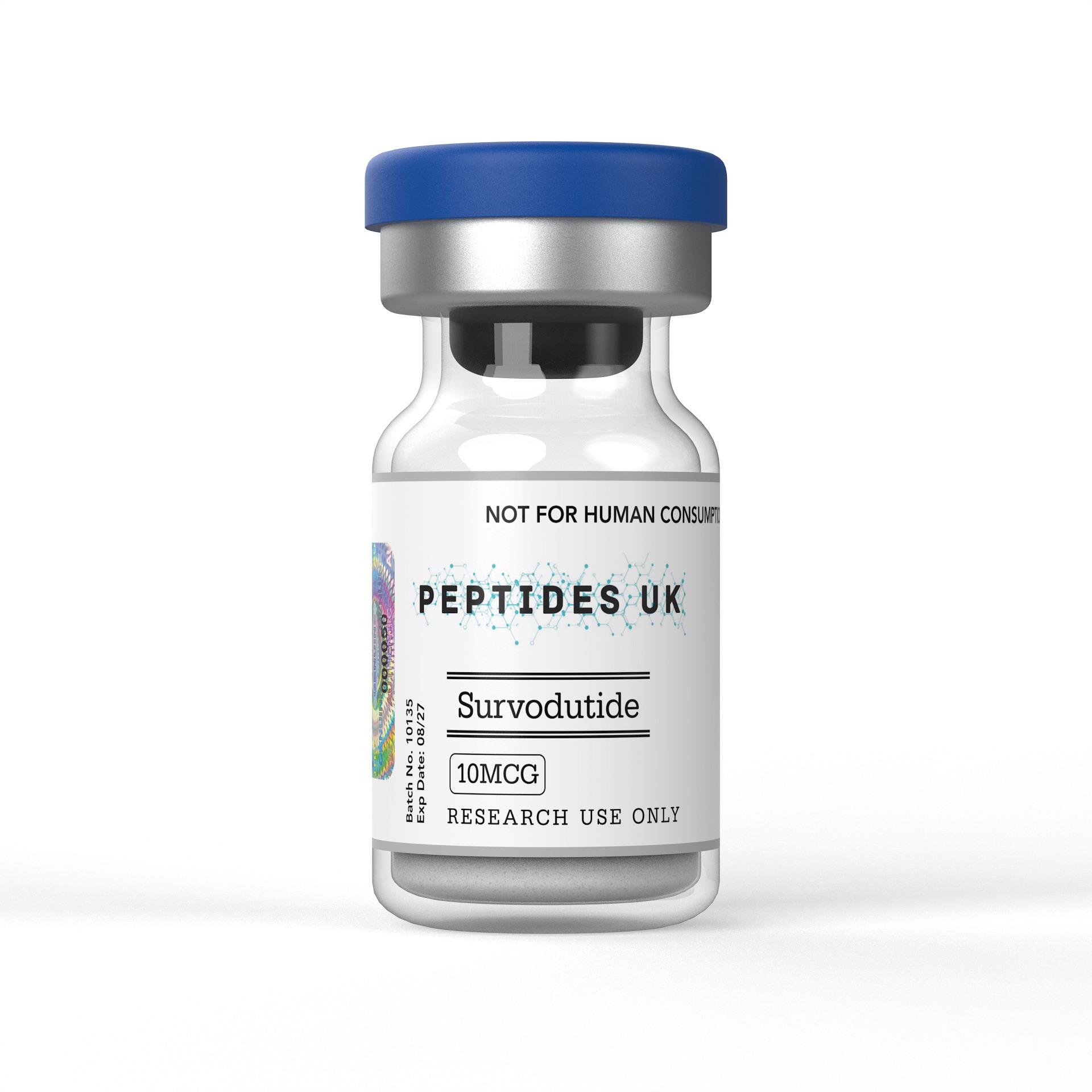
$214.00
Buy Survodutide Peptide in UAE – In Stock & Ready to Ship
Survodutide is a widely researched peptide known for its role in metabolic regulation and dual glucagon/GLP-1 receptor studies. Each batch is independently verified at ≥99% purity and comes with a full Certificate of Analysis (COA) and HPLC testing documentation — giving UAE research teams the confidence they need when sourcing peptides for serious work.
For research use only. Not intended for human or veterinary use.

Survodutide is one of the most actively researched unimolecular dual GLP-1 and glucagon receptor co-agonist peptides available to laboratories in the UAE — a fatty acid-acylated long-acting peptide that simultaneously activates both the GLP-1 receptor and the glucagon receptor with balanced potency, combining GLP-1’s insulin-stimulating and appetite-suppressing effects with glucagon’s energy expenditure-increasing and hepatic lipid metabolism-promoting effects to produce a synergistic metabolic research profile that neither receptor pathway achieves alone, making it one of the most important research tools for studying dual incretin-glucagon receptor co-activation biology, obesity and metabolic syndrome pathway research, and NASH/MAFLD liver biology. Researchers and institutions across the UAE, Dubai, Abu Dhabi and the wider GCC can source verified, research-grade Survodutide with fast international dispatch and full batch documentation included.
✅ ≥99% Purity — HPLC & Mass Spectrometry Verified
✅ Batch-Specific Certificate of Analysis (CoA)
✅ Sterile Lyophilised Powder | GMP Manufactured
✅ Fast International Dispatch to UAE & GCC
Survodutide — also identified in research literature as BI 456906 — is a synthetic long-acting unimolecular dual agonist peptide developed by Boehringer Ingelheim, engineered to simultaneously activate both the Glucagon-Like Peptide-1 receptor (GLP-1R) and the Glucagon receptor (GCGR) with balanced, approximately equipotent activity at both receptor systems. It is acylated with a fatty acid chain that enables albumin binding — extending its half-life to enable once-weekly dosing in research protocols, similar to the acylation strategy used in Semaglutide and Cagrilintide.
The research significance of Survodutide’s dual receptor design lies in the complementary and partially synergistic metabolic effects produced by co-activating two receptor systems that have traditionally been considered opposing regulators of glucose metabolism. GLP-1 receptor activation produces insulin secretion stimulation, glucagon suppression, appetite reduction through central hypothalamic signalling, and slowed gastric emptying — effects that collectively lower blood glucose and reduce caloric intake. Glucagon receptor activation produces opposing glucose effects — stimulating hepatic glucose output — but simultaneously drives energy expenditure through thermogenesis, promotes hepatic fatty acid oxidation and lipid clearance, and produces independent appetite-suppressing effects through central nervous system signalling.
The insight underlying dual GLP-1/glucagon receptor co-agonist research is that GLP-1 receptor co-activation can counterbalance glucagon receptor-driven glucose elevation while preserving glucagon’s beneficial metabolic effects on energy expenditure and hepatic lipid metabolism — producing a net metabolic profile characterised by reduced body weight, improved lipid parameters, and reduced hepatic steatosis that exceeds what GLP-1 receptor agonism alone achieves. Survodutide’s balanced potency at both receptors and long-acting acylated design make it one of the most research-practical and clinically advanced compounds in this dual agonist class.
In laboratory settings, Survodutide research is centred on its simultaneous GLP-1R and GCGR co-activation and the downstream metabolic, hepatic, and body composition effects this produces in experimental models. Research applications include:
Its balanced dual GLP-1R/GCGR co-activation profile — combined with long-acting acylated pharmacokinetics — makes Survodutide one of the most research-practically advanced dual receptor metabolic agonists available for studying how simultaneous incretin and glucagon pathway co-activation influences metabolic outcomes beyond GLP-1 monotherapy. All applications are for research use only.
Survodutide has developed one of the most rapidly advancing research profiles in dual incretin-glucagon receptor pharmacology and metabolic biology:
Dual receptor pharmacology research has characterised Survodutide’s balanced co-activation of GLP-1R and GCGR — with studies confirming approximately equipotent activity at both receptors and documenting the downstream signalling consequences of simultaneous cAMP elevation through both receptor systems in relevant metabolic tissues. These pharmacological characterisation studies have established Survodutide as one of the most balanced dual GLP-1R/GCGR agonists in the research literature — with its acylated design providing the sustained receptor engagement required for once-weekly pre-clinical research protocols.
Pre-clinical obesity and body weight research has documented significant body weight reductions with Survodutide in diet-induced obesity models — with studies characterising contributions from both GLP-1R-mediated appetite suppression and caloric intake reduction and GCGR-mediated energy expenditure enhancement and thermogenesis. Research comparing Survodutide with GLP-1 receptor monotherapy has consistently documented superior weight reduction with the dual agonist — establishing that glucagon receptor co-activation provides additive or synergistic weight-reducing effects beyond GLP-1 monotherapy.
NASH and liver biology research has produced some of the most distinctive Survodutide findings — with pre-clinical studies in NASH models documenting significant reductions in hepatic steatosis, liver inflammation markers, and fibrosis parameters. Studies have attributed these hepatic effects primarily to GCGR-mediated promotion of hepatic fatty acid oxidation and lipid clearance alongside GLP-1R-mediated reduction in hepatic lipid influx through weight loss and improved insulin sensitivity. These combined hepatic biology findings have positioned Survodutide as one of the most referenced compounds in pre-clinical NASH research.
Clinical research has significantly advanced Survodutide’s profile — with Phase II studies in overweight and obese subjects documenting substantial dose-dependent body weight reductions alongside improvements in metabolic parameters, and separate Phase II studies in NASH patients documenting significant reductions in liver fat content and inflammatory biomarkers. These clinical findings have generated substantial research interest in dual GLP-1R/GCGR co-activation as a metabolic research strategy and positioned Survodutide as one of the most clinically advanced compounds in this mechanistic class.
Comparative dual agonist research has positioned Survodutide within the broader landscape of multi-receptor metabolic agonists — with studies comparing its dual GLP-1R/GCGR profile against GLP-1/GIP dual agonists like Tirzepatide, triple GLP-1R/GCGR/GIPR agonists, and GLP-1 monotherapy compounds to characterise how different receptor combination strategies influence metabolic outcomes, body composition changes, and hepatic biology. These comparative studies have contributed to the broader research understanding of how incretin and glucagon receptor pathway co-activation can be optimised for different metabolic research applications.
| Compound | Type | Receptors Targeted | Primary Research Focus | Weight Reduction | Liver Biology | Research Profile |
|---|---|---|---|---|---|---|
| Survodutide (BI 456906) | GLP-1R/GCGR dual agonist | GLP-1R + GCGR | Obesity, NASH, metabolic syndrome | Strong | Strong — NASH focused | Rapidly growing |
| Tirzepatide | GLP-1R/GIPR dual agonist | GLP-1R + GIPR | Obesity, T2D, metabolic research | Very strong | Moderate | Extensively studied |
| Cotadutide | GLP-1R/GCGR dual agonist | GLP-1R + GCGR | NASH, obesity | Strong | Strong | Well-documented |
| Semaglutide | GLP-1R mono agonist | GLP-1R only | GLP-1 axis reference | Strong | Moderate | Extensively studied |
| Cagrilintide | Amylin analogue | Amylin receptor | Obesity, CagriSema combo | Moderate | Minimal | Rapidly growing |
| Retatrutide | GLP-1R/GCGR/GIPR triple | GLP-1R + GCGR + GIPR | Obesity, metabolic syndrome | Very strong | Strong | Growing |
| Parameter | Detail |
|---|---|
| Type | Fatty Acid-Acylated Unimolecular Dual Receptor Agonist |
| Also Known As | BI 456906, Survodutide |
| Primary Receptors | GLP-1 Receptor (GLP-1R) + Glucagon Receptor (GCGR) |
| Receptor Balance | Approximately equipotent at GLP-1R and GCGR |
| Half-Life | ~1 week (fatty acid acylation / albumin binding) |
| Dosing Frequency | Once-weekly in pre-clinical research protocols |
| Purity | ≥99% |
| Verification | HPLC & Mass Spectrometry |
| Form | Lyophilised Powder |
| Solubility | Sterile water or suitable laboratory buffer |
| Storage | -20°C, protected from light and moisture |
| Intended Use | Research use only |
Every order dispatched to the UAE and GCC includes:
Yes. We supply research-grade Survodutide with international dispatch to the UAE, Dubai, Abu Dhabi, Sharjah and across the GCC. All orders include full batch documentation and are packaged to maintain peptide integrity throughout transit. This compound is supplied strictly for laboratory research use only.
GLP-1 and glucagon receptors are traditionally considered opposing regulators — GLP-1 lowers blood glucose through insulin stimulation and glucagon suppression, while glucagon raises blood glucose through hepatic glucose output. The dual agonist research rationale is that GLP-1R co-activation can counterbalance glucagon’s glucose-raising effects while preserving its beneficial metabolic actions — particularly its promotion of energy expenditure through thermogenesis and hepatic fatty acid oxidation. Research has established that this counterbalancing allows glucagon’s metabolic benefits to be harnessed without net hyperglycaemia — producing superior weight reduction, improved lipid profiles, and enhanced hepatic lipid clearance compared to GLP-1 receptor agonism alone.
Survodutide and Tirzepatide are both unimolecular dual receptor agonists but target different receptor combinations. Tirzepatide co-activates GLP-1R and GIP receptor (GIPR) — combining GLP-1’s appetite suppression with GIP’s insulin sensitising and adipose tissue effects. Survodutide co-activates GLP-1R and glucagon receptor (GCGR) — combining GLP-1’s appetite suppression with glucagon’s energy expenditure enhancement and hepatic lipid metabolism promotion. Research comparing the two dual agonist strategies has examined how GIP vs glucagon receptor co-activation produces different metabolic outcome profiles — with Survodutide’s GCGR component providing stronger hepatic lipid clearance effects that have made it particularly referenced in NASH research, while Tirzepatide’s GIPR component produces distinct insulin sensitisation effects.
NASH (Non-Alcoholic Steatohepatitis) is characterised by hepatic fat accumulation, inflammation, and progressive fibrosis — driven significantly by excessive hepatic lipid influx and impaired hepatic fatty acid oxidation. Survodutide’s GCGR component directly promotes hepatic fatty acid oxidation and lipid clearance — addressing the impaired lipid metabolism at the core of NASH pathology — while its GLP-1R component reduces hepatic lipid influx through weight loss and improved insulin sensitivity. Pre-clinical and clinical research has documented significant reductions in liver fat content and inflammatory markers with Survodutide in NASH models — establishing it as one of the most referenced compounds in NASH and MAFLD research and distinguishing it from GLP-1 monotherapy compounds with more modest hepatic effects.
Glucagon receptor activation promotes thermogenesis through brown adipose tissue activation and increases basal metabolic rate — effects that contribute to energy expenditure enhancement beyond what caloric restriction and reduced appetite alone produce. Research has characterised GCGR-mediated thermogenesis as a significant contributor to the body weight reduction seen with dual GLP-1R/GCGR agonists like Survodutide that exceeds GLP-1 monotherapy outcomes. Studies examining brown adipose tissue activation, uncoupling protein expression, and metabolic rate parameters under GCGR activation have established glucagon’s thermogenic biology as a key research area for understanding how dual agonist strategies produce superior weight reduction in obesity models.
Pre-clinical comparative studies have consistently documented superior body weight reduction, greater improvements in lipid profiles, and more pronounced hepatic steatosis reduction with Survodutide compared to GLP-1 receptor monotherapy at equivalent doses — establishing the additive or synergistic metabolic benefits of GCGR co-activation beyond GLP-1R agonism alone. These comparative findings have been central to validating the dual GLP-1R/GCGR co-activation research strategy and have informed the broader research interest in how different receptor combination approaches can optimise metabolic outcomes beyond what single-receptor incretin agonism achieves.
Allow the vial to reach room temperature before opening. Add sterile water or appropriate laboratory buffer slowly down the vial wall and swirl gently without shaking. The fatty acid acylation modification provides enhanced solution stability compared to unmodified peptides — prepare at your protocol’s required concentration. Aliquot and store at -80°C to minimise freeze-thaw degradation and maintain peptide integrity between experimental sessions.
Orders are dispatched promptly via tracked international courier. Delivery to the UAE typically takes 3–5 working days, with packaging designed to maintain peptide stability and integrity throughout transit.
Survodutide is supplied exclusively for legitimate scientific research conducted within licensed laboratory environments. This product is not intended for human consumption, self-administration, or any therapeutic or veterinary application. It must be handled solely by qualified researchers in compliance with applicable UAE regulations and institutional ethics guidelines. By purchasing, you confirm this compound will be used exclusively for approved in vitro or pre-clinical research purposes.
Receive News
