
COMING SOON Awaiting UAE License
PRODUCTS SOLD ON PEPTIDESLABUAE.COM ARE FOR RESEARCH PURPOSES ONLY AND ARE NOT FOR HUMAN OR VETERINARY USE.
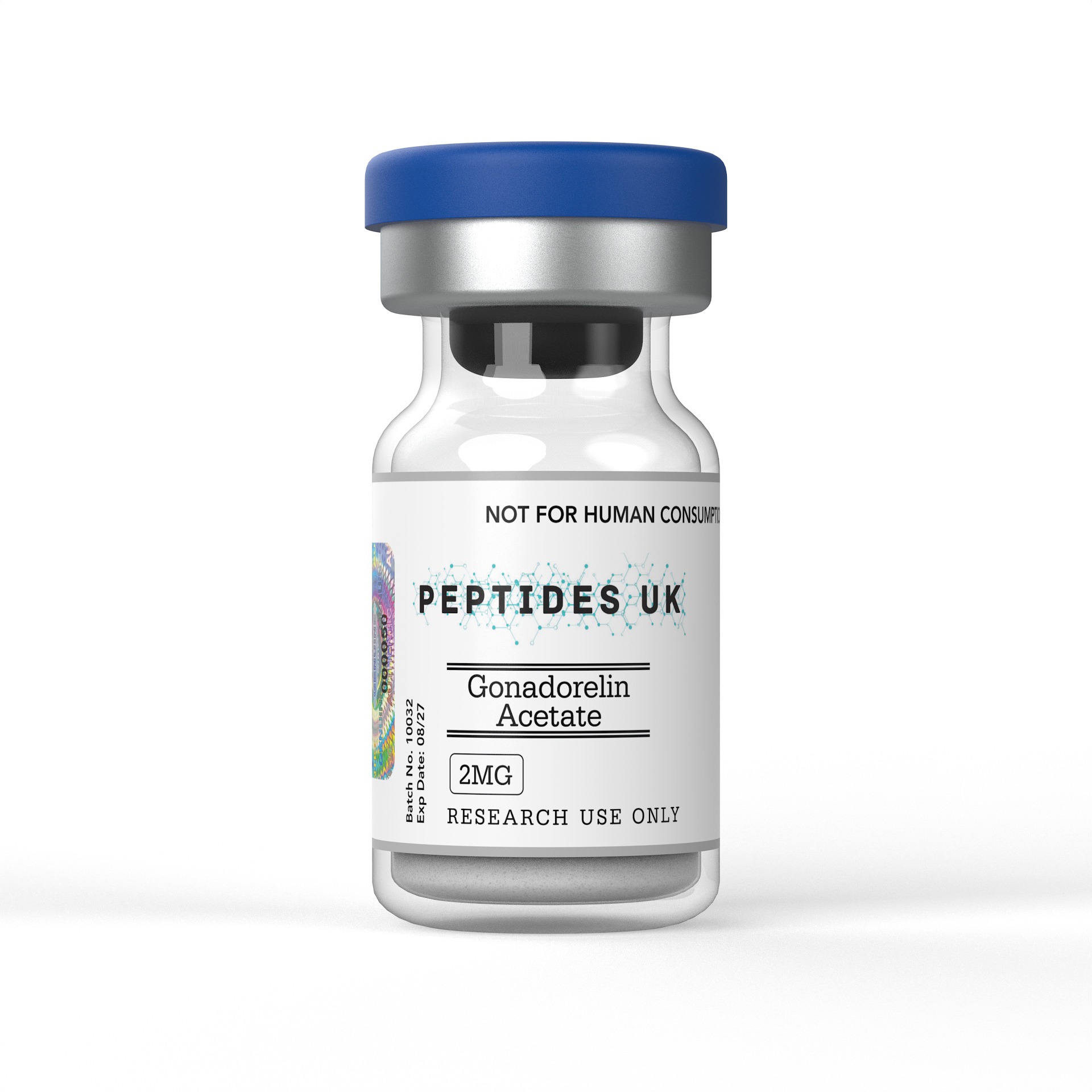
$57.50
Buy Gonadorelin Acetate Peptide in UAE – In Stock & Ready to Ship
Gonadorelin Acetate is a widely researched peptide known for its role in hypothalamic signalling and gonadotropin release studies. Each batch is independently verified at ≥99% purity and comes with a full Certificate of Analysis (COA) and HPLC testing documentation — giving UAE research teams the confidence they need when sourcing peptides for serious work.
For research use only. Not intended for human or veterinary use.

Gonadorelin Acetate is the acetate salt form of Gonadorelin — the synthetic identical sequence of native Gonadotropin-Releasing Hormone (GnRH) — and the most physiologically accurate research tool available to laboratories in the UAE for studying endogenous GnRH receptor pharmacology, pulsatile HPG axis stimulation, and hypothalamic-pituitary signalling in its most native form, offering superior aqueous solubility and reconstitution consistency compared to the free base while delivering identical GnRH receptor binding and downstream gonadotropin release responses to endogenous GnRH itself. Researchers and institutions across the UAE, Dubai, Abu Dhabi and the wider GCC can source verified, research-grade Gonadorelin Acetate with fast international dispatch and full batch documentation included.
✅ ≥99% Purity — HPLC & Mass Spectrometry Verified
✅ Batch-Specific Certificate of Analysis (CoA)
✅ Sterile Lyophilised Powder | GMP Manufactured
✅ Fast International Dispatch to UAE & GCC
Gonadorelin Acetate is the acetate counter-ion salt form of Gonadorelin — a synthetic decapeptide that is chemically and biologically identical to endogenous Gonadotropin-Releasing Hormone (GnRH), also known as Luteinizing Hormone-Releasing Hormone (LHRH). Unlike synthetic GnRH analogues such as Triptorelin, Leuprolide, or Buserelin — which incorporate amino acid substitutions to enhance receptor binding affinity and extend half-life — Gonadorelin replicates the exact ten amino acid sequence of native hypothalamic GnRH without modification, making it the only GnRH research compound that precisely mirrors endogenous hypothalamic signalling.
The acetate salt designation indicates pairing of the Gonadorelin peptide cation with an acetate counter-ion — the standard salt form used across published GnRH research literature. The acetate counter-ion dissociates completely in aqueous solution and has no effect on GnRH receptor binding or downstream HPG axis pharmacology — its role is purely to optimise the compound’s physical properties for research practicality, providing improved aqueous solubility, faster and cleaner reconstitution, and enhanced lyophilised powder stability compared to the free base form.
Gonadorelin’s native sequence means it acts identically to endogenous GnRH at the GnRH receptor (GnRHR) — a Gq/11-coupled GPCR expressed on pituitary gonadotroph cells that activates phospholipase C, IP3/DAG second messengers, and protein kinase C to stimulate LH and FSH gene expression and secretion. Its half-life of approximately 2–4 minutes mirrors that of endogenous GnRH — reflecting the rapid enzymatic degradation that makes pulsatile rather than continuous administration essential for maintaining pituitary gonadotroph sensitivity in research protocols examining physiological HPG axis stimulation.
In laboratory settings, Gonadorelin Acetate research is centred on its physiologically identical GnRH receptor activation and the downstream HPG axis responses this produces — making it uniquely valuable for research requiring precise replication of endogenous hypothalamic GnRH signalling. Research applications include:
Its structural identity with endogenous GnRH — combined with the acetate form’s superior aqueous reconstitution characteristics — makes Gonadorelin Acetate the reference GnRH compound for research requiring physiologically accurate HPG axis stimulation. All applications are for research use only.
Gonadorelin Acetate has the most extensive and foundational research profile of any GnRH compound — as the native sequence it has underpinned decades of reproductive neuroendocrinology research:
Pulsatile GnRH research using Gonadorelin established the fundamental principle that the frequency and amplitude of GnRH pulses differentially regulate LH and FSH secretion — with landmark studies demonstrating that high-frequency GnRH pulses favour LH secretion while low-frequency pulses favour FSH — providing the mechanistic foundation for understanding how the hypothalamus differentially controls gonadotropin output through a single releasing hormone delivered in varying pulse patterns. These foundational studies established Gonadorelin as the essential research tool for studying how GnRH pulse dynamics encode reproductive regulatory information.
GnRH receptor pharmacology research has comprehensively characterised Gonadorelin’s binding to GnRHR — documenting receptor binding kinetics, Gq/11 coupling, downstream PLC activation, and IP3/DAG-mediated calcium signalling in gonadotroph cells. These mechanistic studies established the complete intracellular signalling cascade through which GnRH receptor activation produces LH and FSH gene expression and secretion — providing the molecular foundation for understanding all downstream GnRH analogue pharmacology.
Pituitary desensitisation research has used Gonadorelin to characterise the receptor-level mechanisms underlying gonadotroph desensitisation — examining how continuous vs pulsatile GnRH exposure differentially affects GnRH receptor expression, internalisation, and gonadotroph sensitivity. These studies provided the mechanistic explanation for why continuous GnRH agonist exposure produces paradoxical HPG axis suppression — foundational research that informed understanding of all synthetic GnRH agonist biology.
Reproductive neuroendocrinology research has used pulsatile Gonadorelin administration as the gold standard model for physiological GnRH replacement — with studies in GnRH-deficient pre-clinical models documenting restoration of pulsatile LH and FSH secretion, gonadal steroidogenesis, and fertility parameters with appropriately pulsed Gonadorelin protocols. These studies established the physiological pulse frequency and amplitude requirements for normal gonadotropin secretion and validated pulsatile Gonadorelin as the benchmark for physiological HPG axis research.
Kisspeptin-GnRH circuit research has used Gonadorelin downstream of Kisspeptin-10 administration to characterise the GnRH neuron output following upstream Kisspeptin receptor activation — with studies examining how Kisspeptin-driven GnRH release translates to downstream LH pulses and establishing Gonadorelin’s LH-releasing potency as the reference output measure for GnRH neuron activation studies.
| Compound | Sequence | Half-Life | GnRH Receptor Action | HPG Effect | Research Profile |
|---|---|---|---|---|---|
| Gonadorelin Acetate | Native GnRH — identical | ~2–4 minutes | Pure agonist — pulsatile | Physiological stimulation | Most studied — reference |
| Triptorelin Acetate | Modified — 4 substitutions | ~3 hours | Agonist — stimulate then suppress | Stimulation then suppression | Extensively studied |
| Leuprolide Acetate | Modified — 6 substitutions | ~3 hours | Agonist — stimulate then suppress | Stimulation then suppression | Extensively studied |
| Buserelin Acetate | Modified — 2 substitutions | ~80 minutes | Agonist — stimulate then suppress | Stimulation then suppression | Well-documented |
| Cetrorelix Acetate | Antagonist analogue | ~62 hours | Direct antagonist | Immediate suppression | Well-documented |
| Nafarelin | Modified GnRH agonist | ~3 hours | Agonist — stimulate then suppress | Stimulation then suppression | Well-documented |
| Parameter | Gonadorelin Acetate | Gonadorelin Base |
|---|---|---|
| Counter-ion | Acetate | None |
| Aqueous solubility | Superior | Good |
| Reconstitution consistency | Excellent | Good |
| Lyophilised stability | Enhanced | Standard |
| GnRH receptor binding | Identical | Identical |
| HPG axis pharmacology | Identical | Identical |
| Published literature form | Primary referenced form | Secondary |
| Preferred for | Pulsatile protocols, in vitro assays | General research |
| Parameter | Detail |
|---|---|
| Type | Synthetic Native GnRH Decapeptide — Acetate Salt |
| Also Known As | GnRH Acetate, LHRH Acetate, Gonadorelin Acetate |
| Sequence | Identical to endogenous GnRH — no modifications |
| Salt Form | Acetate counter-ion |
| Primary Target | GnRH Receptor (GnRHR) on pituitary gonadotrophs |
| Intracellular Signalling | Gq/11 — PLC — IP3/DAG — PKC |
| Chain Length | 10 Amino Acids |
| Half-Life | ~2–4 minutes — mirrors endogenous GnRH |
| Purity | ≥99% |
| Verification | HPLC & Mass Spectrometry |
| Form | Lyophilised Powder |
| Solubility | Sterile water or bacteriostatic water — superior dissolution |
| Storage | -20°C, protected from light and moisture |
| Intended Use | Research use only |
Every order dispatched to the UAE and GCC includes:
Yes. We supply research-grade Gonadorelin Acetate with international dispatch to the UAE, Dubai, Abu Dhabi, Sharjah and across the GCC. All orders include full batch documentation and are packaged to maintain peptide integrity throughout transit. This compound is supplied strictly for laboratory research use only.
Gonadorelin is the only GnRH research compound that replicates the exact native hypothalamic GnRH sequence without modification — making it the most physiologically accurate GnRH receptor agonist available. Synthetic analogues like Triptorelin, Leuprolide, and Buserelin incorporate amino acid substitutions that increase receptor binding affinity and extend half-life to hours or days — useful for sustained HPG suppression research but producing pharmacological profiles that differ significantly from endogenous GnRH. Gonadorelin’s 2–4 minute half-life mirrors native GnRH exactly — making it the essential reference compound for research requiring physiological pulsatile GnRH stimulation rather than prolonged receptor engagement.
Native GnRH is released from hypothalamic neurons in discrete pulses — approximately every 60–90 minutes in humans under normal physiological conditions. This pulsatile pattern is essential for maintaining pituitary gonadotroph sensitivity and appropriate LH/FSH secretion. Research has firmly established that continuous GnRH exposure — even with native sequence Gonadorelin — produces receptor downregulation and gonadotroph desensitisation leading to HPG axis suppression. Pulsatile Gonadorelin administration replicates physiological hypothalamic GnRH output — maintaining gonadotroph sensitivity and producing sustained LH and FSH secretion. This fundamental principle makes pulse frequency and amplitude the critical experimental variables in Gonadorelin research protocols.
Gonadorelin Acetate and Kisspeptin-10 stimulate the HPG axis at different levels of the reproductive neuroendocrine hierarchy. Kisspeptin-10 acts upstream — activating GPR54 on GnRH neurons to stimulate GnRH release, making it a tool for studying hypothalamic-level regulation of the axis. Gonadorelin Acetate acts downstream of Kisspeptin — directly activating pituitary GnRH receptors to stimulate LH and FSH release, making it a tool for studying pituitary-level GnRH pharmacology. Research combining both compounds allows dissection of hypothalamic vs pituitary contributions to HPG axis responses — with Kisspeptin-10 probing the Kisspeptin-GnRH neuron circuit and Gonadorelin Acetate characterising pituitary gonadotroph responsiveness independently.
Pulsatile Gonadorelin administration has been used as the gold standard model for physiological GnRH replacement in pre-clinical GnRH-deficient models — with studies documenting restoration of pulsatile LH and FSH secretion, gonadal steroidogenesis recovery, and fertility parameter restoration with appropriately timed pulse frequencies. Research has also used variable pulse frequency protocols to examine how GnRH pulse rate differentially regulates LH vs FSH secretion — establishing the fundamental principle that pulse frequency encodes differential gonadotropin output from a single releasing hormone. These studies remain foundational references in reproductive neuroendocrinology research.
GnRH receptor desensitisation research using Gonadorelin has characterised how continuous vs pulsatile GnRH exposure differentially affects GnRH receptor expression, internalisation, and downstream signalling in pituitary gonadotrophs. Studies established that receptor-level desensitisation — rather than post-receptor signalling changes — is the primary mechanism through which continuous GnRH engagement produces gonadotroph insensitivity. This foundational research provided the mechanistic explanation for the paradoxical HPG suppression produced by continuous synthetic GnRH agonist administration and informed the entire field of GnRH agonist pharmacology — making it among the most cited mechanistic findings in reproductive endocrinology.
Allow the vial to reach room temperature before opening. Add sterile or bacteriostatic water slowly down the vial wall and swirl gently without shaking. The acetate salt form dissolves rapidly and cleanly in aqueous media — prepare at your protocol’s required concentration. For pulsatile research protocols requiring repeated precise dosing, prepare stock solutions and aliquot carefully to ensure concentration consistency across pulse administrations. Store aliquots at -80°C to minimise degradation between experimental sessions. Given Gonadorelin’s short half-life in biological systems, handle reconstituted solutions promptly and minimise exposure to elevated temperatures.
Orders are dispatched promptly via tracked international courier. Delivery to the UAE typically takes 3–5 working days, with packaging designed to maintain peptide stability and integrity throughout transit.
Gonadorelin Acetate is supplied exclusively for legitimate scientific research conducted within licensed laboratory environments. This product is not intended for human consumption, self-administration, or any therapeutic or veterinary application. It must be handled solely by qualified researchers in compliance with applicable UAE regulations and institutional ethics guidelines. By purchasing, you confirm this compound will be used exclusively for approved in vitro or pre-clinical research purposes.
Receive News
