
COMING SOON Awaiting UAE License
PRODUCTS SOLD ON PEPTIDESLABUAE.COM ARE FOR RESEARCH PURPOSES ONLY AND ARE NOT FOR HUMAN OR VETERINARY USE.
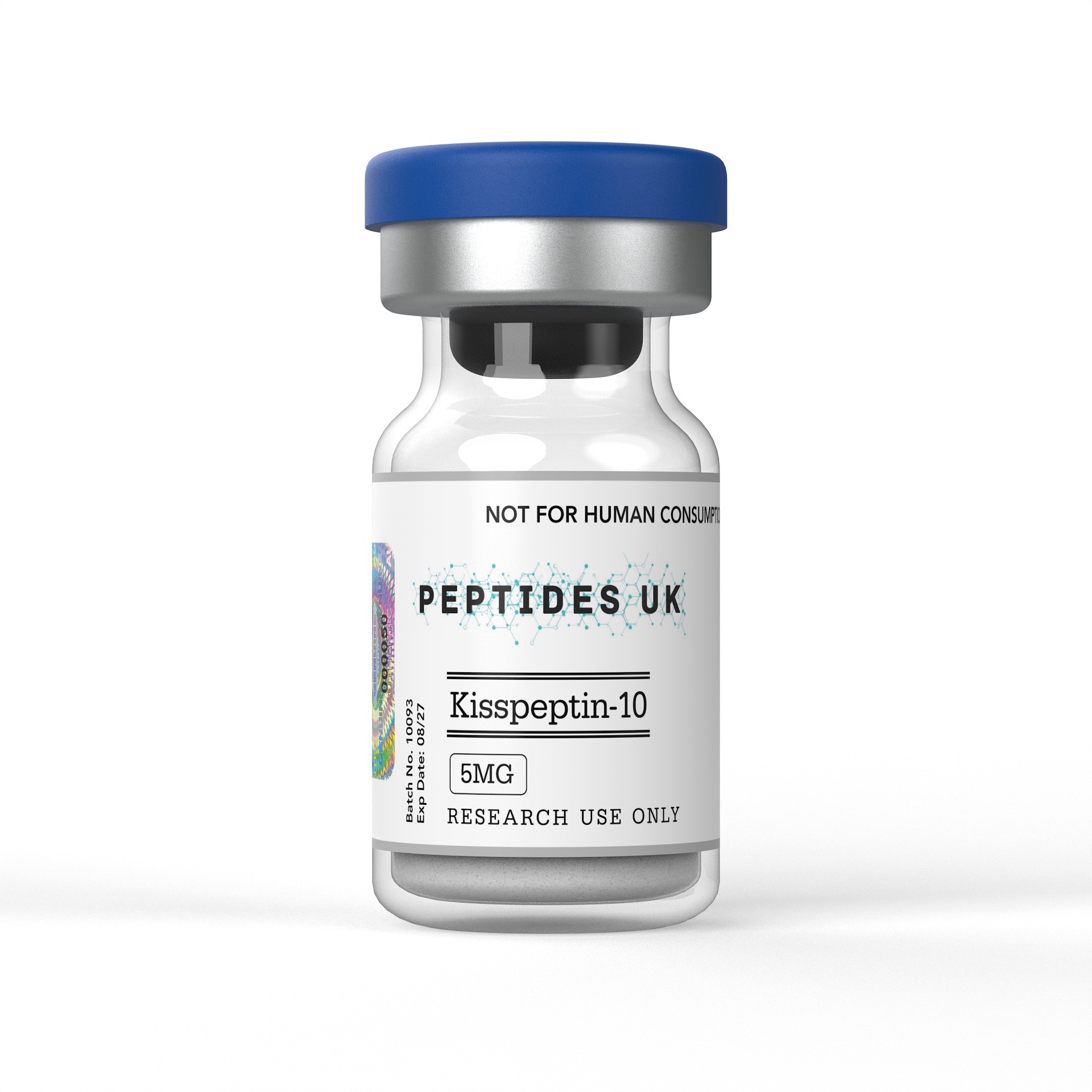
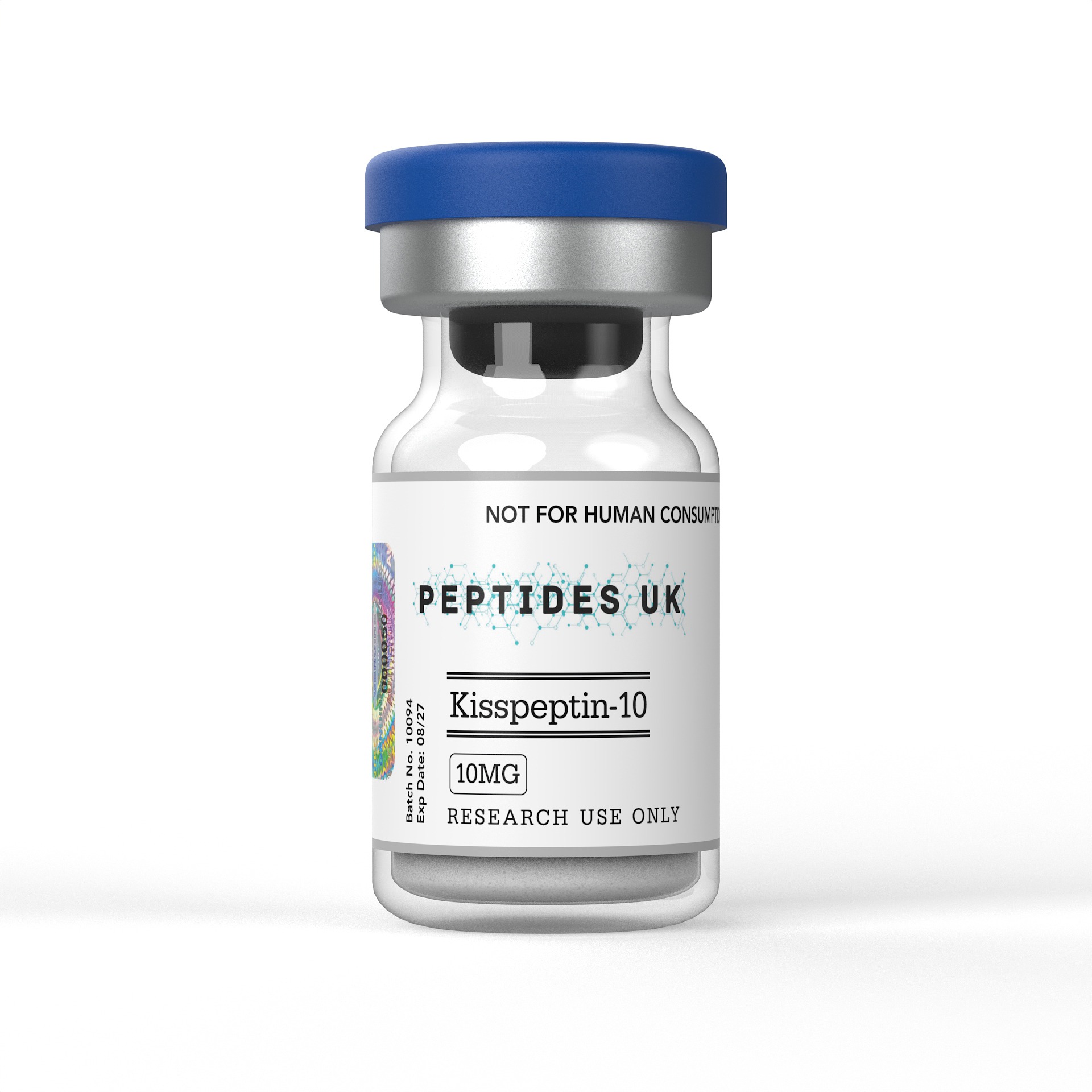
$27.00 – $49.50Price range: $27.00 through $49.50
Buy Kisspeptin-10 Peptide in UAE – In Stock & Ready to Ship
Kisspeptin-10 is a widely researched peptide known for its role in reproductive hormone regulation and gonadotropin releasing studies. Each batch is independently verified at ≥99% purity and comes with a full Certificate of Analysis (COA) and HPLC testing documentation — giving UAE research teams the confidence they need when sourcing peptides for serious work.
For research use only. Not intended for human or veterinary use.


Kisspeptin-10 is one of the most critically studied neuropeptides in reproductive endocrinology and HPG axis research available to laboratories in the UAE — a ten amino acid C-terminal fragment of the Kiss1 gene product that acts as the most potent endogenous activator of GnRH neuron firing through GPR54 receptor activation, functioning as the master upstream regulator of the entire hypothalamic-pituitary-gonadal axis and making it an indispensable research tool for studying reproductive neuroendocrinology, puberty onset mechanisms, sex hormone feedback regulation, and GnRH pulse generation biology. Researchers and institutions across the UAE, Dubai, Abu Dhabi and the wider GCC can source verified, research-grade Kisspeptin-10 with fast international dispatch and full batch documentation included.
✅ ≥99% Purity — HPLC & Mass Spectrometry Verified
✅ Batch-Specific Certificate of Analysis (CoA)
✅ Sterile Lyophilised Powder | GMP Manufactured
✅ Fast International Dispatch to UAE & GCC
Kisspeptin-10 is the biologically active ten amino acid C-terminal fragment of Kisspeptin — the peptide product of the Kiss1 gene, originally identified as a metastasis suppressor before its pivotal role in reproductive neuroendocrinology was discovered. The full-length Kiss1 gene product is a 145 amino acid precursor protein that undergoes proteolytic processing to generate several biologically active fragments of varying lengths — Kisspeptin-54, Kisspeptin-14, Kisspeptin-13, and Kisspeptin-10 — all of which share the same C-terminal decapeptide sequence that constitutes the receptor-binding domain. Kisspeptin-10 (KP-10) represents this minimal active fragment and is the most commonly used form in research due to its small size, well-defined sequence, and full retention of GPR54 receptor binding and activation activity.
Kisspeptin-10 acts exclusively through GPR54 — also known as Kiss1R — a G-protein coupled receptor coupled primarily to Gq/11, activating phospholipase C and generating IP3 and DAG second messengers. GPR54 is expressed prominently on GnRH neurons in the hypothalamus — particularly in the arcuate nucleus and anteroventral periventricular nucleus — where Kisspeptin neuron projections form direct synaptic contacts. Kisspeptin-10 binding to GPR54 on GnRH neurons produces a powerful depolarising input that dramatically increases GnRH neuron firing frequency and GnRH pulse amplitude — making the Kisspeptin-GnRH neuronal circuit the primary upstream gate through which the brain regulates the entire reproductive endocrine axis.
The discovery of GPR54 loss-of-function mutations causing hypogonadotropic hypogonadism and failure of puberty onset in both humans and mice — and the mirror-image phenotype of precocious puberty associated with activating GPR54 mutations — established Kisspeptin signalling as the essential trigger for reproductive axis activation and the key mediator through which nutritional status, stress, photoperiod, and sex hormone feedback signals are integrated into GnRH pulse regulation.
In laboratory settings, Kisspeptin-10 research is centred on its GPR54-mediated activation of GnRH neurons and the downstream HPG axis consequences this produces in experimental models. Research applications include:
Its status as the most potent endogenous activator of GnRH neuron firing — and the essential upstream regulator of the entire HPG axis — makes Kisspeptin-10 the foundational research tool for studying reproductive neuroendocrinology from its most proximal hypothalamic control point. All applications are for research use only.
Kisspeptin-10 has developed one of the most rapidly advanced and fundamentally important research profiles in reproductive neuroendocrinology:
GPR54 discovery research produced the foundational findings that established Kisspeptin as the essential HPG axis regulator — with studies in humans and mice carrying loss-of-function GPR54 mutations documenting complete failure of puberty onset and hypogonadotropic hypogonadism, while activating mutations produced precocious puberty. These genetic studies established GPR54 as a non-redundant requirement for reproductive axis activation and launched an entirely new research field examining how Kisspeptin neurons gate GnRH pulse generation.
GnRH neuron activation research has comprehensively characterised Kisspeptin-10’s electrophysiological effects on GnRH neurons — with studies documenting dramatic increases in GnRH neuron action potential firing, increased GnRH pulse amplitude, and downstream LH surges following Kisspeptin-10 administration in pre-clinical models. These studies established the mechanistic basis for Kisspeptin’s role as the primary excitatory input to GnRH neurons and provided the research framework for understanding how upstream Kisspeptin signalling drives the pulsatile GnRH output essential for normal gonadotropin secretion.
Sex hormone feedback research has used Kisspeptin-10 to examine how oestrogen and testosterone negative feedback is mediated at the hypothalamic level — with studies establishing that steroid hormone feedback acts primarily through modulation of Kisspeptin neuron activity rather than directly on GnRH neurons themselves. Research has characterised differential oestrogen receptor expression between arcuate nucleus and anteroventral periventricular nucleus Kisspeptin populations — establishing the two populations as mediating negative feedback and positive feedback (LH surge triggering) respectively, providing a mechanistic architecture for understanding sex hormone regulation of GnRH pulsatility.
KNDy neuron research has characterised the arcuate nucleus Kisspeptin neurons as co-expressing Neurokinin B (NKB) and Dynorphin alongside Kisspeptin — forming the KNDy neuron population that functions as the hypothalamic GnRH pulse generator. Studies have mapped the auto-regulatory circuit through which NKB activates and Dynorphin inhibits KNDy neurons synchronously — producing the coordinated bursting activity that drives each GnRH pulse. Kisspeptin-10 has been an essential research tool for probing how Kisspeptin output from this circuit translates to GnRH neuron firing and downstream LH pulse generation.
Metabolic regulation research has examined how energy status signals — particularly leptin — influence Kisspeptin neuron activity to gate reproductive function according to nutritional availability. Studies have documented leptin receptor expression on Kisspeptin neurons and characterised how leptin deficiency suppresses Kisspeptin signalling and reproductive axis activity — providing a mechanistic research framework for understanding how metabolic state regulates fertility through the Kisspeptin-GnRH neuronal circuit.
| Compound | Type | Primary Target | HPG Effect | Research Focus | Research Profile |
|---|---|---|---|---|---|
| Kisspeptin-10 | Decapeptide — Kiss1 C-terminal | GPR54 on GnRH neurons | Potent stimulation | HPG axis regulation, puberty, GnRH pulsatility | Extensively studied |
| Kisspeptin-54 | 54 AA — full processed form | GPR54 | Potent stimulation | Comparative KP fragment pharmacology | Well-documented |
| Senktide | NKB analogue | NK3 receptor | GnRH stimulation via KNDy | KNDy neuron biology, NKB pathway | Well-documented |
| Gonadorelin | Native GnRH | GnRHR | Direct HPG stimulation | Acute GnRH pharmacology | Well-documented |
| Triptorelin | GnRH agonist | GnRHR | Stimulate then suppress | HPG suppression research | Extensively studied |
| Dynorphin A | Endogenous opioid | KOR | GnRH inhibition via KNDy | KNDy pulse inhibition research | Well-documented |
| Parameter | Detail |
|---|---|
| Type | Synthetic Decapeptide Neuropeptide |
| Gene Origin | Kiss1 gene C-terminal fragment |
| Also Known As | KP-10, Metastin (10 AA fragment) |
| Primary Target | GPR54 / Kiss1R on GnRH neurons |
| Intracellular Signalling | Gq/11 — PLC — IP3/DAG |
| Chain Length | 10 Amino Acids |
| Purity | ≥99% |
| Verification | HPLC & Mass Spectrometry |
| Form | Lyophilised Powder |
| Solubility | Sterile water or suitable laboratory buffer |
| Storage | -20°C, protected from light and moisture |
| Intended Use | Research use only |
Every order dispatched to the UAE and GCC includes:
Yes. We supply research-grade Kisspeptin-10 with international dispatch to the UAE, Dubai, Abu Dhabi, Sharjah and across the GCC. All orders include full batch documentation and are packaged to maintain peptide integrity throughout transit. This compound is supplied strictly for laboratory research use only.
Both Kisspeptin-10 and Kisspeptin-54 are biologically active fragments derived from the same Kiss1 gene precursor protein and both activate GPR54 through the shared C-terminal decapeptide sequence. Their primary research distinction is pharmacokinetic — Kisspeptin-54 has a longer half-life in circulation due to its greater size providing more protection against enzymatic degradation, while Kisspeptin-10 is cleared more rapidly. Research comparing the two fragments examines how differences in circulating half-life and clearance influence the duration and amplitude of GPR54 activation and downstream GnRH and LH responses — making both fragments useful but complementary research tools for studying GPR54 pharmacology and HPG axis dynamics.
Research has established that Kisspeptin neurons in the hypothalamus receive and integrate virtually all the major physiological signals that regulate reproductive function — sex hormone feedback, metabolic status through leptin, stress signals, photoperiod information, and circadian rhythms — and translate these diverse inputs into modulation of GnRH pulse frequency and amplitude through GPR54 activation on GnRH neurons. Since GnRH pulsatility drives the entire downstream HPG axis — pituitary LH and FSH secretion and gonadal sex hormone production — Kisspeptin neurons function as the essential hypothalamic hub through which the reproductive axis is regulated. No other single neuronal population has been shown to be equally essential for HPG axis function.
KNDy neurons are a population of arcuate nucleus neurons that co-express three neuropeptides — Kisspeptin, Neurokinin B (NKB), and Dynorphin — and function as the hypothalamic GnRH pulse generator. Research has characterised an auto-regulatory circuit within KNDy neurons where NKB acts as an auto-excitatory signal activating neighbouring KNDy neurons via NK3 receptors, while Dynorphin acts as an auto-inhibitory signal terminating the burst of activity. The synchronised bursting this circuit produces drives coordinated Kisspeptin release onto GnRH neurons — generating each discrete GnRH pulse. Kisspeptin-10 is an essential research tool for probing how Kisspeptin output from KNDy neurons activates GnRH neurons and for studying the downstream consequences of each component of the KNDy pulse generator circuit.
The discovery that loss-of-function GPR54 mutations cause complete failure of puberty onset — with absence of LH and FSH secretion and non-development of secondary sexual characteristics — established Kisspeptin signalling as the essential trigger for reproductive axis activation at puberty. Research has examined what drives the increase in Kisspeptin neuron activity at puberty onset — with studies implicating changes in sex steroid feedback sensitivity, metabolic signals reflecting sufficient energy reserves, and epigenetic changes in Kiss1 gene expression. Kisspeptin-10 has been used extensively in pre-clinical puberty research to probe GPR54 sensitivity at different developmental stages and characterise the maturation of GnRH neuron responsiveness to Kisspeptin input.
Studies have characterised the mechanistic link between metabolic status and reproductive function through the Kisspeptin system — with research documenting leptin receptor expression on Kisspeptin neurons and showing that leptin deficiency suppresses Kisspeptin neuron activity and Kiss1 gene expression, reducing GnRH pulsatility and impairing reproductive axis function. This research has provided a mechanistic framework for understanding how undernutrition, excessive exercise, and metabolic stress suppress reproductive function — establishing Kisspeptin neurons as the hypothalamic metabolic sensor that gates reproductive axis activity according to available energy stores.
Allow the vial to reach room temperature before opening. Add sterile water or appropriate laboratory buffer slowly down the vial wall and swirl gently without shaking. Prepare at your protocol’s required concentration. Note that Kisspeptin-10 has a relatively short half-life in biological systems due to enzymatic degradation — prepare solutions fresh for each experimental session where possible and aliquot promptly for storage at -80°C to minimise freeze-thaw degradation and maintain peptide integrity.
Orders are dispatched promptly via tracked international courier. Delivery to the UAE typically takes 3–5 working days, with packaging designed to maintain peptide stability and integrity throughout transit.
Kisspeptin-10 is supplied exclusively for legitimate scientific research conducted within licensed laboratory environments. This product is not intended for human consumption, self-administration, or any therapeutic or veterinary application. It must be handled solely by qualified researchers in compliance with applicable UAE regulations and institutional ethics guidelines. By purchasing, you confirm this compound will be used exclusively for approved in vitro or pre-clinical research purposes.
Receive News
