
COMING SOON Awaiting UAE License
PRODUCTS SOLD ON PEPTIDESLABUAE.COM ARE FOR RESEARCH PURPOSES ONLY AND ARE NOT FOR HUMAN OR VETERINARY USE.
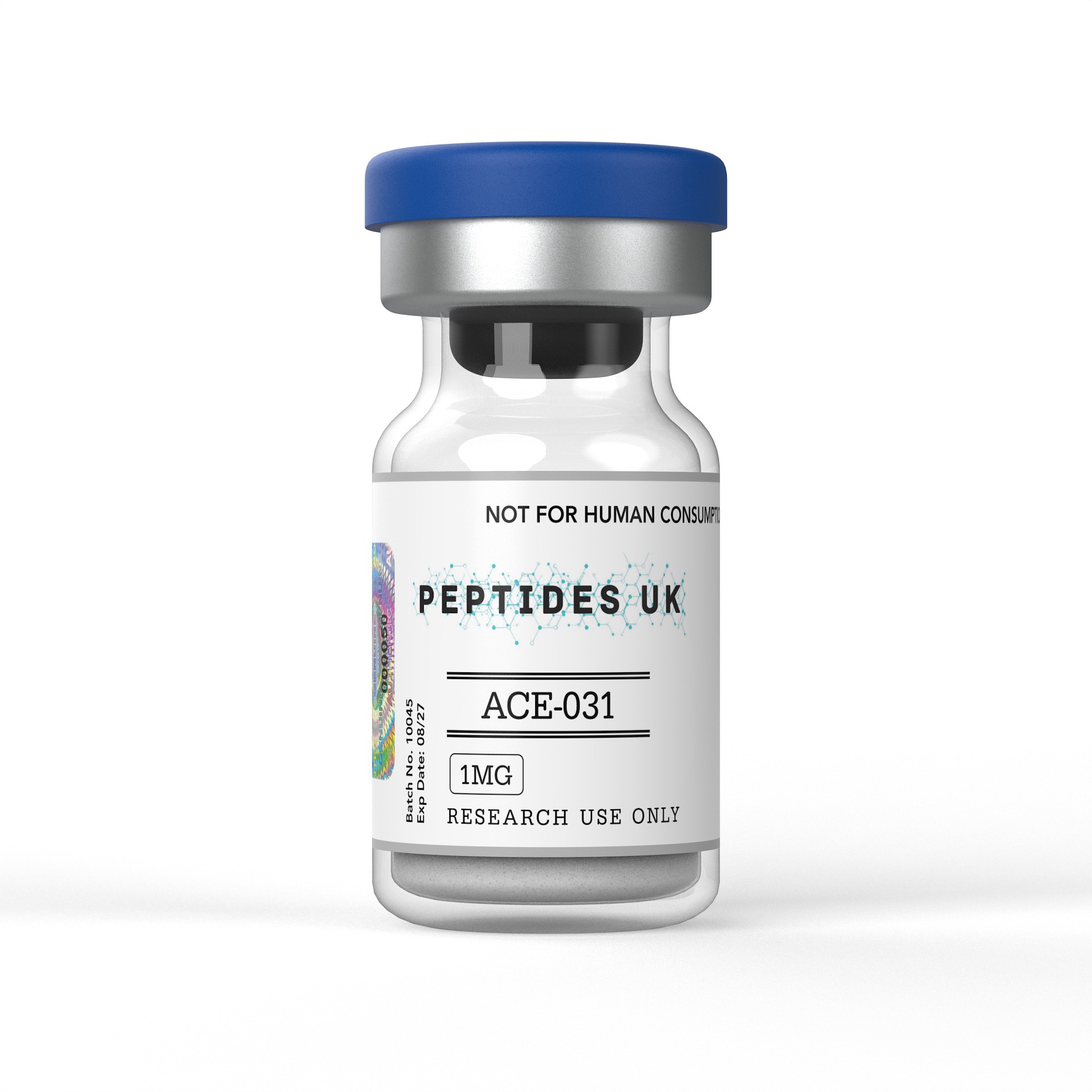
$107.00
Buy ACE-031 Peptide in UAE – In Stock & Ready to Ship
ACE-031 is a widely researched peptide known for its role in muscle mass regulation and myostatin pathway inhibition studies. Each batch is independently verified at ≥99% purity and comes with a full Certificate of Analysis (COA) and HPLC testing documentation — giving UAE research teams the confidence they need when sourcing peptides for serious work.
For research use only. Not intended for human or veterinary use.

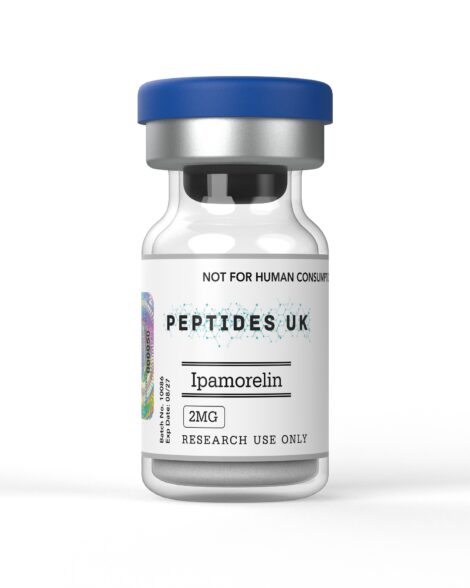
ACE-031 is one of the most potently studied myostatin and activin pathway inhibitors available to laboratories in the UAE — a soluble fusion protein combining the extracellular domain of Activin Receptor Type IIB (ActRIIB) with a human IgG1 Fc region that acts as a decoy receptor, sequestering myostatin, activin, GDF-11, and other TGF-β superfamily ligands before they can engage endogenous muscle receptors, making it the most broadly acting and potent research tool for studying ActRIIB ligand biology, muscle mass regulation, and TGF-β superfamily inhibition available to research institutions across the UAE and GCC. Researchers and institutions across the UAE, Dubai, Abu Dhabi and the wider GCC can source verified, research-grade ACE-031 with fast international dispatch and full batch documentation included.
✅ ≥99% Purity — HPLC & Mass Spectrometry Verified
✅ Batch-Specific Certificate of Analysis (CoA)
✅ Sterile Lyophilised Powder | GMP Manufactured
✅ Fast International Dispatch to UAE & GCC
ACE-031 is a soluble fusion protein — also described in research literature as a ligand trap — constructed by fusing the extracellular ligand-binding domain of Activin Receptor Type IIB (ActRIIB) to the Fc region of human IgG1. This architecture creates a circulating decoy receptor that competes with endogenous cell-surface ActRIIB for binding to its natural ligands — sequestering them in the circulation before they can engage muscle cell receptors and activate the SMAD2/3 signalling cascade that suppresses muscle growth.
The critical research distinction between ACE-031 and more selective Myostatin inhibitors is its broad ligand capture profile. Endogenous ActRIIB binds multiple TGF-β superfamily members beyond Myostatin alone — including Activin A, Activin B, GDF-11, GDF-8, BMP-9, and BMP-10. ACE-031, presenting the same extracellular binding domain as the natural receptor, captures this full spectrum of ActRIIB ligands simultaneously. This broad sequestration produces more pronounced muscle mass increases in pre-clinical models than selective Myostatin inhibition alone — and also makes ACE-031 an important research tool for studying the combined biological contributions of the full ActRIIB ligand family to muscle mass regulation, as opposed to Myostatin’s individual contribution.
The IgG1 Fc fusion component serves multiple research-practical functions — it dramatically extends the half-life of the ActRIIB domain beyond what the soluble extracellular domain alone would achieve, enables homodimerisation that increases avidity for ligand binding, and allows detection and quantification using standard anti-Fc immunological reagents. ACE-031 was developed by Acceleron Pharma and has been studied in pre-clinical models and early clinical research in the context of muscle wasting conditions — generating a well-characterised research profile that makes it a highly referenced tool in TGF-β superfamily and muscle biology research.
In laboratory settings, ACE-031 research is centred on its broad ActRIIB ligand sequestration and the downstream consequences of simultaneously blocking Myostatin, Activin, GDF-11, and related TGF-β family members in muscle and metabolic tissue models. Research applications include:
Its pan-ActRIIB ligand sequestration profile — capturing the full spectrum of muscle-inhibiting TGF-β superfamily members simultaneously — makes ACE-031 the most potent and broadly acting research tool for studying ActRIIB pathway biology and its role in muscle mass regulation. All applications are for research use only.
ACE-031 has developed one of the most compelling and extensively referenced research profiles among ActRIIB pathway inhibitors in muscle biology science:
Pre-clinical muscle mass research has documented ACE-031’s extraordinary potency as a muscle hypertrophy-inducing agent — with studies in rodent models consistently documenting substantially greater skeletal muscle mass increases compared to selective Myostatin inhibition alone, providing compelling evidence that ActRIIB ligands beyond Myostatin — particularly Activin A — make significant independent contributions to endogenous muscle mass suppression. These findings established ACE-031 as both a research tool and a biological probe for dissecting the relative contributions of different ActRIIB ligands to muscle mass regulation.
Activin research emerging from ACE-031 studies has significantly advanced understanding of Activin A’s role as a muscle mass regulator — with studies demonstrating that Activin A is a potent ActRIIB-signalling muscle inhibitor in its own right, and that its simultaneous blockade alongside Myostatin by ACE-031 contributes substantially to the compound’s superior muscle mass effects compared to Myostatin-selective inhibitors. These findings have reframed muscle mass research from a Myostatin-centric to a broader ActRIIB ligand family perspective.
Muscle wasting and cachexia research has examined ACE-031 in pre-clinical models of cancer cachexia, muscular dystrophy, and other muscle wasting conditions — with studies documenting significant attenuation of muscle loss and improvements in muscle mass and functional parameters under ActRIIB ligand blockade. These findings have established ACE-031 as a highly referenced research tool for studying how ActRIIB pathway inhibition influences the molecular drivers of pathological muscle wasting.
Bone biology research has emerged as an important secondary finding area from ACE-031 studies — with research documenting effects on bone density parameters in pre-clinical models, attributed to sequestration of BMP-9 and BMP-10 which are also ActRIIB ligands involved in bone remodelling. These findings have revealed that broad ActRIIB ligand blockade produces biological effects beyond muscle tissue and have informed research into the full physiological scope of ActRIIB ligand biology.
Early clinical research with ACE-031 in healthy volunteers and patients with Duchenne muscular dystrophy documented significant increases in lean mass and reductions in fat mass alongside bone-related biomarker changes — providing translational data that has further established ACE-031 as one of the most referenced compounds in the muscle biology and neuromuscular disease research literature.
Erythropoiesis research has examined ACE-031’s effects on red blood cell production — with studies documenting increases in haemoglobin and haematocrit parameters under ActRIIB ligand blockade, attributed to sequestration of Activin pathway members that normally suppress erythroid progenitor differentiation. These findings have revealed an unexpected connection between ActRIIB ligand biology and erythropoiesis regulation — expanding ACE-031’s research relevance into haematological biology.
| Compound | Type | Ligand Target | Muscle Effect | Selectivity | Research Profile |
|---|---|---|---|---|---|
| ACE-031 | ActRIIB-Fc fusion / ligand trap | Pan-ActRIIB — Myostatin, Activin, GDF-11, BMP-9/10 | Most potent — broad blockade | Broad | Extensively studied |
| ACE-011 (Sotatercept) | ActRIIA-Fc fusion / ligand trap | Pan-ActRIIA ligands | Moderate muscle | Broad — haematology focused | Well-documented |
| ACE-2494 | ActRIIB-Fc variant | Pan-ActRIIB | Potent | Broad | Growing |
| Anti-Myostatin antibody | Monoclonal antibody | Myostatin selective | Strong | High — Myostatin only | Well-documented |
| Follistatin | Endogenous antagonist | Myostatin + Activin | Strong | Myostatin + Activin | Extensively studied |
| GDF-8 (Myostatin) | TGF-β ligand | ActRIIB agonist | Inhibits growth | N/A — reference ligand | Extensively studied |
| Parameter | Detail |
|---|---|
| Type | Soluble Fusion Protein — Ligand Trap |
| Architecture | ActRIIB extracellular domain + human IgG1 Fc |
| Ligand Targets | Myostatin, Activin A/B, GDF-11, BMP-9, BMP-10 |
| Receptor Blocked | Endogenous cell-surface ActRIIB |
| Intracellular Pathway Blocked | SMAD2/3 signalling |
| Purity | ≥99% |
| Verification | HPLC & Mass Spectrometry |
| Form | Lyophilised Powder |
| Solubility | Sterile water or suitable laboratory buffer |
| Storage | -20°C, protected from light and moisture |
| Intended Use | Research use only |
Every order dispatched to the UAE and GCC includes:
Yes. We supply research-grade ACE-031 with international dispatch to the UAE, Dubai, Abu Dhabi, Sharjah and across the GCC. All orders include full batch documentation and are packaged to maintain protein integrity throughout transit. This compound is supplied strictly for laboratory research use only.
Selective Myostatin inhibitors — including anti-Myostatin neutralising antibodies — target only GDF-8, leaving other ActRIIB ligands including Activin A, GDF-11, and BMPs free to engage endogenous receptors. ACE-031 captures the full spectrum of ActRIIB ligands simultaneously by presenting a soluble decoy receptor that competes with endogenous ActRIIB for all its natural ligands. Pre-clinical research has documented substantially greater muscle mass increases with ACE-031 compared to selective Myostatin inhibition — establishing that Activin A and other ActRIIB ligands make significant independent contributions to endogenous muscle suppression. This comparison has made ACE-031 vs selective inhibitor studies a central research approach for dissecting individual ActRIIB ligand contributions to muscle biology.
The IgG1 Fc fusion serves several important research functions. It dramatically extends ACE-031’s half-life through FcRn-mediated recycling — enabling sustained ActRIIB ligand blockade over days to weeks rather than hours. It promotes homodimerisation of the ActRIIB extracellular domains, increasing avidity for ligand binding. It enables straightforward quantification using standard anti-human IgG reagents in research assays. And it produces a molecular weight and pharmacokinetic profile similar to a monoclonal antibody — making ACE-031 suitable for in vivo research protocols requiring prolonged, consistent ligand trap activity.
ACE-031’s superior muscle mass effects compared to Myostatin-selective inhibitors provided the research evidence that repositioned Activin A as a major independent contributor to endogenous muscle mass suppression — not merely a secondary ActRIIB ligand. Studies comparing ACE-031 with selective Myostatin blockade, selective Activin blockade, and combined blockade have quantified the relative contributions of each ligand to total ActRIIB-mediated muscle suppression — establishing that a complete picture of muscle mass regulation requires considering the full ActRIIB ligand family rather than Myostatin alone.
Research has documented significant effects on bone density parameters and bone remodelling biomarkers in both pre-clinical and early clinical ACE-031 studies — attributed to sequestration of BMP-9 and BMP-10, which are ActRIIB ligands with roles in bone remodelling and vascular biology. These bone effects represent an important secondary biological consequence of broad ActRIIB ligand blockade and have informed research into the full physiological scope of ActRIIB pathway biology beyond skeletal muscle — revealing that the ActRIIB ligand family regulates bone homeostasis alongside muscle mass.
Studies have documented increases in haemoglobin, haematocrit, and red blood cell parameters following ACE-031 administration in both pre-clinical and early clinical research — attributed to sequestration of Activin pathway members that normally suppress erythroid progenitor cell differentiation in bone marrow. This erythropoietic effect has expanded ACE-031’s research relevance into haematological biology and has informed the development of related ActRIIA-targeting compounds — particularly Sotatercept (ACE-011) — for haematological research applications, demonstrating how ActRIIB and ActRIIA ligand trap approaches can be directed toward different primary research applications.
Allow the vial to reach room temperature before opening. Add sterile water or appropriate laboratory buffer slowly down the vial wall and swirl gently without shaking. As a fusion protein, ACE-031 should be handled with care to avoid denaturation — do not vortex or shake vigorously. Prepare at your protocol’s required concentration. Aliquot and store at -80°C to minimise freeze-thaw degradation. Avoid repeated freeze-thaw cycles as these can compromise fusion protein integrity and reduce biological activity.
Orders are dispatched promptly via tracked international courier. Delivery to the UAE typically takes 3–5 working days, with packaging designed to maintain protein stability and integrity throughout transit.
ACE-031 is supplied exclusively for legitimate scientific research conducted within licensed laboratory environments. This product is not intended for human consumption, self-administration, or any therapeutic or veterinary application. It must be handled solely by qualified researchers in compliance with applicable UAE regulations and institutional ethics guidelines. By purchasing, you confirm this compound will be used exclusively for approved in vitro or pre-clinical research purposes.

Receive News
