COMING SOON Awaiting UAE License
PRODUCTS SOLD ON PEPTIDESLABUAE.COM ARE FOR RESEARCH PURPOSES ONLY AND ARE NOT FOR HUMAN OR VETERINARY USE.
$35.00 – $126.00Price range: $35.00 through $126.00
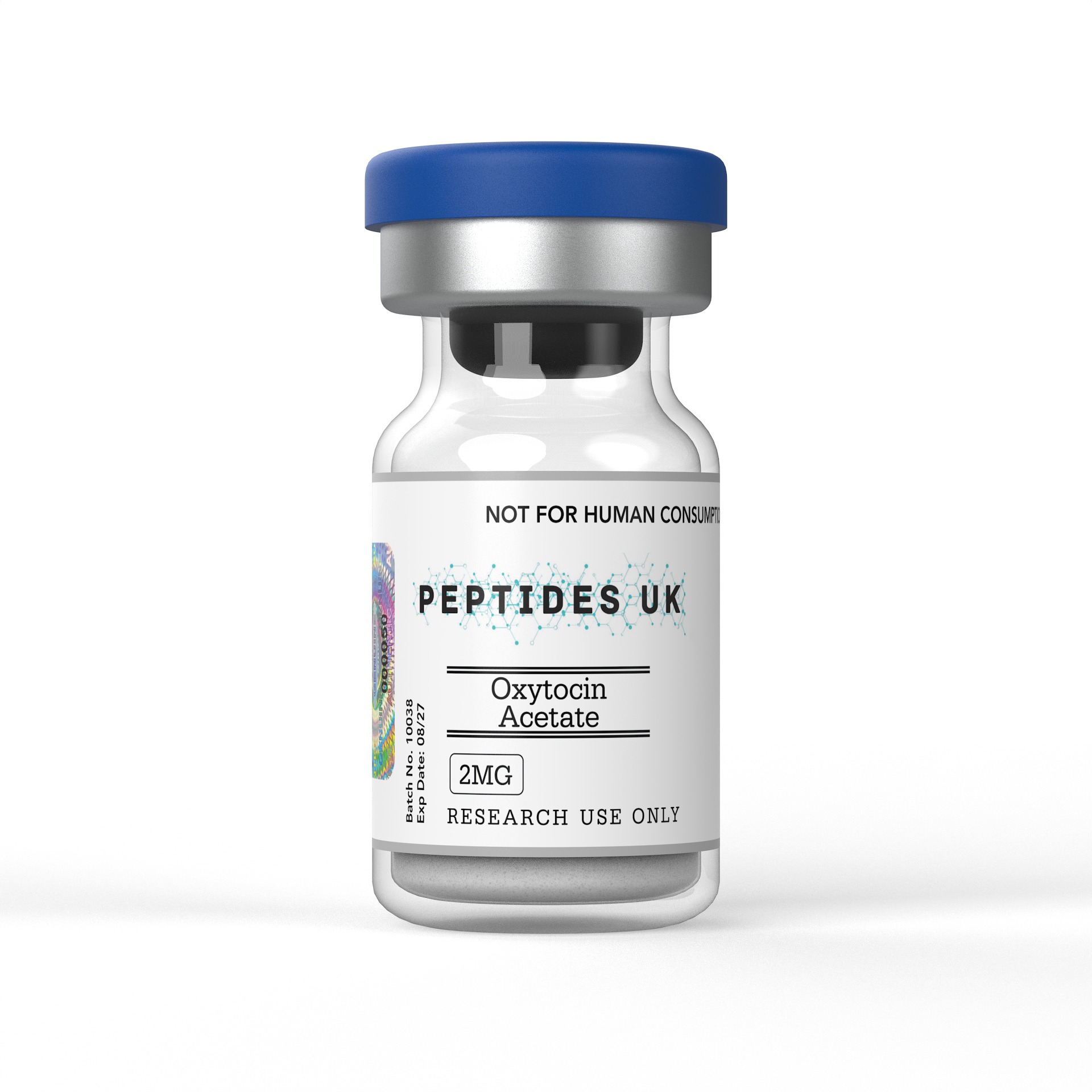
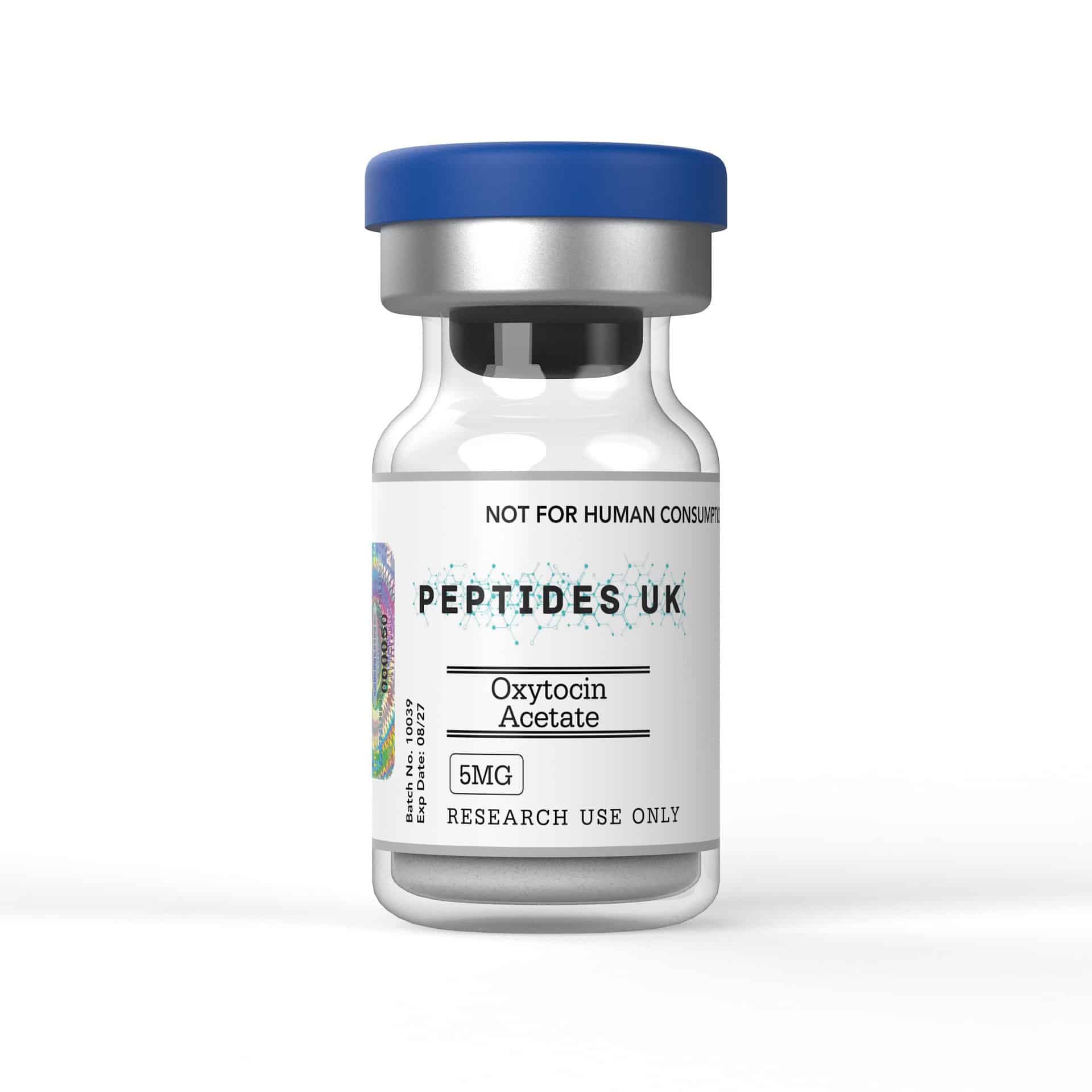
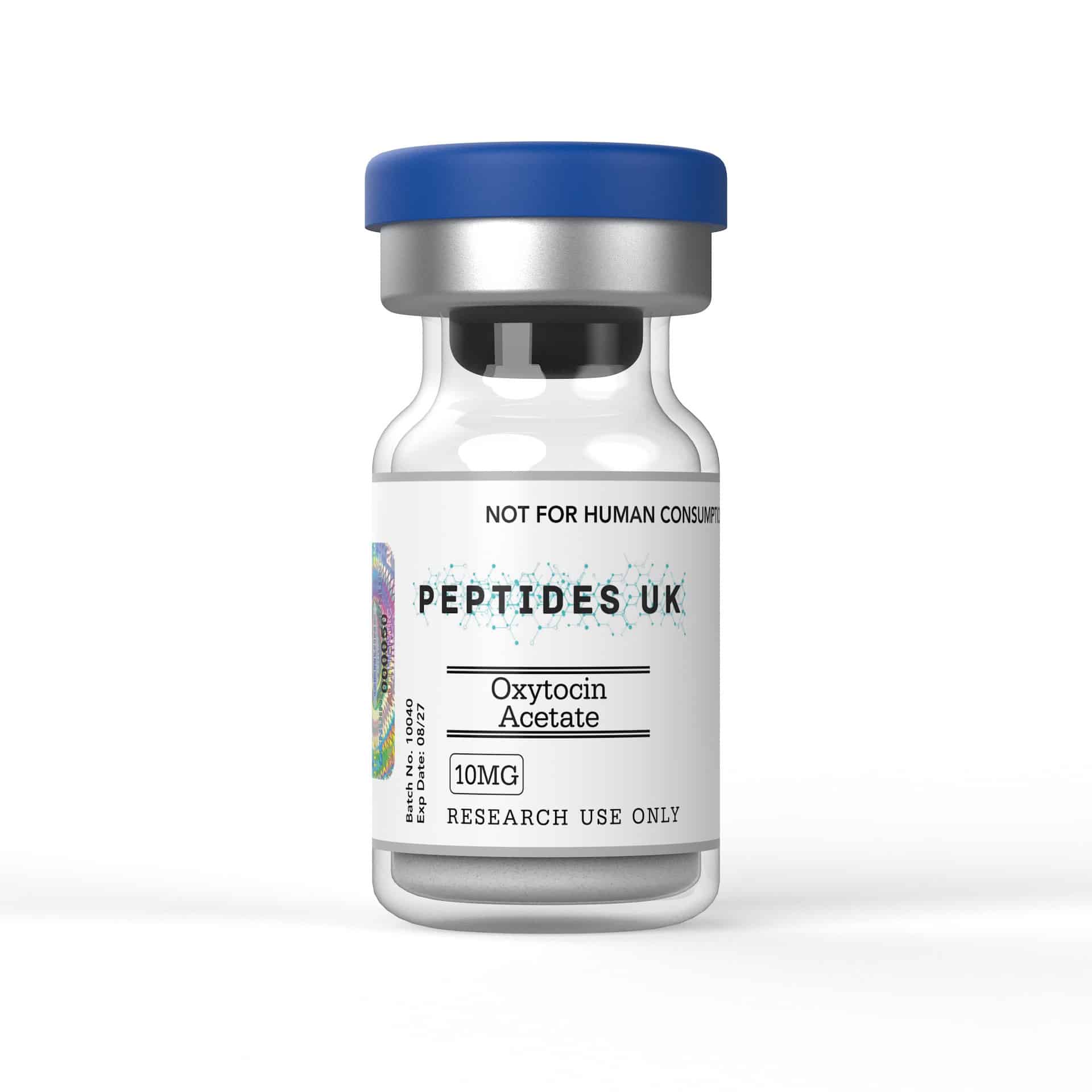
Buy Oxytocin Peptide in UAE – In Stock & Ready to Ship
Oxytocin is a widely researched peptide known for its role in social bonding, neuromodulation and hormonal signalling studies. Each batch is independently verified at ≥99% purity and comes with a full Certificate of Analysis (COA) and HPLC testing documentation — giving UAE research teams the confidence they need when sourcing peptides for serious work.
For research use only. Not intended for human or veterinary use.


Oxytocin is one of the most extensively studied neuropeptide hormones in behavioural neuroscience and neuroendocrinology research available to laboratories in the UAE — a nine amino acid cyclic peptide produced in the hypothalamus that acts as both a peripheral hormone and a central neurotransmitter, regulating an remarkably broad range of biological processes including social behaviour, bonding, stress response, pain modulation, and reproductive physiology, making it one of the most multifunctional and widely referenced neuropeptides in contemporary neuroscience and endocrinology research. Researchers and institutions across the UAE, Dubai, Abu Dhabi and the wider GCC can source verified, research-grade Oxytocin with fast international dispatch and full batch documentation included.
✅ ≥99% Purity — HPLC & Mass Spectrometry Verified
✅ Batch-Specific Certificate of Analysis (CoA)
✅ Sterile Lyophilised Powder | GMP Manufactured
✅ Fast International Dispatch to UAE & GCC
Oxytocin is a nine amino acid cyclic neuropeptide hormone — a nonapeptide — synthesised in magnocellular neurons of the hypothalamic paraventricular nucleus (PVN) and supraoptic nucleus (SON), from where it is transported along axonal projections to the posterior pituitary gland for peripheral release into the bloodstream, and also released centrally within the brain through axonal and dendritic projections to numerous brain regions involved in social and emotional processing.
Structurally, Oxytocin contains a six amino acid ring formed by a disulphide bond between two cysteine residues at positions 1 and 6, with a three amino acid C-terminal tail — a structural motif shared with its closely related neuropeptide vasopressin (ADH), from which it differs by only two amino acids. This structural similarity means Oxytocin has some affinity for vasopressin receptors (V1a, V1b, V2) at higher concentrations, a cross-reactivity that is relevant to receptor selectivity studies in research settings.
Oxytocin acts through G-protein coupled oxytocin receptors (OXTR) — widely distributed across both peripheral tissues including the uterus, mammary glands, heart, and gastrointestinal tract, and centrally throughout limbic system structures, prefrontal cortex, hypothalamus, brainstem, and spinal cord. This broad receptor distribution underlies Oxytocin’s remarkably diverse biological roles and has made it one of the most studied neuropeptides across multiple research disciplines from reproductive endocrinology to social neuroscience.
In laboratory settings, Oxytocin research spans an exceptionally broad range of biological and neuroscientific disciplines given its widespread receptor distribution and diverse physiological roles. Research applications include:
Its combination of peripheral hormonal and central neurotransmitter roles — acting simultaneously on reproductive tissues, the cardiovascular system, immune function, and complex social and emotional neural circuits — makes Oxytocin one of the most research-versatile neuropeptides in biology. All applications are for research use only.
Oxytocin has accumulated one of the most extensive, cross-disciplinary, and rapidly evolving research profiles of any neuropeptide in modern biology:
Social behaviour research has established Oxytocin as the most studied neuropeptide in the neuroscience of social cognition and bonding — with studies across rodent models, non-human primates, and human subjects documenting its role in pair bonding, maternal behaviour, social recognition, and affiliative responses. Research using oxytocin receptor knockout models has characterised the behavioural consequences of OXTR deficiency — providing mechanistic data on how oxytocin signalling contributes to normal social behaviour patterns and how disruptions in this system influence social interaction in pre-clinical models.
HPA axis and stress research has characterised Oxytocin as a significant modulator of the stress response — with studies documenting its inhibitory effects on corticotropin-releasing hormone (CRH) neurons and HPA axis activation, anxiolytic effects in pre-clinical anxiety models, and interactions with cortisol regulation. These findings have positioned Oxytocin as an important research tool for studying how neuropeptide signalling intersects with stress hormone biology.
Pain modulation research has examined Oxytocin’s analgesic properties — with studies documenting oxytocin receptor expression in spinal cord pain processing circuits and characterising how central oxytocin signalling modulates nociceptive transmission. Research has identified the PVN-spinal cord oxytocin projection as a significant descending pain modulation pathway, making Oxytocin a referenced research tool in central pain regulation studies.
Reproductive physiology research has extensively characterised Oxytocin’s peripheral hormonal roles — documenting its stimulation of uterine smooth muscle contraction during parturition and its role in milk ejection during lactation through mammary myoepithelial cell contraction. These well-established peripheral actions have made Oxytocin a reference compound in reproductive endocrinology research across multiple model systems.
Autism spectrum disorder research has examined Oxytocin’s relationship to social behaviour deficits — with studies investigating OXTR genetic variations, central oxytocin signalling differences, and the effects of oxytocin administration on social behaviour parameters in pre-clinical ASD models. This research area has generated significant interest in oxytocin pathway biology as a research framework for understanding social behaviour neuroscience.
Cardiovascular research has explored Oxytocin’s cardioprotective properties — with pre-clinical studies documenting OXTR expression in cardiac tissue, oxytocin’s effects on cardiomyocyte differentiation from stem cells, and potential cytoprotective effects in ischaemic cardiac models — revealing a cardiac biology dimension of oxytocin research that extends well beyond its classical reproductive and social roles.
| Compound | Type | Primary Receptor | Key Research Areas | Research Profile |
|---|---|---|---|---|
| Oxytocin | Nonapeptide neuropeptide | OXTR (+ V1a/V1b cross) | Social behaviour, reproduction, stress, pain | Extensively studied |
| Vasopressin (ADH) | Nonapeptide neuropeptide | V1a, V1b, V2 (+ OXTR cross) | Social behaviour, stress, water homeostasis | Extensively studied |
| Carbetocin | Long-acting OXTR agonist | OXTR | Extended oxytocin pharmacology research | Well-documented |
| Atosiban | OXTR/V1a antagonist | OXTR + V1a | Oxytocin antagonism, receptor selectivity | Well-documented |
| CRH | Neuropeptide | CRH receptor | Stress response, HPA axis | Extensively studied |
| Neuropeptide Y | Neuropeptide | Y1–Y5 receptors | Appetite, stress, social behaviour | Extensively studied |
| Parameter | Detail |
|---|---|
| Type | Synthetic Nonapeptide Neuropeptide Hormone |
| Structure | 9 AA cyclic peptide — disulphide bond Cys1-Cys6 |
| Primary Target | Oxytocin Receptor (OXTR) |
| Cross-Reactivity | Vasopressin receptors V1a, V1b at higher concentrations |
| Purity | ≥99% |
| Verification | HPLC & Mass Spectrometry |
| Form | Lyophilised Powder |
| Solubility | Sterile water or suitable laboratory buffer |
| Storage | -20°C, protected from light and moisture |
| Intended Use | Research use only |
Every order dispatched to the UAE and GCC includes:
Yes. We supply research-grade Oxytocin with international dispatch to the UAE, Dubai, Abu Dhabi, Sharjah and across the GCC. All orders include full batch documentation and are packaged to maintain peptide integrity throughout transit. This compound is supplied strictly for laboratory research use only.
Oxytocin and Vasopressin (ADH) are structurally closely related nonapeptides — differing by only two amino acids — that evolved from a common ancestral peptide. Despite their structural similarity, they have distinct primary receptor systems and biological roles. Vasopressin acts primarily through V1a receptors (social behaviour, cardiovascular), V1b receptors (HPA axis stress response), and V2 receptors (renal water homeostasis). Oxytocin acts primarily through OXTR (social behaviour, reproduction, pain). Each has some cross-reactivity with the other’s receptors at higher concentrations — a pharmacologically important consideration in receptor selectivity research. Comparative studies using both peptides alongside selective receptor antagonists are central to disentangling their overlapping contributions to social behaviour neuroscience.
The popular designation reflects Oxytocin’s well-documented role in social bonding research — with studies in prairie voles, rodents, and human subjects consistently linking oxytocin signalling to pair bonding, maternal behaviour, social recognition, and affiliative responses. Research has characterised OXTR distribution in limbic system structures including the nucleus accumbens and amygdala as critical for these bonding effects — with studies showing that OXTR density in these regions correlates with social behaviour parameters in pre-clinical models. The research basis for this designation is well-founded in mechanistic neuroscience, though the full complexity of oxytocin’s social behaviour effects — including context-dependent pro- and anti-social actions — continues to be an active area of investigation.
Studies have characterised Oxytocin as a significant negative modulator of HPA axis activation — with research documenting its inhibitory effects on CRH neuron activity, reduction of cortisol responses in stress paradigms, and anxiolytic effects in pre-clinical anxiety models. The PVN is a key site where oxytocin and CRH neurons interact, and research has examined how this interaction regulates the balance between stress activation and stress buffering. These findings have made Oxytocin an important research tool for studying how neuropeptide systems modulate stress hormone biology and anxiety-related neural circuitry.
Research has identified significant oxytocin receptor expression throughout spinal cord pain processing circuits — with studies characterising a descending pain modulation pathway from the hypothalamic PVN to the spinal cord dorsal horn through which central oxytocin signalling inhibits nociceptive transmission. Pre-clinical pain studies have documented analgesic effects following central oxytocin administration in various pain models, and research has examined how peripheral and central oxytocin receptor populations contribute differently to pain modulation — establishing Oxytocin as a referenced research tool in central pain regulation and descending inhibitory pathway biology.
Research has examined the oxytocin system’s relationship to social behaviour deficits relevant to autism spectrum disorder — with studies investigating OXTR genetic polymorphisms, central oxytocin signalling differences in ASD pre-clinical models, and the effects of oxytocin administration on social behaviour parameters including social recognition, social approach, and communicative behaviours in rodent ASD models. These studies have generated significant research interest in OXTR pathway biology as a framework for understanding the neuroscience of social behaviour and how disruptions in oxytocin signalling influence social cognition in experimental models.
Allow the vial to reach room temperature before opening. Add sterile water or appropriate laboratory buffer slowly down the vial wall and swirl gently without shaking. Prepare at your protocol’s required concentration. Note that Oxytocin’s disulphide bond can be sensitive to reducing agents — avoid buffers containing DTT or beta-mercaptoethanol. Aliquot and store at -80°C to minimise freeze-thaw degradation and maintain peptide integrity between experimental sessions.
Orders are dispatched promptly via tracked international courier. Delivery to the UAE typically takes 3–5 working days, with packaging designed to maintain peptide stability and integrity throughout transit.
Oxytocin is supplied exclusively for legitimate scientific research conducted within licensed laboratory environments. This product is not intended for human consumption, self-administration, or any therapeutic or veterinary application. It must be handled solely by qualified researchers in compliance with applicable UAE regulations and institutional ethics guidelines. By purchasing, you confirm this compound will be used exclusively for approved in vitro or pre-clinical research purposes.
Receive News
