
COMING SOON Awaiting UAE License
PRODUCTS SOLD ON PEPTIDESLABUAE.COM ARE FOR RESEARCH PURPOSES ONLY AND ARE NOT FOR HUMAN OR VETERINARY USE.
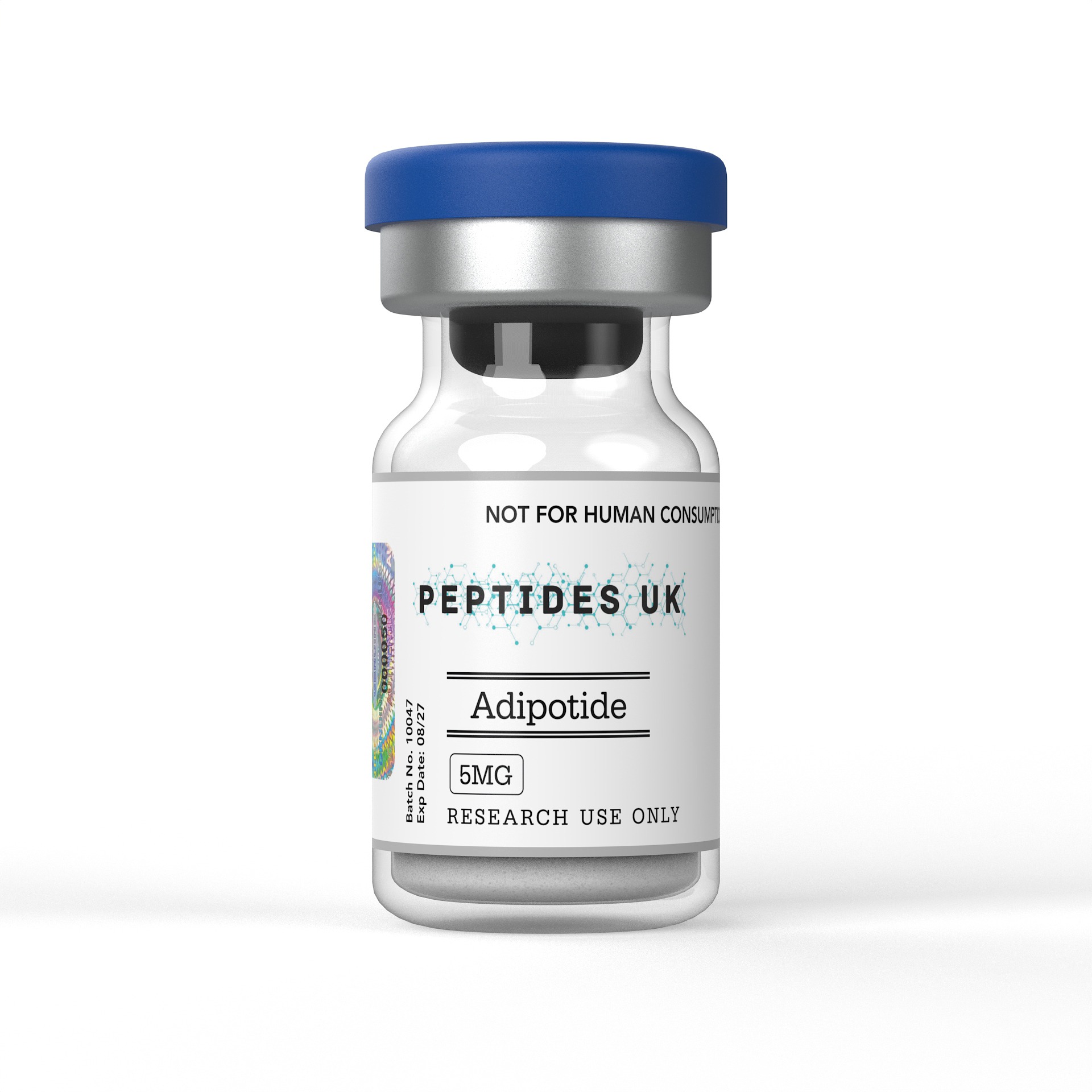
$240.50
Buy Adipotide Peptide in UAE – In Stock & Ready to Ship
Adipotide is a widely researched peptide known for its role in adipose tissue targeting and metabolic regulation studies. Each batch is independently verified at ≥99% purity and comes with a full Certificate of Analysis (COA) and HPLC testing documentation — giving UAE research teams the confidence they need when sourcing peptides for serious work.
For research use only. Not intended for human or veterinary use.


Adipotide (CKGGRAKDC-GG-D(KLAKLAK)2) is one of the most mechanistically distinctive peptides in obesity and adipose tissue biology research available to laboratories in the UAE — a bispecific proapoptotic peptide that selectively homes to the vasculature supplying white adipose tissue by targeting prohibitin on fat-associated blood vessel endothelium, delivering a cell-killing D(KLAKLAK)2 sequence specifically to adipose tissue vasculature and inducing targeted apoptosis of fat-associated endothelial cells, making it a uniquely targeted research tool for studying adipose tissue vascular biology, prohibitin receptor pharmacology, and selective adipose tissue ablation mechanisms. Researchers and institutions across the UAE, Dubai, Abu Dhabi and the wider GCC can source verified, research-grade Adipotide with fast international dispatch and full batch documentation included.
✅ ≥99% Purity — HPLC & Mass Spectrometry Verified
✅ Batch-Specific Certificate of Analysis (CoA)
✅ Sterile Lyophilised Powder | GMP Manufactured
✅ Fast International Dispatch to UAE & GCC
Adipotide — also referenced in research literature as CKGGRAKDC-GG-D(KLAKLAK)2 — is a synthetic bispecific peptide constructed from two functionally distinct domains joined by a glycine-glycine linker. The first domain, CKGGRAKDC, is a homing peptide identified through in vivo phage display screening that selectively binds to prohibitin — a multifunctional protein expressed on the luminal surface of endothelial cells specifically within the vasculature supplying white adipose tissue. The second domain, D(KLAKLAK)2, is a proapoptotic peptide sequence composed of D-amino acids that disrupts mitochondrial membranes and triggers cell death upon intracellular delivery.
The research significance of Adipotide’s design lies in its tissue-targeting selectivity architecture. Prohibitin’s differential expression on adipose tissue-associated vasculature — as opposed to endothelium supplying other tissue types — provides the molecular address that directs the peptide specifically to fat-associated blood vessels. Once bound and internalised, the proapoptotic D(KLAKLAK)2 domain disrupts mitochondrial integrity in the targeted endothelial cells, inducing apoptosis and ablating the vascular supply to white adipose tissue depots.
This targeted vascular ablation approach represents a fundamentally different research strategy for studying adipose tissue biology compared to metabolic or hormonal approaches — directly targeting the structural vascular support of fat tissue rather than modulating appetite, energy expenditure, or lipid metabolism signalling. Adipotide’s highly specific mechanism has made it an important research tool for studying adipose tissue vascular dependency, prohibitin biology, and targeted proapoptotic peptide delivery strategies.
In laboratory settings, Adipotide research is centred on its prohibitin-mediated adipose tissue vascular targeting and the downstream consequences of selective fat-associated endothelial apoptosis. Research applications include:
Its unique targeting architecture — combining a tissue-specific vascular homing sequence with a proapoptotic effector domain — makes Adipotide one of the most precisely designed research tools for studying adipose tissue biology from a vascular targeting perspective. All applications are for research use only.
Adipotide has developed a focused and mechanistically compelling research profile within adipose tissue vascular biology and targeted proapoptotic peptide science:
Prohibitin expression research established the molecular foundation for Adipotide’s targeting strategy — with studies characterising prohibitin’s differential expression on the luminal surface of white adipose tissue-associated endothelial cells compared to endothelium in other tissue types. This differential expression pattern was identified through systematic in vivo phage display screening of peptide libraries, with the CKGGRAKDC sequence emerging as a selective binder to adipose tissue vasculature — providing the tissue-specific homing address that makes Adipotide’s targeting mechanism possible.
Pre-clinical obesity research has produced the most widely referenced Adipotide findings — with studies in obese non-human primate models documenting significant reductions in body weight and waist circumference following Adipotide administration, alongside histological evidence of white adipose tissue vascular regression and fat depot reduction. These findings represented a notable proof-of-concept for targeted vascular ablation as a research approach to adipose tissue reduction and generated significant interest in prohibitin as a vascular address for adipose-targeted peptide delivery.
Rodent obesity model research preceded and supported the primate findings — with studies in diet-induced obese mice documenting selective white adipose tissue reduction, preserved lean mass, and metabolic parameter changes following Adipotide treatment, characterising the tissue selectivity of the prohibitin-targeting mechanism and establishing the biological plausibility of the vascular ablation approach in pre-clinical models.
Mechanistic studies have examined the intracellular fate of Adipotide following prohibitin binding — characterising endothelial cell internalisation of the peptide, mitochondrial co-localisation of the D(KLAKLAK)2 domain, and the apoptotic cascade initiated by mitochondrial membrane disruption in targeted adipose endothelial cells. These studies have contributed to the broader research understanding of how proapoptotic peptide domains function when delivered to specific intracellular compartments via targeted homing sequences.
Bispecific peptide design research has used Adipotide as a model system for studying how homing peptide and effector domain combinations can achieve tissue-selective cytotoxicity — with SAR studies examining how linker composition, domain orientation, and sequence modifications influence targeting efficiency and proapoptotic potency, contributing to the broader research into targeted peptide delivery platform design.
| Compound | Type | Targeting Mechanism | Effector Domain | Research Focus | Research Profile |
|---|---|---|---|---|---|
| Adipotide | Bispecific proapoptotic peptide | Prohibitin / adipose vasculature | D(KLAKLAK)2 mitochondrial | Adipose vascular ablation, obesity | Well-documented |
| D(KLAKLAK)2 alone | Proapoptotic peptide | Non-selective | Mitochondrial disruption | Proapoptotic mechanism reference | Well-documented |
| CKGGRAKDC alone | Homing peptide | Prohibitin targeting | None | Adipose vascular homing reference | Research tool |
| Cagrilintide | Long-acting amylin analogue | Amylin receptor — CNS | Satiety signalling | Metabolic obesity research | Rapidly growing |
| Semaglutide | GLP-1 receptor agonist | GLP-1R — CNS/peripheral | Incretin signalling | GLP-1 axis, metabolic regulation | Extensively studied |
| AOD-9604 | GH fragment peptide | Beta-3 adrenergic / lipolytic | Fat metabolism signalling | Lipolysis research | Well-documented |
| Parameter | Detail |
|---|---|
| Type | Synthetic Bispecific Proapoptotic Homing Peptide |
| Also Known As | CKGGRAKDC-GG-D(KLAKLAK)2 |
| Homing Domain | CKGGRAKDC — prohibitin binding |
| Effector Domain | D(KLAKLAK)2 — mitochondrial disruption |
| Linker | Glycine-Glycine (GG) |
| Target | Prohibitin on white adipose tissue vasculature |
| Purity | ≥99% |
| Verification | HPLC & Mass Spectrometry |
| Form | Lyophilised Powder |
| Solubility | Sterile water or suitable laboratory buffer |
| Storage | -20°C, protected from light and moisture |
| Intended Use | Research use only |
Every order dispatched to the UAE and GCC includes:
Yes. We supply research-grade Adipotide with international dispatch to the UAE, Dubai, Abu Dhabi, Sharjah and across the GCC. All orders include full batch documentation and are packaged to maintain peptide integrity throughout transit. This compound is supplied strictly for laboratory research use only.
Prohibitin is a multifunctional protein with roles in mitochondrial function, cell cycle regulation, and cell signalling. Research identified its differential expression on the luminal surface of endothelial cells specifically within the vasculature supplying white adipose tissue — a location that makes it accessible to circulating peptides and provides a tissue-specific molecular address for targeted delivery strategies. This adipose vascular-specific expression pattern, identified through in vivo phage display screening, established prohibitin as the targeting receptor that gives Adipotide its tissue selectivity and made it a significant research discovery in adipose tissue vascular biology.
D(KLAKLAK)2 is a proapoptotic peptide sequence composed entirely of D-amino acids — the mirror image form of natural L-amino acids — which confers resistance to enzymatic degradation by proteases that typically break down L-amino acid peptides. Upon intracellular delivery to target cells, D(KLAKLAK)2 disrupts mitochondrial membrane integrity, triggering cytochrome c release and initiating the intrinsic apoptotic cascade. In isolation, D(KLAKLAK)2 lacks cell specificity — its proapoptotic activity is only made selective when delivered to specific cell types via a targeting homing sequence, as in Adipotide’s bispecific design.
Pre-clinical research has examined Adipotide in both rodent and non-human primate obesity models. Rodent studies documented selective white adipose tissue reduction with preserved lean mass in diet-induced obese mice. Non-human primate studies — conducted in obese rhesus monkeys — documented significant reductions in body weight and waist circumference alongside histological evidence of white adipose tissue vascular regression, representing a notable proof-of-concept for the prohibitin-targeting vascular ablation approach in a model with greater translational relevance to human adipose tissue biology.
Metabolic obesity research compounds — including GLP-1 receptor agonists like semaglutide and amylin analogues like Cagrilintide — reduce adiposity by modulating appetite signalling, energy homeostasis, and metabolic regulation through hormonal and neurological pathways. Adipotide operates through an entirely different mechanism — directly targeting and ablating the vascular supply to white adipose tissue through prohibitin-mediated endothelial cell apoptosis. This mechanistic distinction makes Adipotide a complementary rather than competing research tool, providing researchers with a vascular biology approach to studying adipose tissue reduction alongside the established metabolic and hormonal approaches.
In vivo phage display is a peptide discovery technique in which large libraries of peptide-displaying bacteriophage are administered systemically in live animal models and subsequently recovered from specific target tissues — allowing identification of peptides that selectively home to particular tissue vasculatures in living organisms. Adipotide’s homing domain CKGGRAKDC was identified through this approach — isolated from phage recovered selectively from adipose tissue vasculature after systemic administration in animal models. This discovery method has made Adipotide a frequently cited example of in vivo phage display as a vascular address discovery platform in targeted peptide research.
Allow the vial to reach room temperature before opening. Add sterile water or appropriate laboratory buffer slowly down the vial wall and swirl gently without shaking. Prepare at your protocol’s required concentration. Aliquot and store at -80°C to minimise freeze-thaw degradation and maintain peptide integrity between experimental sessions. Handle under standard laboratory peptide protocols with appropriate containment given the proapoptotic effector domain present in the sequence.
Orders are dispatched promptly via tracked international courier. Delivery to the UAE typically takes 3–5 working days, with packaging designed to maintain peptide stability and integrity throughout transit.
Adipotide is supplied exclusively for legitimate scientific research conducted within licensed laboratory environments. This product is not intended for human consumption, self-administration, or any therapeutic or veterinary application. It must be handled solely by qualified researchers in compliance with applicable UAE regulations and institutional ethics guidelines. By purchasing, you confirm this compound will be used exclusively for approved in vitro or pre-clinical research purposes.
Receive News
