
COMING SOON Awaiting UAE License
PRODUCTS SOLD ON PEPTIDESLABUAE.COM ARE FOR RESEARCH PURPOSES ONLY AND ARE NOT FOR HUMAN OR VETERINARY USE.
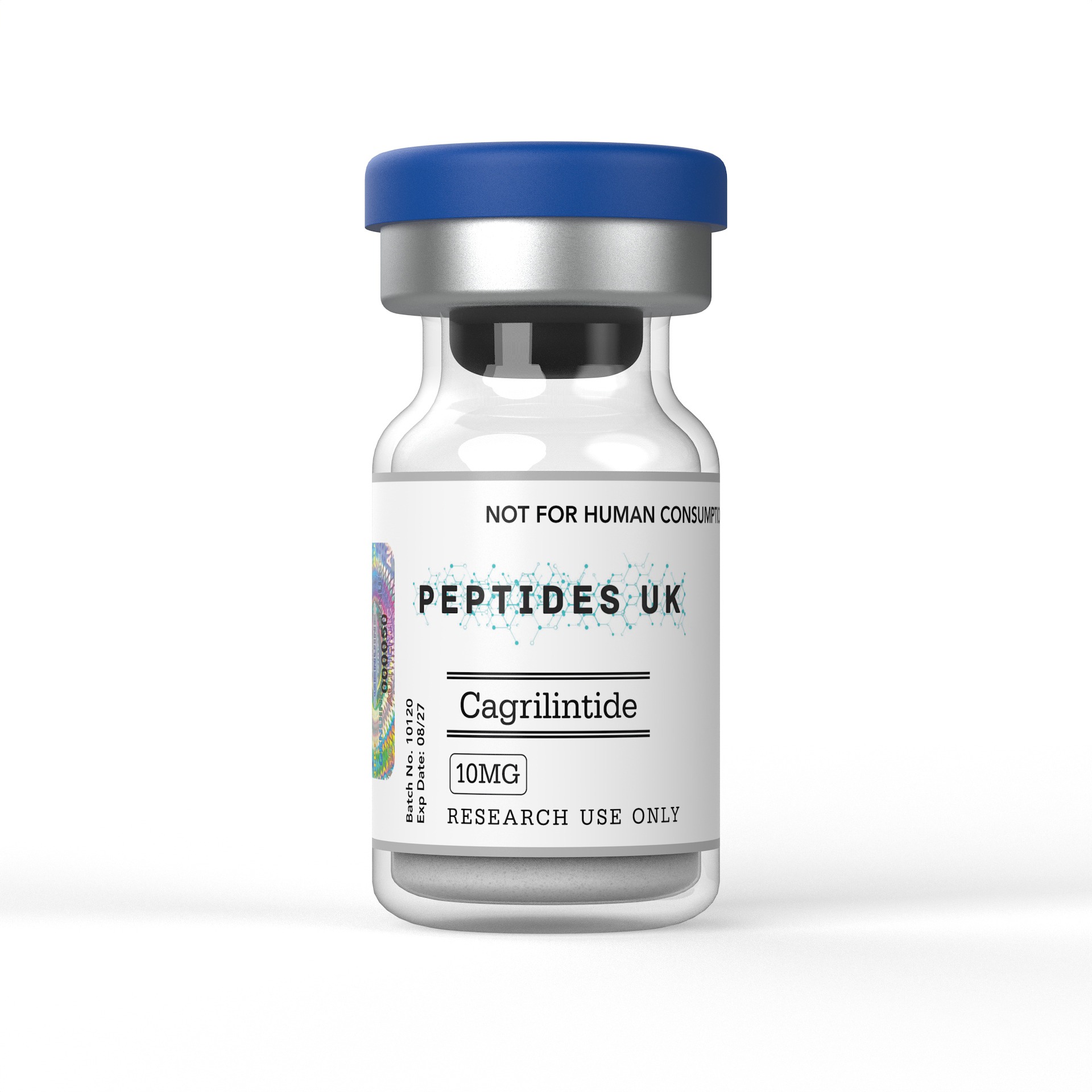
$199.50
Buy Cagrilintide Peptide in UAE – In Stock & Ready to Ship
Cagrilintide is a widely researched peptide known for its role in appetite regulation and amylin receptor studies. Each batch is independently verified at ≥99% purity and comes with a full Certificate of Analysis (COA) and HPLC testing documentation — giving UAE research teams the confidence they need when sourcing peptides for serious work.
For research use only. Not intended for human or veterinary use.

Cagrilintide is one of the most advanced long-acting amylin receptor agonist peptides available to laboratories in the UAE — a fatty acid-acylated amylin analogue engineered for extended half-life that activates amylin receptors in the hypothalamus and brainstem to suppress appetite, slow gastric emptying, and reduce body weight in pre-clinical models, and is currently one of the most actively researched compounds in metabolic and obesity biology as the amylin component of the investigational CagriSema combination alongside semaglutide. Researchers and institutions across the UAE, Dubai, Abu Dhabi and the wider GCC can source verified, research-grade Cagrilintide with fast international dispatch and full batch documentation included.
✅ ≥99% Purity — HPLC & Mass Spectrometry Verified
✅ Batch-Specific Certificate of Analysis (CoA)
✅ Sterile Lyophilised Powder | GMP Manufactured
✅ Fast International Dispatch to UAE & GCC
Cagrilintide is a synthetic long-acting amylin analogue — a modified peptide based on the structure of human amylin (Islet Amyloid Polypeptide, IAPP), a 37 amino acid peptide hormone co-secreted with insulin from pancreatic beta cells in response to meals. Native human amylin has a very short half-life and a tendency to form amyloid fibrils — properties that limit its research and therapeutic utility. Cagrilintide addresses both limitations through two key structural modifications: specific amino acid substitutions that prevent amyloid fibril formation, and fatty acid acylation that enables albumin binding and dramatically extends its half-life to approximately one week — making it suitable for once-weekly dosing in research protocols.
Cagrilintide acts as an agonist at amylin receptors — heterodimeric receptor complexes formed by the calcitonin receptor (CTR) paired with receptor activity-modifying proteins (RAMPs), primarily RAMP1, RAMP2, and RAMP3. These receptors are expressed in key metabolic regulation centres including the area postrema, nucleus tractus solitarius, and hypothalamic nuclei — brain regions central to appetite regulation, energy homeostasis, and body weight control. Through amylin receptor activation in these areas, Cagrilintide produces satiety signalling, reduces food intake, slows gastric emptying, and suppresses glucagon secretion in research models.
What makes Cagrilintide particularly significant in current metabolic research is its combination with semaglutide — a GLP-1 receptor agonist — in the investigational CagriSema protocol. Research examining this dual amylin/GLP-1 receptor co-activation has produced some of the most notable body weight reduction findings in obesity biology, positioning Cagrilintide as one of the most actively studied peptides in contemporary metabolic science.
In laboratory settings, Cagrilintide research is centred on its long-acting amylin receptor agonism and the downstream metabolic effects this produces in experimental models. Research applications include:
Its once-weekly research dosing profile — enabled by fatty acid acylation and albumin binding — makes Cagrilintide particularly practical for sustained pre-clinical metabolic research protocols requiring consistent long-acting amylin receptor engagement without frequent administration. All applications are for research use only.
Cagrilintide has developed one of the most rapidly advancing and widely referenced research profiles in contemporary obesity and metabolic biology:
Amylin receptor pharmacology research has characterised Cagrilintide’s binding profile at calcitonin receptor/RAMP heterodimers — with studies confirming its high affinity amylin receptor agonism and documenting its extended half-life of approximately one week in pre-clinical models, validating the fatty acid acylation strategy for producing a practical long-acting amylin receptor agonist suitable for once-weekly research protocols.
Pre-clinical weight reduction research has documented significant body weight and adiposity reductions with Cagrilintide administration in obese animal models — with studies characterising the contributions of reduced food intake, slowed gastric emptying, and enhanced satiety signalling to the observed weight effects. These findings established Cagrilintide as one of the most potent long-acting amylin analogues studied in pre-clinical obesity models and provided the foundation for its advancement into combination research protocols.
CagriSema combination research has produced the most widely referenced Cagrilintide findings — with studies examining the co-activation of amylin receptors by Cagrilintide alongside GLP-1 receptor activation by semaglutide documenting synergistic effects on body weight reduction that substantially exceeded those achieved by either compound alone in pre-clinical models. This synergy has been attributed to the complementary and partially non-overlapping mechanisms through which amylin and GLP-1 receptor activation produce satiety and reduce food intake — with amylin signalling operating primarily through brainstem and area postrema circuits while GLP-1 acts through both peripheral vagal signalling and central hypothalamic pathways.
Clinical research with Cagrilintide has further advanced the research profile — with studies in human subjects examining pharmacokinetics, tolerability, and metabolic effects including body weight changes and glycaemic parameters, providing translational data that has generated significant research interest in the amylin receptor pathway as a target for metabolic regulation research. Comparative amylin analogue research has positioned Cagrilintide against pramlintide — the shorter-acting amylin analogue — with studies examining how the extended half-life and acylation modifications of Cagrilintide translate to different receptor engagement duration, metabolic effect profiles, and research protocol practicality compared to the earlier generation analogue.
| Compound | Type | Primary Receptor | Half-Life | Key Research Focus | Research Profile |
|---|---|---|---|---|---|
| Cagrilintide | Long-acting amylin analogue | Amylin receptor (CTR/RAMP) | ~1 week | Obesity, satiety, CagriSema combo | Rapidly growing |
| Pramlintide | Short-acting amylin analogue | Amylin receptor (CTR/RAMP) | ~48 minutes | Amylin pharmacology reference | Well-documented |
| Semaglutide | GLP-1 receptor agonist | GLP-1R | ~1 week | GLP-1 axis, metabolic regulation | Extensively studied |
| Tirzepatide | GIP/GLP-1 dual agonist | GIPR + GLP-1R | ~5 days | Dual incretin research | Extensively studied |
| Liraglutide | GLP-1 receptor agonist | GLP-1R | ~13 hours | GLP-1 pharmacology | Extensively studied |
| Native Amylin (IAPP) | Endogenous peptide | Amylin receptor | ~minutes | Amylin reference biology | Well-documented |
| Parameter | Detail |
|---|---|
| Type | Long-Acting Fatty Acid-Acylated Amylin Analogue |
| Also Known As | AM833, Long-acting amylin analogue |
| Primary Target | Amylin Receptor (Calcitonin Receptor / RAMP complexes) |
| Half-Life | ~1 week (fatty acid acylation / albumin binding) |
| Key Modification | Fatty acid acylation + amyloid-preventing substitutions |
| Purity | ≥99% |
| Verification | HPLC & Mass Spectrometry |
| Form | Lyophilised Powder |
| Solubility | Sterile water or suitable laboratory buffer |
| Storage | -20°C, protected from light and moisture |
| Intended Use | Research use only |
Every order dispatched to the UAE and GCC includes:
Yes. We supply research-grade Cagrilintide with international dispatch to the UAE, Dubai, Abu Dhabi, Sharjah and across the GCC. All orders include full batch documentation and are packaged to maintain peptide integrity throughout transit. This compound is supplied strictly for laboratory research use only.
Amylin (Islet Amyloid Polypeptide, IAPP) is a 37 amino acid peptide hormone co-secreted with insulin from pancreatic beta cells in response to meals. It acts through amylin receptors in the brainstem and hypothalamus to produce satiety signalling, slow gastric emptying, and suppress glucagon — complementing insulin’s glucose-lowering effects with appetite and gastric regulation. Native amylin’s very short half-life and tendency to form amyloid fibrils limit its research utility. Cagrilintide is engineered to address both limitations — with amino acid substitutions preventing fibril formation and fatty acid acylation extending half-life to approximately one week — making it a far more research-practical amylin receptor agonist.
CagriSema is the investigational combination of Cagrilintide (amylin receptor agonist) and semaglutide (GLP-1 receptor agonist) — co-developed by Novo Nordisk and currently one of the most actively researched combinations in obesity biology. Research examining CagriSema has documented synergistic body weight reduction effects that substantially exceeded those of either compound alone in pre-clinical models and early clinical studies — attributed to the complementary mechanisms through which amylin receptor and GLP-1 receptor activation independently produce satiety and reduce food intake. This combination has generated significant research interest in dual and multi-receptor metabolic targeting strategies.
Both Cagrilintide and Pramlintide are amylin analogues that activate the same receptor complexes, but they differ significantly in pharmacokinetics. Pramlintide has a half-life of approximately 48 minutes, requiring multiple daily administrations in research protocols. Cagrilintide’s fatty acid acylation extends its half-life to approximately one week, enabling once-weekly dosing — a significant practical advantage for sustained metabolic research protocols. Research comparing the two compounds provides data on how amylin receptor engagement duration influences metabolic outcomes and how acylation modifications translate to different pharmacological profiles within the amylin analogue class.
Amylin receptors are heterodimeric receptor complexes formed by the calcitonin receptor (CTR) paired with receptor activity-modifying proteins (RAMPs) — primarily RAMP1, RAMP2, and RAMP3, forming AMY1, AMY2, and AMY3 receptor subtypes respectively. They are expressed prominently in metabolic regulation centres of the central nervous system including the area postrema, nucleus tractus solitarius, and hypothalamic nuclei — brain regions that integrate peripheral satiety signals and regulate energy homeostasis. Research into amylin receptor distribution and subtype pharmacology has made these receptor complexes an important focus in metabolic biology and obesity research.
Pre-clinical obesity research has documented significant body weight and fat mass reductions with Cagrilintide in animal models of diet-induced obesity — characterising the contributions of reduced caloric intake, slowed gastric emptying, and enhanced satiety signalling to the observed weight effects. Clinical research has further examined pharmacokinetics, dose-dependent weight effects, and tolerability in human subjects. The most extensively referenced findings involve CagriSema combination studies, where co-administration with semaglutide produced synergistic weight reduction results that have positioned the amylin/GLP-1 dual receptor approach as one of the most actively researched strategies in current obesity biology.
Allow the vial to reach room temperature before opening. Add sterile water or appropriate laboratory buffer slowly down the vial wall and swirl gently without shaking. Prepare at your protocol’s required concentration. Aliquot and store at -80°C to minimise freeze-thaw degradation and maintain peptide integrity between experimental sessions. The fatty acid acylation modification provides enhanced solution stability compared to unmodified amylin analogues under appropriate storage conditions.
Orders are dispatched promptly via tracked international courier. Delivery to the UAE typically takes 3–5 working days, with packaging designed to maintain peptide stability and integrity throughout transit.
Cagrilintide is supplied exclusively for legitimate scientific research conducted within licensed laboratory environments. This product is not intended for human consumption, self-administration, or any therapeutic or veterinary application. It must be handled solely by qualified researchers in compliance with applicable UAE regulations and institutional ethics guidelines. By purchasing, you confirm this compound will be used exclusively for approved in vitro or pre-clinical research purposes.

Receive News
