
COMING SOON Awaiting UAE License
PRODUCTS SOLD ON PEPTIDESLABUAE.COM ARE FOR RESEARCH PURPOSES ONLY AND ARE NOT FOR HUMAN OR VETERINARY USE.
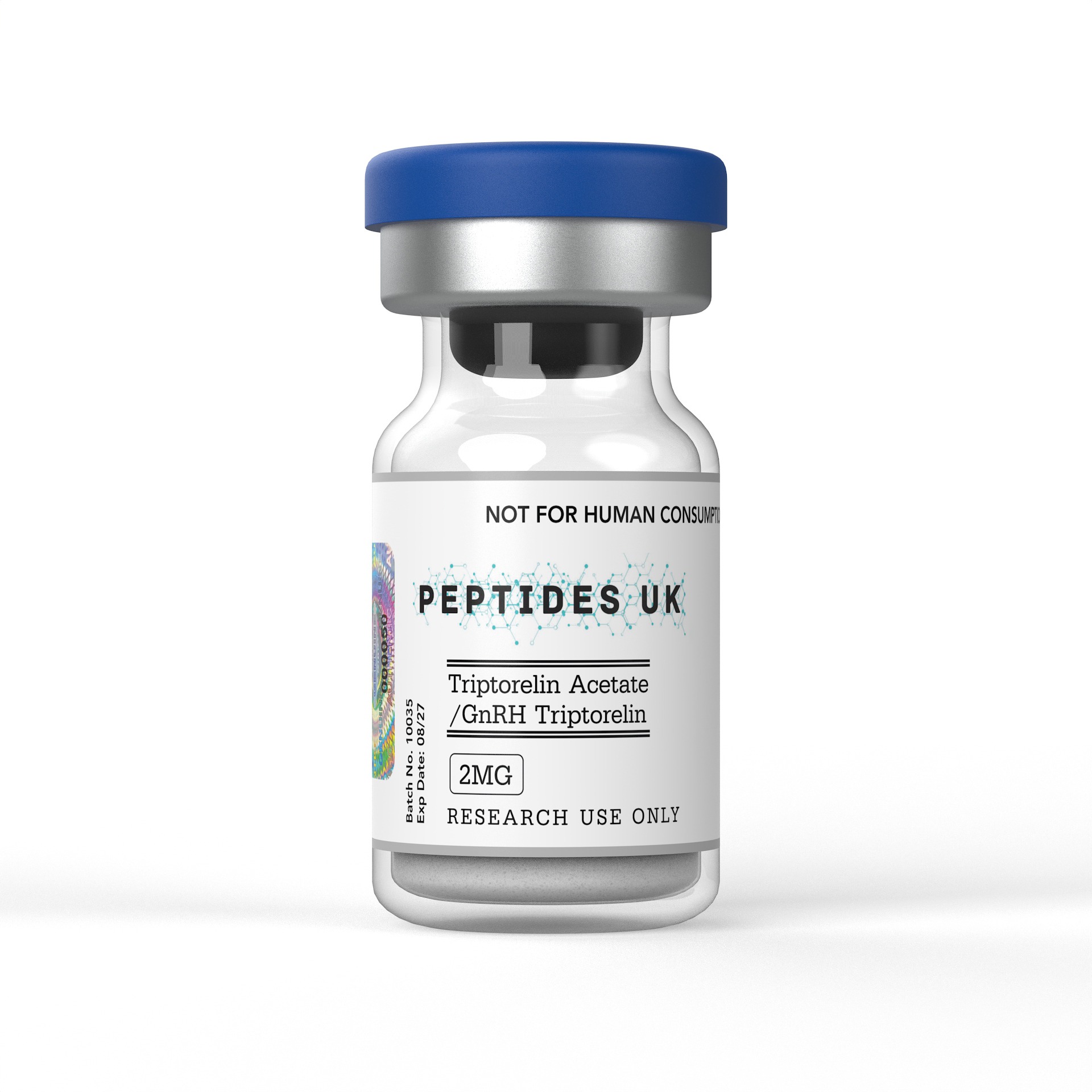
$27.00
Buy Triptorelin Peptide in UAE – In Stock & Ready to Ship
Triptorelin is a widely researched peptide known for its role in gonadotropin regulation and hormonal signalling studies. Each batch is independently verified at ≥99% purity and comes with a full Certificate of Analysis (COA) and HPLC testing documentation — giving UAE research teams the confidence they need when sourcing peptides for serious work.
For research use only. Not intended for human or veterinary use.


Triptorelin is one of the most extensively studied synthetic GnRH (Gonadotropin-Releasing Hormone) agonist peptides available to laboratories in the UAE — a decapeptide analogue of native GnRH that binds with high affinity to GnRH receptors on pituitary gonadotroph cells, initially stimulating and then — with continued exposure — profoundly suppressing LH and FSH secretion through receptor downregulation, making it one of the most important research tools for studying hypothalamic-pituitary-gonadal axis regulation, gonadotropin suppression mechanisms, and sex hormone biology in controlled laboratory settings. Researchers and institutions across the UAE, Dubai, Abu Dhabi and the wider GCC can source verified, research-grade Triptorelin with fast international dispatch and full batch documentation included.
✅ ≥99% Purity — HPLC & Mass Spectrometry Verified
✅ Batch-Specific Certificate of Analysis (CoA)
✅ Sterile Lyophilised Powder | GMP Manufactured
✅ Fast International Dispatch to UAE & GCC
Triptorelin is a synthetic decapeptide — a ten amino acid sequence — and a potent agonist analogue of native Gonadotropin-Releasing Hormone (GnRH), also known as Luteinizing Hormone-Releasing Hormone (LHRH). It shares the same core structure as endogenous GnRH but incorporates specific amino acid substitutions that significantly increase its binding affinity for the GnRH receptor and substantially extend its half-life compared to the native hormone — which has a half-life of only 2–4 minutes due to rapid enzymatic degradation.
The mechanism that makes Triptorelin uniquely valuable as a research tool is the paradoxical suppression it produces with continuous administration. While a single acute exposure to Triptorelin mimics the stimulatory effect of endogenous GnRH — triggering LH and FSH release from pituitary gonadotroph cells — sustained continuous GnRH receptor stimulation produces the opposite effect through receptor downregulation and desensitisation. Prolonged receptor occupation leads to internalisation and loss of functional GnRH receptors on pituitary gonadotrophs, resulting in a profound and reversible suppression of LH and FSH secretion and subsequent suppression of gonadal sex hormone production.
This dual pharmacological profile — initial stimulation followed by sustained suppression — makes Triptorelin one of the most mechanistically interesting and research-practically useful GnRH analogues available, allowing researchers to study both acute GnRH receptor activation and chronic HPG axis suppression using a single, well-characterised compound.
In laboratory settings, Triptorelin research spans the full scope of HPG axis biology given its dual stimulatory and suppressive pharmacological profile. Research applications include:
Its ability to both acutely stimulate and chronically suppress the HPG axis — depending on administration pattern — makes Triptorelin one of the most versatile GnRH analogue research tools available for studying the full spectrum of HPG axis regulation. All applications are for research use only.
Triptorelin has developed one of the most well-characterised and clinically referenced research profiles among synthetic GnRH analogues:
GnRH receptor pharmacology research has comprehensively characterised Triptorelin’s binding profile — with studies documenting its significantly higher receptor binding affinity compared to native GnRH, confirming that its amino acid substitutions enhance receptor interaction while maintaining the selectivity for GnRH receptors on pituitary gonadotroph cells. These studies have established Triptorelin as a reference GnRH agonist for receptor pharmacology research across the GnRH analogue class.
HPG axis suppression research has extensively documented the pituitary desensitisation mechanism underlying Triptorelin’s suppressive effects — with studies characterising the sequence of events from initial receptor stimulation through receptor internalisation, gonadotroph desensitisation, and resultant LH/FSH suppression. This research has provided fundamental insights into how continuous GnRH receptor occupation produces the paradoxical suppression that is central to GnRH agonist biology.
Testosterone suppression research has used Triptorelin in pre-clinical models to examine how pituitary LH suppression translates to gonadal testosterone production inhibition — documenting the downstream consequences of HPG axis suppression on Leydig cell function, intratesticular testosterone dynamics, and androgen-dependent tissue responses. These studies have made Triptorelin a key reference compound in androgen deprivation biology research.
Hormone-sensitive cancer biology research has examined Triptorelin’s effects in pre-clinical models of hormone-dependent tumour biology — with studies exploring how androgen and oestrogen deprivation through HPG axis suppression influences hormone-sensitive cell lines and tumour biology parameters, contributing to the broader research into how sex hormone manipulation affects hormone-responsive tissue biology.
Precocious puberty research has used GnRH agonists including Triptorelin to study the mechanisms controlling pubertal timing — with studies examining how sustained GnRH receptor stimulation suppresses the gonadotropin secretion that drives pubertal development, providing insights into the HPG axis regulation mechanisms that govern the timing of reproductive maturation. HPG axis recovery research has characterised the reversibility of Triptorelin-induced suppression — documenting the timeline and mechanism of GnRH receptor re-expression, gonadotroph resensitisation, and HPG axis reactivation following withdrawal, providing important research data on the plasticity of pituitary gonadotroph function.
| Compound | Type | GnRH Receptor Action | Half-Life | Primary Research Focus | Research Profile |
|---|---|---|---|---|---|
| Triptorelin | GnRH agonist decapeptide | Agonist — stimulate then suppress | ~3 hours | HPG axis, gonadotropin suppression | Extensively studied |
| Leuprolide (Leuprorelin) | GnRH agonist | Agonist — stimulate then suppress | ~3 hours | HPG suppression, androgen deprivation | Extensively studied |
| Buserelin | GnRH agonist | Agonist — stimulate then suppress | ~80 minutes | HPG axis, comparative pharmacology | Well-documented |
| Gonadorelin | Native GnRH analogue | Pure agonist — pulsatile | ~2–4 minutes | Acute HPG stimulation, pulse studies | Well-documented |
| Cetrorelix | GnRH antagonist | Direct antagonist — immediate suppress | ~62 hours | GnRH antagonism, immediate suppression | Well-documented |
| Degarelix | GnRH antagonist | Direct antagonist — immediate suppress | ~23–26 days | Long-acting antagonism research | Growing |
| Parameter | Detail |
|---|---|
| Type | Synthetic Decapeptide GnRH Agonist |
| Also Known As | LHRH Agonist, GnRH Agonist |
| Primary Target | GnRH Receptor (GnRHR) on pituitary gonadotrophs |
| Chain Length | 10 Amino Acids |
| Half-Life | ~3 hours (vs native GnRH ~2–4 minutes) |
| Purity | ≥99% |
| Verification | HPLC & Mass Spectrometry |
| Form | Lyophilised Powder |
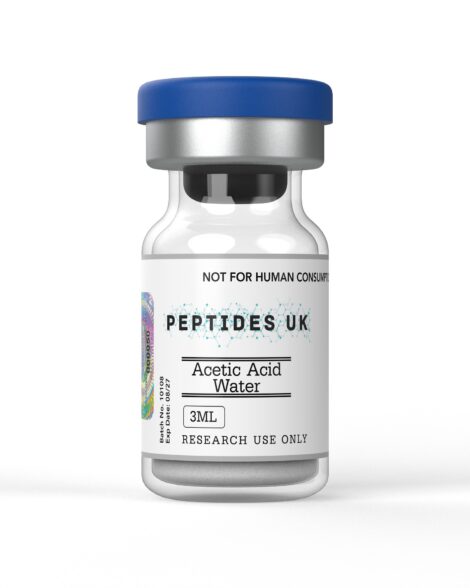
| Solubility | Sterile water or bacteriostatic water |
| Storage | -20°C, protected from light and moisture |
| Intended Use | Research use only |
Every order dispatched to the UAE and GCC includes:
Yes. We supply research-grade Triptorelin with international dispatch to the UAE, Dubai, Abu Dhabi, Sharjah and across the GCC. All orders include full batch documentation and are packaged to maintain peptide integrity throughout transit. This compound is supplied strictly for laboratory research use only.
GnRH agonists like Triptorelin initially stimulate GnRH receptors before producing suppression through receptor downregulation with continuous exposure — creating a brief initial gonadotropin surge before sustained HPG axis suppression develops over days to weeks. GnRH antagonists like Cetrorelix and Degarelix competitively block GnRH receptors and produce immediate HPG axis suppression without any initial stimulatory phase. Research using both classes examines different aspects of GnRH receptor biology — agonists for studying receptor downregulation and desensitisation mechanisms, antagonists for studying immediate receptor blockade and acute HPG suppression.
In natural HPG axis physiology, GnRH is released in discrete pulses from the hypothalamus — this pulsatile pattern is essential for maintaining pituitary gonadotroph sensitivity and LH/FSH secretion. Continuous, non-pulsatile GnRH receptor stimulation — as produced by sustained GnRH agonist exposure — overrides this pulsatile pattern and triggers receptor internalisation, downregulation, and gonadotroph desensitisation. Research examining this paradoxical suppression mechanism has provided fundamental insights into how receptor expression and sensitivity are regulated by ligand exposure patterns — a principle with broader implications across receptor pharmacology research.
Pre-clinical studies have used Triptorelin to characterise the downstream consequences of HPG axis suppression on testicular steroidogenesis — documenting the timeline of LH suppression, subsequent Leydig cell quiescence, and reduction in testosterone production following sustained GnRH receptor downregulation. These studies have examined both the suppression mechanism and the recovery pathway following Triptorelin withdrawal, providing comprehensive research data on the reversibility of androgen suppression and the dynamics of HPG axis reactivation in experimental models.
Both Triptorelin and Leuprolide (Leuprorelin) are GnRH agonist decapeptides with similar mechanisms, receptor binding profiles, and HPG suppression pharmacology. Their primary differences lie in specific amino acid substitutions and formulation characteristics rather than fundamental pharmacological mechanisms. Research using both compounds contributes to the comparative GnRH agonist literature, with each compound’s distinct substitution pattern providing structural data for GnRH analogue SAR studies. Triptorelin’s specific substitution pattern and its extensive published literature base make it a well-referenced research tool within the GnRH agonist class.
Studies examining HPG axis recovery following GnRH agonist withdrawal have characterised the sequence of GnRH receptor re-expression on pituitary gonadotrophs, restoration of LH and FSH pulsatility, and recovery of gonadal sex hormone production in pre-clinical models. These recovery studies have provided important insights into the plasticity of pituitary gonadotroph function and the mechanisms governing HPG axis reactivation — contributing to the broader research understanding of how the reproductive endocrine axis responds to and recovers from sustained suppression.
Allow the vial to reach room temperature before opening. Add sterile or bacteriostatic water slowly down the vial wall and swirl gently without shaking. Prepare at your protocol’s required concentration. Aliquot and store at -80°C to minimise freeze-thaw degradation and maintain peptide integrity between experimental sessions.
Orders are dispatched promptly via tracked international courier. Delivery to the UAE typically takes 3–5 working days, with packaging designed to maintain peptide stability and integrity throughout transit.
Triptorelin is supplied exclusively for legitimate scientific research conducted within licensed laboratory environments. This product is not intended for human consumption, self-administration, or any therapeutic or veterinary application. It must be handled solely by qualified researchers in compliance with applicable UAE regulations and institutional ethics guidelines. By purchasing, you confirm this compound will be used exclusively for approved in vitro or pre-clinical research purposes.
Receive News
