
COMING SOON Awaiting UAE License
PRODUCTS SOLD ON PEPTIDESLABUAE.COM ARE FOR RESEARCH PURPOSES ONLY AND ARE NOT FOR HUMAN OR VETERINARY USE.
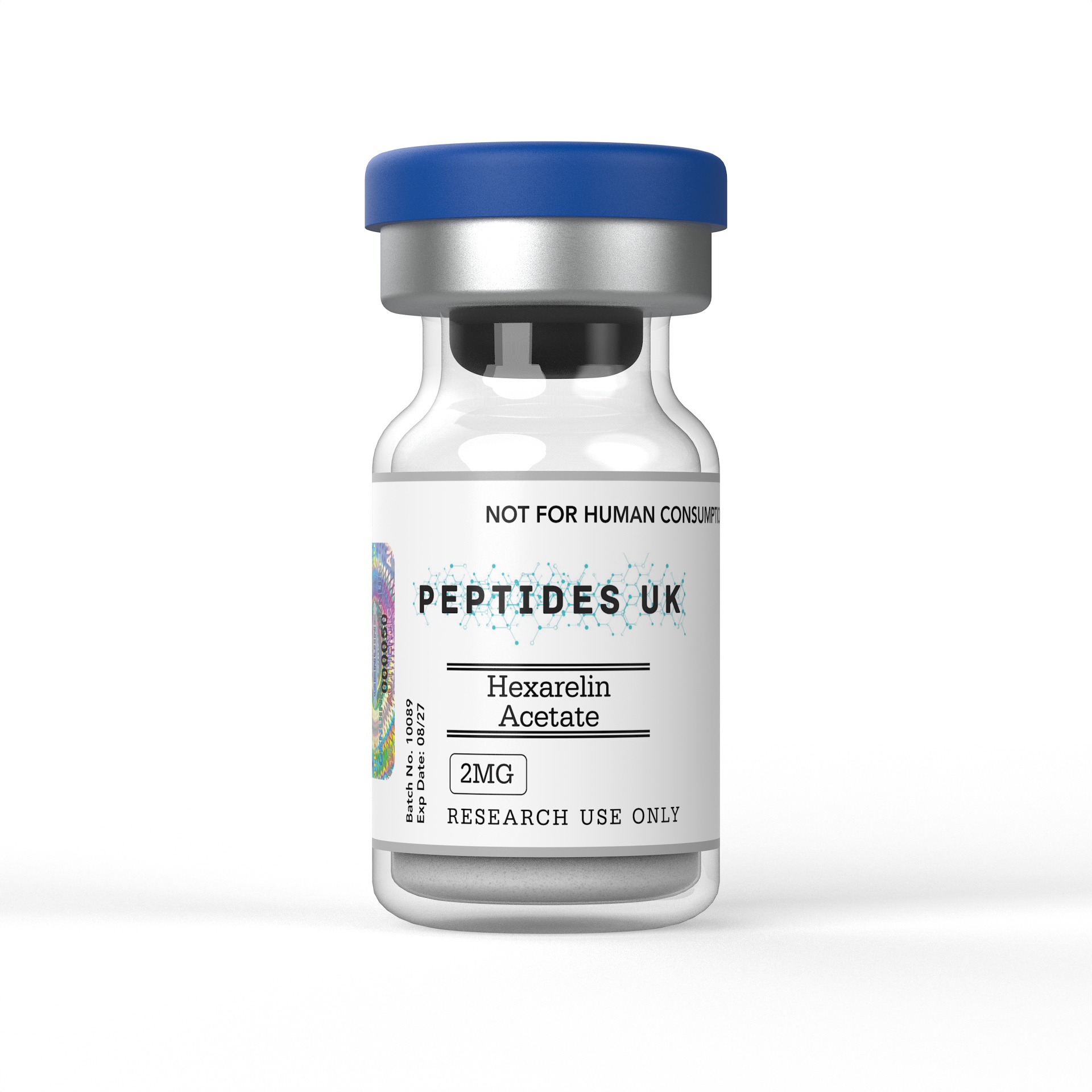
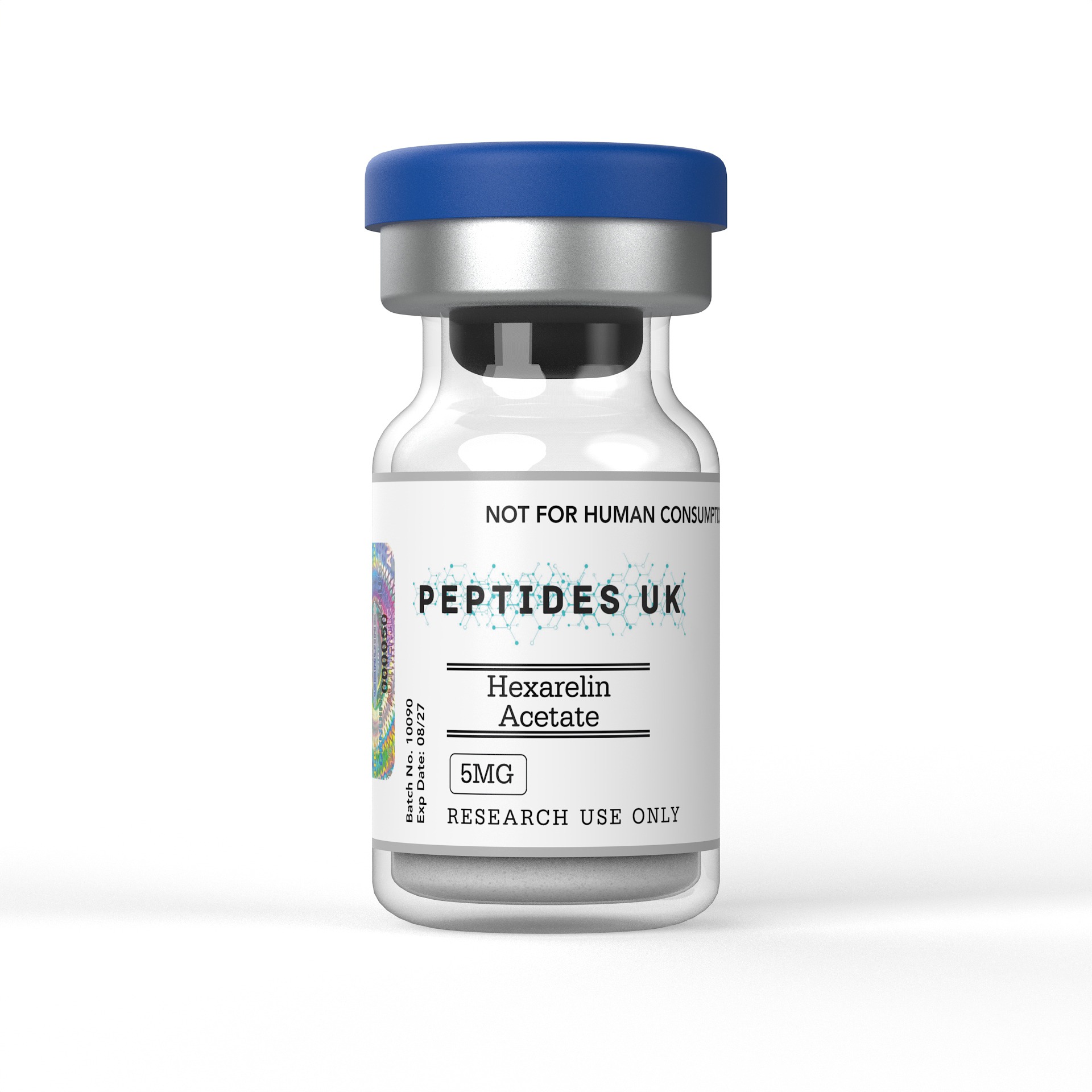
$33.50 – $64.50Price range: $33.50 through $64.50
Buy Hexarelin Acetate Peptide in UAE – In Stock & Ready to Ship
Hexarelin Acetate is a widely researched peptide known for its role in growth hormone secretion and cardiovascular function studies. Each batch is independently verified at ≥99% purity and comes with a full Certificate of Analysis (COA) and HPLC testing documentation — giving UAE research teams the confidence they need when sourcing peptides for serious work.
For research use only. Not intended for human or veterinary use.


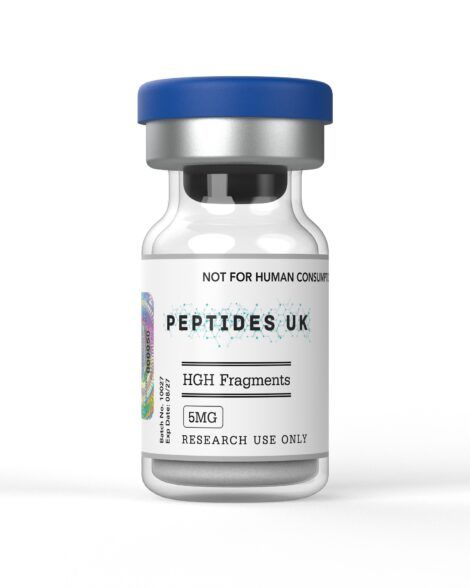
Hexarelin Acetate is a synthetic hexapeptide growth hormone secretagogue studied in endocrinology research for its potent stimulation of growth hormone release and its uniquely documented direct cardiac activity — making it one of the most pharmacologically distinctive GH-releasing peptides available as a research tool, with a research profile that extends meaningfully beyond the growth hormone axis into cardiovascular biology. Researchers and institutions across the UAE, Dubai, Abu Dhabi and the wider GCC can source verified, research-grade Hexarelin Acetate with fast international dispatch and full batch documentation included.
✅ ≥99% Purity — HPLC & Mass Spectrometry Verified
✅ Batch-Specific Certificate of Analysis (CoA) Included
✅ Sterile Lyophilised Powder | GMP Manufactured
✅ Fast International Dispatch to UAE & GCC
Hexarelin Acetate is a synthetic six-amino acid peptide (hexapeptide) developed as a potent growth hormone secretagogue — a compound that stimulates growth hormone release from the pituitary gland. It acts as an agonist at the ghrelin receptor (GHSR-1a), the same receptor targeted by Ipamorelin and other GH-releasing peptides, but with notably greater potency at this receptor compared to many other synthetic secretagogues in its class.
What distinguishes Hexarelin from other GH secretagogues in research is its documented activity at a second receptor system — the CD36 scavenger receptor, also known as the hexarelin receptor — which is expressed in cardiac tissue, adrenal glands, and macrophages. This dual receptor activity gives Hexarelin a unique research profile that spans both the growth hormone axis and cardiovascular biology, making it a more multifaceted research tool than selective GHSR-1a agonists like Ipamorelin. The acetate salt form provides improved stability and consistent dissolution characteristics compared to the free base peptide. Research interest from institutions across the UAE and GCC has grown alongside the expanding regional focus on endocrinology and cardiovascular research programmes.
In controlled laboratory and pre-clinical research settings, Hexarelin Acetate has been studied across several endocrinology and cardiovascular research applications:
Growth Hormone Secretion Studies: Hexarelin’s primary research application is as a potent GHSR-1a agonist that stimulates pulsatile GH release from the anterior pituitary. Studies use Hexarelin to examine GH secretion dynamics, receptor activation kinetics, and downstream GH axis responses — with research documenting its notably high potency at the ghrelin receptor compared to other synthetic secretagogues.
Ghrelin Receptor Pharmacology: Research has used Hexarelin to characterise GHSR-1a binding profiles, receptor activation thresholds, and downstream signalling cascades — contributing to the broader understanding of ghrelin receptor pharmacology and how different structural features of synthetic secretagogues influence receptor engagement.
Cardiovascular Research: Hexarelin’s activity at the CD36 receptor in cardiac tissue has made it a uniquely valuable research tool for cardiovascular biology. Studies have examined its direct effects on cardiac muscle cell behaviour, myocardial protection mechanisms, and cardiac function parameters in pre-clinical models — independently of its GH-releasing activity.
Cardioprotection Studies: Pre-clinical research has examined Hexarelin in models of cardiac ischaemia and myocardial injury, with studies exploring whether its CD36-mediated cardiac activity influences cardiomyocyte survival, inflammatory resolution, and functional recovery parameters in heart tissue models.
GH Axis and Body Composition Research: Studies have examined how Hexarelin-stimulated GH release influences downstream IGF-1 production, body composition parameters, and metabolic markers in pre-clinical animal models — reflecting the GH axis’s well-established role in tissue composition and metabolism regulation.
Desensitisation Research: An important and distinctive area of Hexarelin research examines receptor desensitisation — studies have documented that repeated Hexarelin administration leads to attenuation of GH release responses over time, making it a useful research tool for studying GHSR-1a receptor desensitisation and downregulation mechanisms.
Adrenal and Cortisol Research: Unlike the more selective Ipamorelin, Hexarelin stimulates some degree of cortisol and ACTH release alongside GH secretion. Research has used this property to compare the relative endocrine selectivity profiles of different GH secretagogues — examining what structural features determine whether a secretagogue activates HPA axis pathways in addition to GH release.
Comparative Secretagogue Studies: Hexarelin’s high potency at GHSR-1a combined with its broader receptor activity profile has made it a valuable comparative reference compound in studies examining the pharmacological landscape of synthetic GH secretagogues — helping researchers understand potency, selectivity, and multi-receptor engagement across the secretagogue class.
All applications listed are research-based only. Hexarelin Acetate is not approved for human therapeutic use.
Hexarelin Acetate has developed a well-documented and distinctive pre-clinical research profile:
GH secretion research established Hexarelin as one of the most potent synthetic GHSR-1a agonists in its class early in its research history, with studies documenting GH release responses that exceeded those of other synthetic secretagogues at comparable doses — establishing its value as a high-potency research tool for studies requiring robust GHSR-1a stimulation. Cardiovascular research has produced some of Hexarelin’s most distinctive and cited findings — with studies documenting direct cardioprotective effects in pre-clinical models of cardiac ischaemia and reporting that these effects appear to be mediated through the CD36 receptor independently of GH axis activation. This dual-receptor cardiac activity has positioned Hexarelin as a uniquely relevant research compound for cardiovascular biology laboratories studying both the direct and GH-mediated effects of secretagogue peptides on cardiac tissue. Receptor desensitisation studies have documented the progressive attenuation of GH release responses with repeated Hexarelin administration in pre-clinical models — a finding that has provided valuable insights into GHSR-1a receptor regulation and the mechanisms governing secretagogue tolerance in the GH axis. Comparative endocrinology research has examined Hexarelin’s broader hormonal selectivity profile — documenting its stimulation of cortisol and ACTH alongside GH, and using this less selective profile as a comparative contrast to the cleaner selectivity of Ipamorelin — contributing to a better understanding of what structural features in synthetic secretagogues determine endocrine selectivity. Body composition research has documented Hexarelin’s influence on lean mass and fat mass parameters in pre-clinical animal models under sustained GH secretagogue stimulation conditions.
| Feature | Hexarelin | Ipamorelin | GHRP-2 | Sermorelin |
|---|---|---|---|---|
| Type | Hexapeptide secretagogue | Pentapeptide secretagogue | Hexapeptide secretagogue | GHRH analogue |
| Primary Receptor | GHSR-1a + CD36 | GHSR-1a | GHSR-1a | GHRHR |
| GH Release Potency | Very high | Moderate-high | High | Moderate |
| Cortisol Stimulation | Moderate | Minimal | Moderate | Minimal |
| Cardiac Activity | Yes (CD36) | No | No | No |
| Receptor Desensitisation | Documented | Minimal | Moderate | Minimal |
| Selectivity Profile | Broader | Excellent | Moderate | High |
| Unique Feature | Dual receptor / cardiac research | Clean selectivity | Strong GH pulse | Full GHRH sequence |
| Parameter | Specification |
|---|---|
| Full Name | Hexarelin Acetate |
| Type | Synthetic Hexapeptide GH Secretagogue — Acetate Salt |
| Length | 6 Amino Acids |
| Primary Receptors | GHSR-1a + CD36 |
| Purity | ≥99% (HPLC & MS Verified) |
| Form | Sterile Lyophilised Powder |
| Solubility | Sterile water, bacteriostatic water |
| Storage (powder) | -20°C, protect from light |
| Storage (reconstituted) | 2–8°C, use within 2–4 weeks |
Every order of Hexarelin Acetate dispatched to the UAE and GCC includes:
Can I buy Hexarelin Acetate in the UAE?
Yes. We supply research-grade Hexarelin Acetate with international dispatch to the UAE, Dubai, Abu Dhabi, Sharjah and across the GCC. All orders include full batch documentation and are packaged to maintain peptide integrity throughout transit. This compound is supplied strictly for laboratory research use only.
What makes Hexarelin different from Ipamorelin in research?
Both are synthetic GH secretagogues that act at GHSR-1a, but they differ in several important research characteristics. Hexarelin is notably more potent at GHSR-1a than Ipamorelin and additionally engages the CD36 receptor in cardiac tissue — giving it a cardiovascular research dimension that Ipamorelin lacks entirely. Hexarelin also stimulates some cortisol and ACTH release alongside GH, while Ipamorelin’s defining research characteristic is its exceptionally clean selectivity with minimal cortisol stimulation. The choice between them depends on whether the research requires high-potency GH stimulation with cardiac activity, or selective GH axis research with minimal endocrine system interference.
What is the CD36 receptor and why is it significant in Hexarelin research?
CD36 is a scavenger receptor expressed in cardiac muscle cells, adrenal tissue, and macrophages with roles in fatty acid uptake, inflammatory signalling, and cellular stress responses. Hexarelin’s activity at CD36 in cardiac tissue is what underlies its documented direct cardioprotective effects in pre-clinical models — an activity that occurs independently of GH release and distinguishes Hexarelin from all other synthetic GH secretagogues in the research literature. This makes Hexarelin uniquely valuable for cardiovascular research laboratories examining direct peptide-cardiac tissue interactions beyond the GH axis.
What is receptor desensitisation and why is it important in Hexarelin research?
Receptor desensitisation refers to the progressive reduction in receptor response that can occur with repeated or sustained agonist stimulation — essentially the receptor becoming less responsive over time. Hexarelin has been specifically studied for its tendency to produce GHSR-1a desensitisation with repeated dosing in pre-clinical models, which actually makes it a useful research tool for studying the mechanisms of ghrelin receptor regulation. Understanding how and why desensitisation occurs with some secretagogues but not others contributes to a broader mechanistic understanding of GHSR-1a receptor biology.
What purity is required for Hexarelin endocrinology research?
A minimum of ≥98% is considered research grade, though ≥99% is strongly preferred for sensitive GH secretion assays, receptor binding studies, and cardiovascular cell experiments where compound purity directly affects pharmacological accuracy. All our Hexarelin Acetate is independently verified to ≥99% purity.
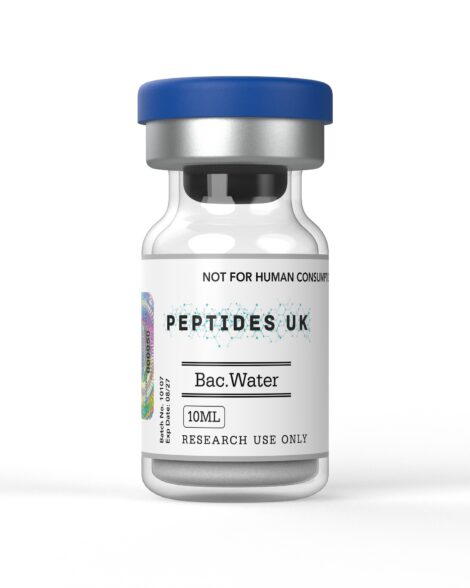
How is Hexarelin Acetate reconstituted for laboratory use?
Allow the vial to reach room temperature before opening. Add sterile or bacteriostatic water slowly down the vial wall and swirl gently without shaking. Aliquot immediately if longer-term storage at -80°C is required to preserve peptide integrity and avoid freeze-thaw degradation across multiple experimental uses.
How quickly is Hexarelin Acetate delivered to UAE?
Orders are dispatched promptly via tracked international courier. Delivery to the UAE typically takes 3–5 working days, with packaging designed to maintain peptide stability throughout transit.
Research Disclaimer: Hexarelin Acetate is supplied exclusively for legitimate scientific research purposes conducted within licensed laboratory environments. This product is not intended for human consumption, self-administration, or any therapeutic application. It must be handled by qualified researchers in compliance with applicable UAE regulations and institutional ethics guidelines. Handling should only be performed by qualified laboratory professionals in controlled research settings with appropriate institutional authorisations in place. By purchasing, you confirm that this compound will be used solely for approved in-vitro or pre-clinical research purposes.
Receive News
