PRODUCTS SOLD ON PEPTIDESLABUAE.COM ARE FOR RESEARCH PURPOSES ONLY AND ARE NOT FOR HUMAN OR VETERINARY USE.
£39.99
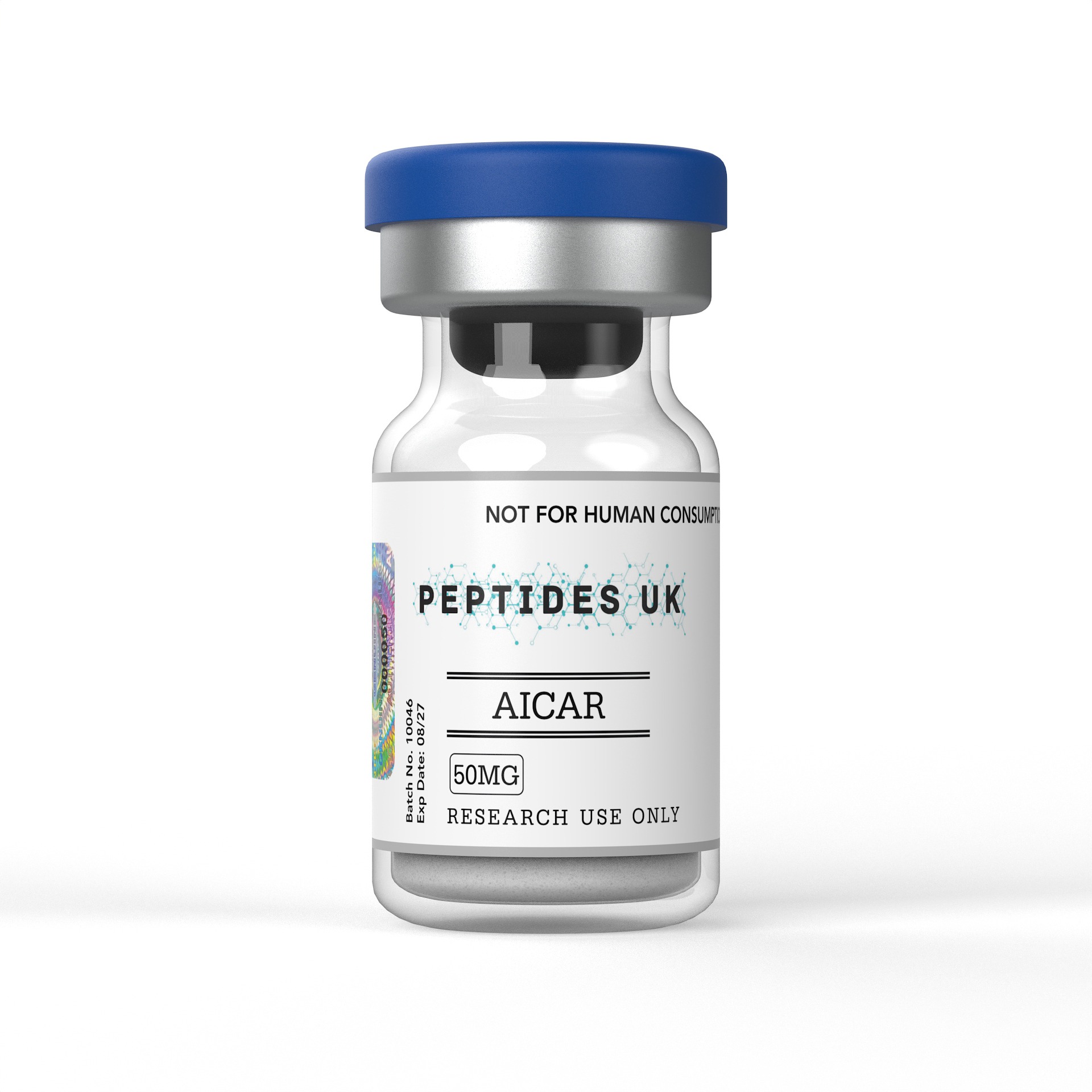
Buy AICAR in UAE – In Stock & Ready to Ship
AICAR is a widely researched compound known for its role in cellular energy regulation and AMPK activation studies. Each batch is independently verified at ≥99% purity and comes with a full Certificate of Analysis (COA) and HPLC testing documentation — giving UAE research teams the confidence they need when sourcing compounds for serious work.
For research use only. Not intended for human or veterinary use.

AICAR (5-Aminoimidazole-4-carboxamide ribonucleotide) is one of the most widely studied and mechanistically precise AMPK-activating compounds available to laboratories in the UAE — a nucleotide analogue that is taken up by cells and converted to ZMP, a direct AMP mimetic that activates AMP-activated protein kinase (AMPK), the master cellular energy sensor, making it the most commonly used pharmacological tool for studying AMPK-dependent metabolic signalling, mitochondrial biogenesis, and cellular energy homeostasis in controlled research settings. Researchers and institutions across the UAE, Dubai, Abu Dhabi and the wider GCC can source verified, research-grade AICAR with fast international dispatch and full batch documentation included.
✅ ≥99% Purity — HPLC & Mass Spectrometry Verified
✅ Batch-Specific Certificate of Analysis (CoA)
✅ Sterile Lyophilised Powder | GMP Manufactured
✅ Fast International Dispatch to UAE & GCC
AICAR (5-Aminoimidazole-4-carboxamide-1-β-D-ribofuranoside), also known as Acadesine or AICA Riboside, is a naturally occurring intermediate in the purine biosynthesis pathway that has become one of the most important pharmacological research tools in metabolic biology. When administered in research settings, AICAR is taken up by cells via adenosine transporters and phosphorylated intracellularly to ZMP (AICA ribonucleotide monophosphate) — a structural analogue of AMP that directly activates AMPK by mimicking the elevated AMP:ATP ratio that signals cellular energy stress.
AMPK (AMP-Activated Protein Kinase) is the master energy sensing kinase in mammalian cells — a heterotrimeric enzyme complex that monitors cellular energy status and, when activated, orchestrates a comprehensive metabolic reprogramming response: switching cells from anabolic energy-consuming processes to catabolic energy-generating pathways. AMPK activation triggers glucose uptake, fatty acid oxidation, mitochondrial biogenesis via PGC-1α, and autophagy initiation — while simultaneously inhibiting energy-expensive processes including fatty acid synthesis, protein synthesis, and gluconeogenesis.
AICAR’s ability to activate AMPK in a controlled, dose-dependent manner without requiring actual energy depletion has made it the reference pharmacological AMPK activator across decades of metabolic research. Its well-characterised mechanism, predictable cellular uptake, and extensive published literature base have established it as an indispensable tool in metabolic biology, mitochondrial research, and cellular energy homeostasis studies.
In laboratory settings, AICAR research is centred on its AMPK activation and the broad downstream metabolic and cellular effects this produces in experimental models. Research applications include:
Its status as the most direct and well-characterised pharmacological AMPK activator available makes AICAR the reference compound against which other AMPK-modulating agents are routinely benchmarked in metabolic research. All applications are for research use only.
AICAR has accumulated one of the most extensive and cross-disciplinary research profiles of any metabolic research compound currently used in laboratory science:
AMPK biology research has used AICAR as the foundational pharmacological tool for characterising AMPK’s role across virtually every major metabolic tissue — with studies documenting its activation of AMPK in skeletal muscle, liver, cardiac tissue, adipose tissue, and neural tissue, and mapping the downstream signalling consequences in each tissue type. This body of research has established AICAR as the primary reference compound for AMPK pathway studies and formed the mechanistic foundation for understanding how AMPK coordinates whole-body metabolic homeostasis.
Skeletal muscle metabolism research has produced some of the most referenced AICAR findings — with studies documenting AICAR-induced GLUT4 translocation and glucose uptake in muscle cells through an insulin-independent mechanism, fatty acid oxidation upregulation, and mitochondrial biogenesis via PGC-1α activation. Research examining AICAR’s effects on endurance-related gene expression in muscle tissue has characterised its ability to activate transcriptional programmes associated with metabolic adaptation — findings that have made AICAR a central research tool in exercise metabolism and muscle biology.
Cardiac research has extensively studied AICAR’s cardioprotective properties — with pre-clinical studies documenting significant protection against ischaemia-reperfusion injury through AMPK-mediated metabolic preconditioning, reduced cardiomyocyte apoptosis, and preservation of cardiac energy metabolism under ischaemic stress. These findings have established AICAR as a key research tool for studying metabolic cardioprotection mechanisms.
Anti-inflammatory research has characterised AICAR’s modulation of inflammatory signalling through AMPK-dependent inhibition of NF-κB — with studies documenting reduced pro-inflammatory cytokine production including TNF-α, IL-6, and IL-1β in inflammatory cell models. This anti-inflammatory profile has made AICAR a referenced research compound in studies examining how metabolic sensing pathways intersect with inflammatory regulation.
Cancer metabolism research has used AICAR to examine how AMPK activation interacts with mTOR signalling and cancer cell energy metabolism — with studies exploring AICAR’s effects on cell proliferation, autophagy induction, and metabolic vulnerability in various cancer cell line models, contributing to the broader research into metabolic approaches to studying tumour biology. Autophagy research has characterised AICAR as a reliable pharmacological inducer of autophagy through AMPK-ULK1 pathway activation — making it a standard research tool in studies examining how cellular energy status regulates the initiation of autophagy and mitophagy programmes.
| Compound | Type | AMPK Activation Mechanism | Selectivity | Primary Research Use | Research Profile |
|---|---|---|---|---|---|
| AICAR | Nucleotide analogue | ZMP — direct AMP mimetic | AMPK direct | AMPK pharmacology reference | Most studied |
| Metformin | Biguanide | Complex I inhibition — indirect | Broad metabolic | Metabolic disease, diabetes research | Extensively studied |
| Resveratrol | Polyphenol | SIRT1/indirect AMPK | Multiple targets | Ageing, metabolism, sirtuin research | Well-documented |
| A-769662 | Synthetic activator | Allosteric β1 subunit binding | AMPK direct | AMPK subunit selectivity research | Growing |
| 991 (Ex229) | Synthetic activator | Allosteric — ADaM site | AMPK direct | AMPK structural biology | Growing |
| Compound C (Dorsomorphin) | AMPK inhibitor | ATP-competitive inhibition | AMPK inhibitor | AMPK inhibition reference | Well-documented |
| Parameter | Detail |
|---|---|
| Type | Nucleotide Analogue / AMPK Activator |
| Also Known As | Acadesine, AICA Riboside, ZMP precursor |
| Primary Target | AMPK (via intracellular ZMP conversion) |
| Activation Mechanism | AMP mimetic — direct AMPK activation |
| Purity | ≥99% |
| Verification | HPLC & Mass Spectrometry |
| Form | Lyophilised Powder |
| Solubility | Sterile water or suitable laboratory buffer |
| Storage | -20°C, protected from light and moisture |
| Intended Use | Research use only |
Every order dispatched to the UAE and GCC includes:
Yes. We supply research-grade AICAR with international dispatch to the UAE, Dubai, Abu Dhabi, Sharjah and across the GCC. All orders include full batch documentation and are packaged to maintain compound integrity throughout transit. This compound is supplied strictly for laboratory research use only.
AMPK (AMP-Activated Protein Kinase) is the master energy sensing enzyme in mammalian cells — activated when cellular AMP:ATP ratios rise, signalling an energy deficit. Once activated, AMPK orchestrates a comprehensive metabolic shift: increasing glucose uptake, stimulating fatty acid oxidation, promoting mitochondrial biogenesis, and initiating autophagy, while simultaneously inhibiting energy-expensive anabolic processes. Because AMPK sits at the centre of cellular energy homeostasis and regulates so many fundamental metabolic processes, it is one of the most studied kinases in metabolic biology, ageing research, and disease pathway investigation.
AICAR enters cells via adenosine transporters and is phosphorylated intracellularly to ZMP — a monophosphate nucleotide that structurally mimics AMP. ZMP binds to the regulatory gamma subunit of AMPK, mimicking the elevated AMP signal that naturally activates the kinase during energy stress. This mechanism allows researchers to activate AMPK in a controlled, dose-dependent manner without requiring actual cellular energy depletion — making AICAR a cleaner and more controllable AMPK activation tool than approaches that induce genuine metabolic stress.
Both AICAR and Metformin activate AMPK, but through fundamentally different mechanisms. AICAR activates AMPK directly via ZMP mimicry of AMP at the regulatory subunit — a highly specific mechanism. Metformin activates AMPK indirectly through inhibition of mitochondrial Complex I, which raises cellular AMP:ATP ratios through genuine energy stress. AICAR’s direct mechanism makes it more precise for studying AMPK-specific signalling, while Metformin’s indirect mechanism introduces broader mitochondrial and energy metabolism variables. Research often uses both compounds to distinguish AMPK-specific effects from broader metabolic responses.
Skeletal muscle metabolism research has produced some of the most referenced AICAR findings in the literature — with studies documenting insulin-independent GLUT4 translocation and glucose uptake, upregulation of fatty acid oxidation enzymes, and activation of PGC-1α-driven mitochondrial biogenesis programmes in muscle cell models. Research examining AICAR’s effects on endurance-related gene expression has characterised its ability to activate metabolic adaptation transcriptional programmes in muscle tissue — establishing it as a central tool in exercise metabolism, muscle energy biology, and metabolic adaptation research.
AICAR is a widely used pharmacological inducer of autophagy in research settings — activating the AMPK-ULK1 signalling axis that initiates autophagosome formation and the selective removal of damaged cellular components through mitophagy. Studies using AICAR to induce autophagy have examined how cellular energy sensing connects to the quality control mechanisms that maintain cellular health, making it a standard research tool in autophagy biology, mitophagy pathway studies, and research examining how metabolic state influences cellular housekeeping processes.
Allow the vial to reach room temperature before opening. Add sterile water or appropriate laboratory buffer slowly down the vial wall and swirl gently without shaking. Prepare at your protocol’s required concentration. AICAR is generally stable in aqueous solution under proper storage conditions — aliquot and store at -80°C to minimise freeze-thaw degradation and maintain compound integrity between experimental sessions.
Orders are dispatched promptly via tracked international courier. Delivery to the UAE typically takes 3–5 working days, with packaging designed to maintain compound stability and integrity throughout transit.
AICAR (5-Aminoimidazole-4-carboxamide ribonucleotide) is supplied exclusively for legitimate scientific research conducted within licensed laboratory environments. This product is not intended for human consumption, self-administration, or any therapeutic or veterinary application. It must be handled solely by qualified researchers in compliance with applicable UAE regulations and institutional ethics guidelines. By purchasing, you confirm this compound will be used exclusively for approved in vitro or pre-clinical research purposes.
WhatsApp us
Receive News
