PRODUCTS SOLD ON PEPTIDESLABUAE.COM ARE FOR RESEARCH PURPOSES ONLY AND ARE NOT FOR HUMAN OR VETERINARY USE.
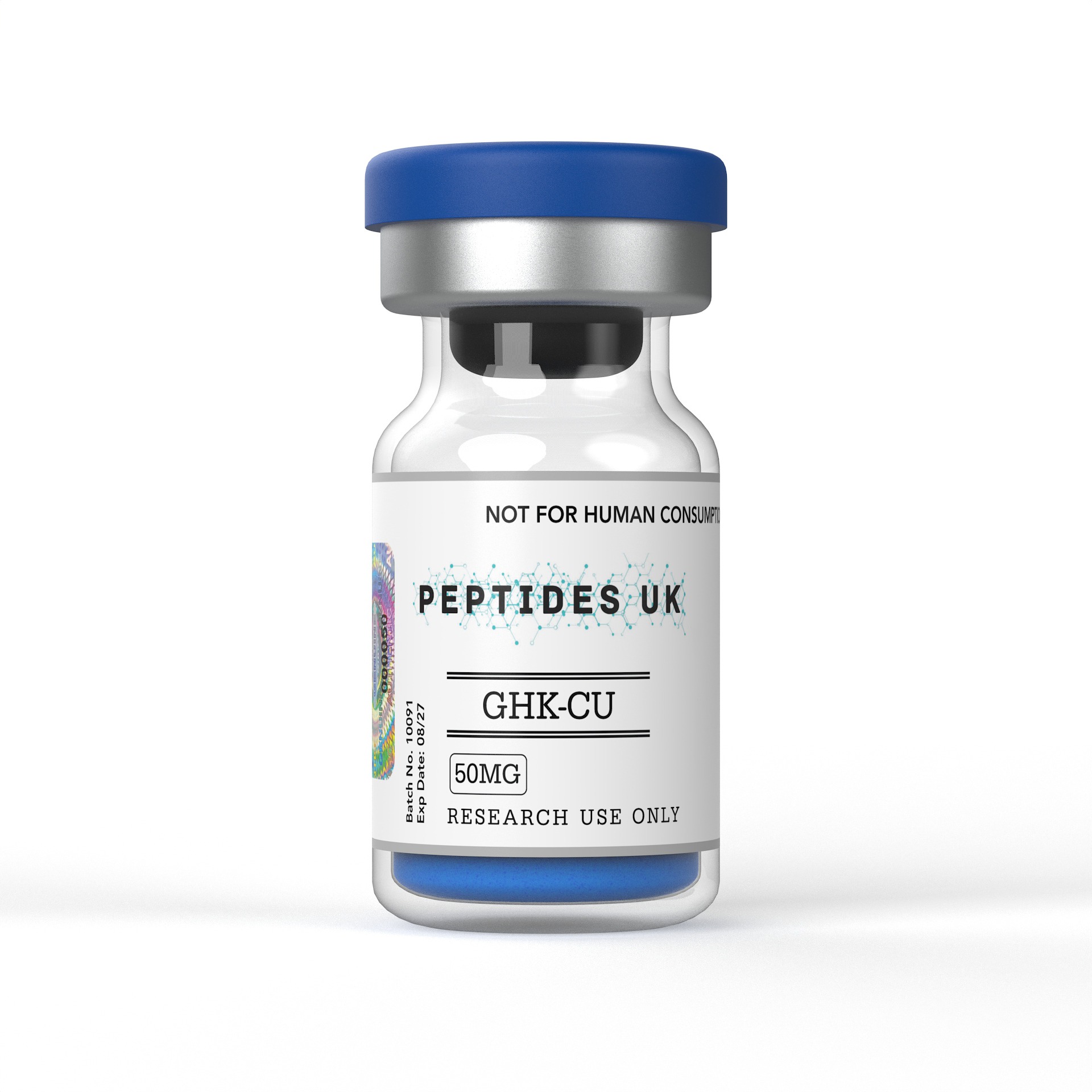
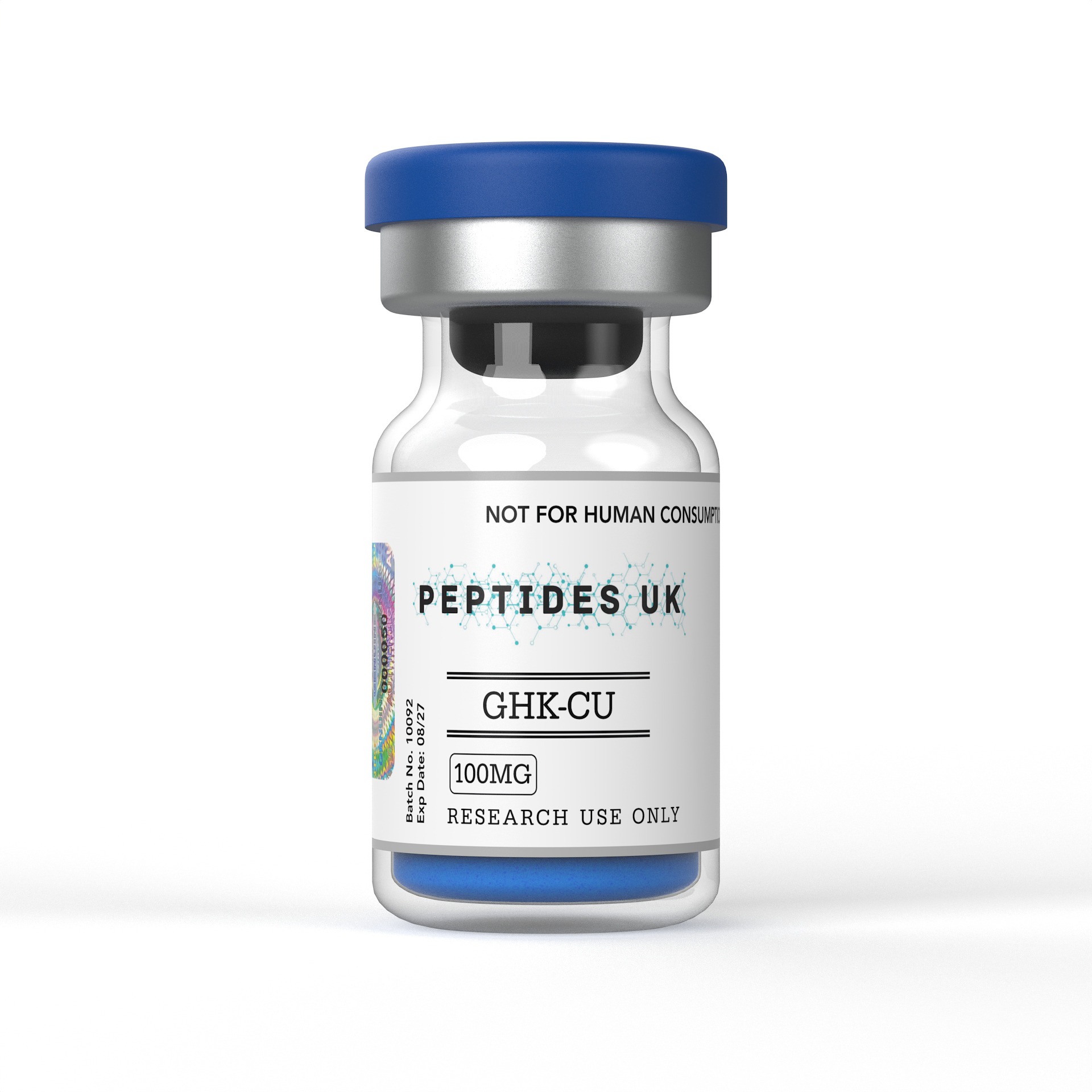
£37.99 – £69.99Price range: £37.99 through £69.99
Buy GHK-Cu Peptide in UAE – In Stock & Ready to Ship
GHK-Cu (Copper Peptide) is a widely researched peptide known for its role in skin regeneration, wound healing and collagen synthesis studies. Each batch is independently verified at ≥99% purity and comes with a full Certificate of Analysis (COA) and HPLC testing documentation — giving UAE research teams the confidence they need when sourcing peptides for serious work.
For research use only. Not intended for human or veterinary use.

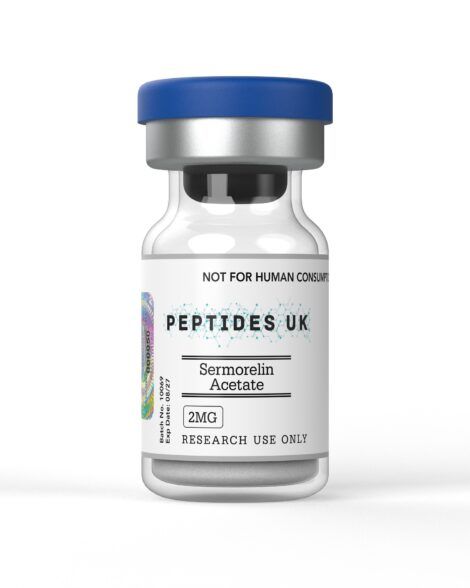
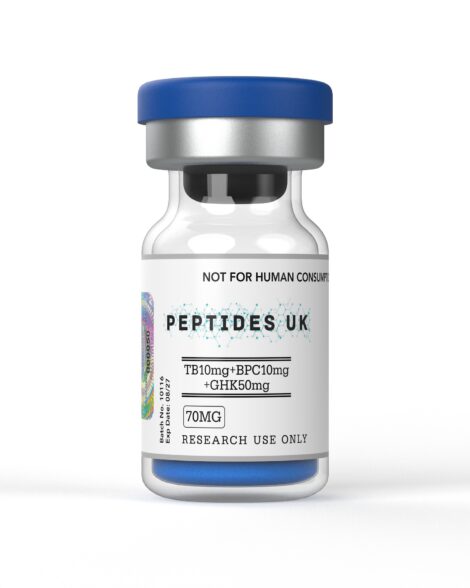
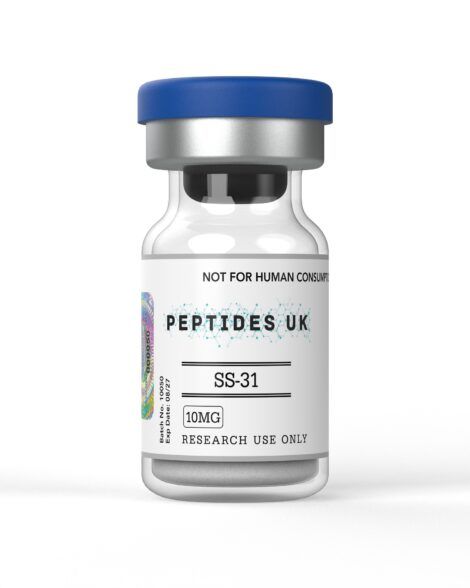
GHK-Cu (Copper Tripeptide-1) is a naturally occurring copper-binding tripeptide found in human plasma, studied extensively in skin biology, wound healing, and tissue regeneration research for its remarkable influence on collagen synthesis, gene expression regulation, antioxidant defence, and extracellular matrix remodelling — giving it one of the most well-documented research profiles of any peptide in dermatological and regenerative science. Researchers and institutions across the UAE, Dubai, Abu Dhabi and the wider GCC can source verified, research-grade GHK-Cu with fast international dispatch and full batch documentation included.
✅ ≥99% Purity — HPLC & Mass Spectrometry Verified ✅ Batch-Specific Certificate of Analysis (CoA) Included ✅ Sterile Lyophilised Powder | GMP Manufactured ✅ Fast International Dispatch to UAE & GCC
GHK-Cu is a naturally occurring tripeptide composed of three amino acids — glycine, histidine, and lysine — with a high affinity for copper ions, forming a stable copper complex that gives the compound its characteristic biological activity. It was first identified in human plasma in the early 1970s by Loren Pickart, who observed that plasma from young individuals had a regenerative effect on aged liver tissue — and subsequently isolated GHK as the active component responsible.
Since its discovery, GHK-Cu has been identified in saliva, urine, and various tissue fluids — and has been found to play roles in wound healing signal cascades, tissue repair coordination, and the regulation of a surprisingly large number of human genes. Research suggests it functions as a biological signal of tissue injury — concentrations rise at wound sites and decline as healing progresses — making it a natural coordinator of tissue repair processes. Its combination of collagen-stimulating, antioxidant, anti-inflammatory, and gene-regulatory properties has made GHK-Cu one of the most multifaceted and extensively studied peptides in skin biology and regenerative research. Research demand from institutions across the UAE and GCC has grown significantly alongside expanding dermatological and tissue repair research programmes in the region.
In controlled laboratory and pre-clinical research settings, GHK-Cu has been studied across a remarkably broad range of biological applications:
Collagen and Extracellular Matrix Research: GHK-Cu’s most studied and documented research area is its influence on collagen synthesis and extracellular matrix biology. Studies have examined its effects on collagen type I, III, and IV production in fibroblast models, alongside its influence on glycosaminoglycan synthesis, elastin production, and decorin expression — key components of healthy skin and connective tissue architecture.
Wound Healing Models: Research has incorporated GHK-Cu into multiple wound healing model types, examining its influence on fibroblast migration, keratinocyte behaviour, wound contraction parameters, and the overall progression of tissue repair from initial injury through to matrix remodelling and resolution.
Gene Expression Research: One of GHK-Cu’s most distinctive research characteristics is the breadth of its gene-regulatory activity. Studies have documented its influence on the expression of hundreds of human genes — including genes involved in tissue remodelling, inflammation resolution, antioxidant defence, and cellular repair — positioning it as one of the most broadly gene-active peptides in research.
Antioxidant Defence Studies: Research has examined GHK-Cu’s influence on antioxidant enzyme systems including superoxide dismutase and catalase, exploring how copper-peptide complexing affects cellular defence against oxidative damage in skin and tissue models.
Anti-Inflammatory Research: Studies have examined GHK-Cu’s modulatory effects on inflammatory cytokine expression in skin and wound models, exploring how this tripeptide influences the resolution of acute inflammation and the transition from inflammatory to proliferative phases of tissue repair.
Angiogenesis Research: GHK-Cu has been studied for its influence on new blood vessel formation in wound healing models, with research examining how it affects VEGF expression and endothelial cell behaviour in tissue repair contexts.
Skin Biology and Ageing Research: Research has examined GHK-Cu’s effects on dermal fibroblast activity, skin thickness parameters, and age-related changes in skin extracellular matrix composition — making it a relevant compound for laboratories studying cellular skin ageing at the molecular level.
Hair Follicle Research: Some studies have examined GHK-Cu’s influence on hair follicle biology, looking at its effects on follicle size, hair growth cycle parameters, and the cellular behaviour of follicular cells in pre-clinical models.
Nerve Tissue Research: Pre-clinical studies have explored GHK-Cu’s potential neuroprotective properties and its influence on nerve tissue repair, reflecting its broad gene-regulatory activity and its presence in biological fluids associated with neural tissue.
All applications listed are research-based only. GHK-Cu is not approved for human therapeutic use.
GHK-Cu has accumulated one of the most extensive and multidisciplinary research profiles of any tripeptide in biological science:
Collagen research spanning several decades has consistently documented GHK-Cu’s stimulatory effects on collagen synthesis in fibroblast cell models, with studies reporting increases in both collagen production and the expression of key matrix remodelling enzymes — establishing it as one of the most reliably collagen-stimulating peptide compounds available for skin biology research. Gene expression studies have produced some of the most striking findings in GHK-Cu’s research profile — with research by Pickart and colleagues documenting GHK-Cu’s influence on the expression of over 4,000 human genes in gene array studies, with effects on genes associated with tissue remodelling, inflammation, antioxidant systems, and DNA repair — positioning it as one of the most broadly gene-active small peptides identified in human biology. Wound healing research has documented GHK-Cu’s consistent pro-healing effects across multiple model types, with studies reporting accelerated wound closure, improved collagen organisation, and enhanced vascularisation in pre-clinical wound models compared to untreated controls. Antioxidant research has examined GHK-Cu’s copper-dependent effects on superoxide dismutase activity and oxidative stress markers in cellular models, with studies documenting meaningful reductions in oxidative damage parameters under GHK-Cu treatment conditions. Hair follicle research has reported GHK-Cu’s influence on follicular cell behaviour and hair growth cycle parameters in pre-clinical models — contributing to its use as a research tool in hair biology studies. Skin ageing research has examined GHK-Cu’s effects on age-related changes in dermal matrix composition, with studies documenting its influence on skin thickness, elastin content, and fibroblast responsiveness in aged tissue models.
GHK-Cu is frequently combined with other repair and regenerative peptides in multi-compound research protocols:
| Stack | Compounds | Research Focus |
|---|---|---|
| Glow Stack | BPC-157 + TB-500 + GHK-Cu | Skin biology / collagen / tissue repair |
| GHK + BPC-157 | GHK-Cu + BPC-157 | Wound healing / angiogenesis research |
| GHK + Epithalon | GHK-Cu + Epithalon | Cellular ageing / longevity research |
| GHK + TB-500 | GHK-Cu + TB-500 | Tissue repair / extracellular matrix |
| Parameter | Specification |
|---|---|
| Full Name | GHK-Cu (Copper Tripeptide-1) |
| Sequence | Gly-His-Lys + Copper (II) |
| Structure | Tripeptide copper chelate |
| Purity | ≥99% (HPLC & MS Verified) |
| Form | Sterile Lyophilised Powder |
| Solubility | Sterile water, bacteriostatic water |
| Storage (powder) | -20°C, protect from light |
| Storage (reconstituted) | 2–8°C, use within 2–4 weeks |
| Appearance | Blue-tinted powder (copper complex) |
Every order of GHK-Cu dispatched to the UAE and GCC includes:
Can I buy GHK-Cu peptide in the UAE?
Yes. We supply research-grade GHK-Cu (Copper Tripeptide-1) with international dispatch to the UAE, Dubai, Abu Dhabi, Sharjah and across the GCC. All orders include full batch documentation and are packaged to maintain peptide integrity throughout transit. This compound is supplied strictly for laboratory research use only.
What does the copper component do in GHK-Cu?
The copper ion is an integral part of GHK-Cu’s biological activity — not simply a carrier metal. GHK (the tripeptide alone) has high affinity for copper (II) ions, and the resulting copper complex has distinct biological properties compared to the peptide alone. Copper is involved in the activity of several key enzymes including lysyl oxidase — which is essential for collagen and elastin crosslinking — and superoxide dismutase. The copper component of GHK-Cu is studied for its contribution to both the peptide’s collagen-stimulating and antioxidant research properties.
Why does GHK-Cu appear blue or blue-green in colour?
The characteristic blue tint of GHK-Cu powder and solution comes from the copper (II) ion chelated within the peptide complex — the same source of colour as other copper-containing biological compounds. This colour is a normal feature of the compound and can be used as a basic visual confirmation of copper complexation, though purity should always be verified through the supplied HPLC chromatogram and certificate of analysis.
How does GHK-Cu compare to other collagen-stimulating research peptides?
GHK-Cu is one of the most extensively studied collagen-stimulating peptides in biological research, with a research profile that extends well beyond collagen synthesis alone into gene expression regulation, antioxidant defence, and wound healing biology. Other collagen-related research peptides like Prolyl-Hydroxyproline (Pro-Hyp) focus more narrowly on matrix synthesis, while GHK-Cu’s broad gene-regulatory activity makes it a more comprehensive research tool for studies examining the multiple dimensions of skin and tissue biology simultaneously.
What purity is required for GHK-Cu skin biology research?
A minimum of ≥98% is considered research grade, though ≥99% is strongly preferred for sensitive gene expression studies, collagen synthesis assays, and wound healing model experiments where compound purity directly affects result accuracy. All our GHK-Cu is independently verified to ≥99% purity.
How is GHK-Cu reconstituted for laboratory use?
Allow the vial to reach room temperature before opening. Add sterile or bacteriostatic water slowly down the vial wall and swirl gently without shaking. GHK-Cu dissolves readily in aqueous solution, producing a characteristic blue-tinted solution confirming copper complexation. Aliquot immediately if longer-term storage at -80°C is required to preserve peptide integrity across multiple experimental uses.
How quickly is GHK-Cu delivered to UAE?
Orders are dispatched promptly via tracked international courier. Delivery to the UAE typically takes 3–5 working days, with packaging designed to maintain peptide stability throughout transit.
Research Disclaimer: GHK-Cu (Copper Tripeptide-1) is supplied exclusively for legitimate scientific research purposes conducted within licensed laboratory environments. This product is not intended for human consumption, self-administration, or any therapeutic application. It must be handled by qualified researchers in compliance with applicable UAE regulations and institutional ethics guidelines. Handling should only be performed by qualified laboratory professionals in controlled research settings with appropriate institutional authorisations in place. By purchasing, you confirm that this compound will be used solely for approved in-vitro or pre-clinical research purposes.
WhatsApp us
Receive News
