
PRODUCTS SOLD ON PEPTIDESLABUAE.COM ARE FOR RESEARCH PURPOSES ONLY AND ARE NOT FOR HUMAN OR VETERINARY USE.
£58.99
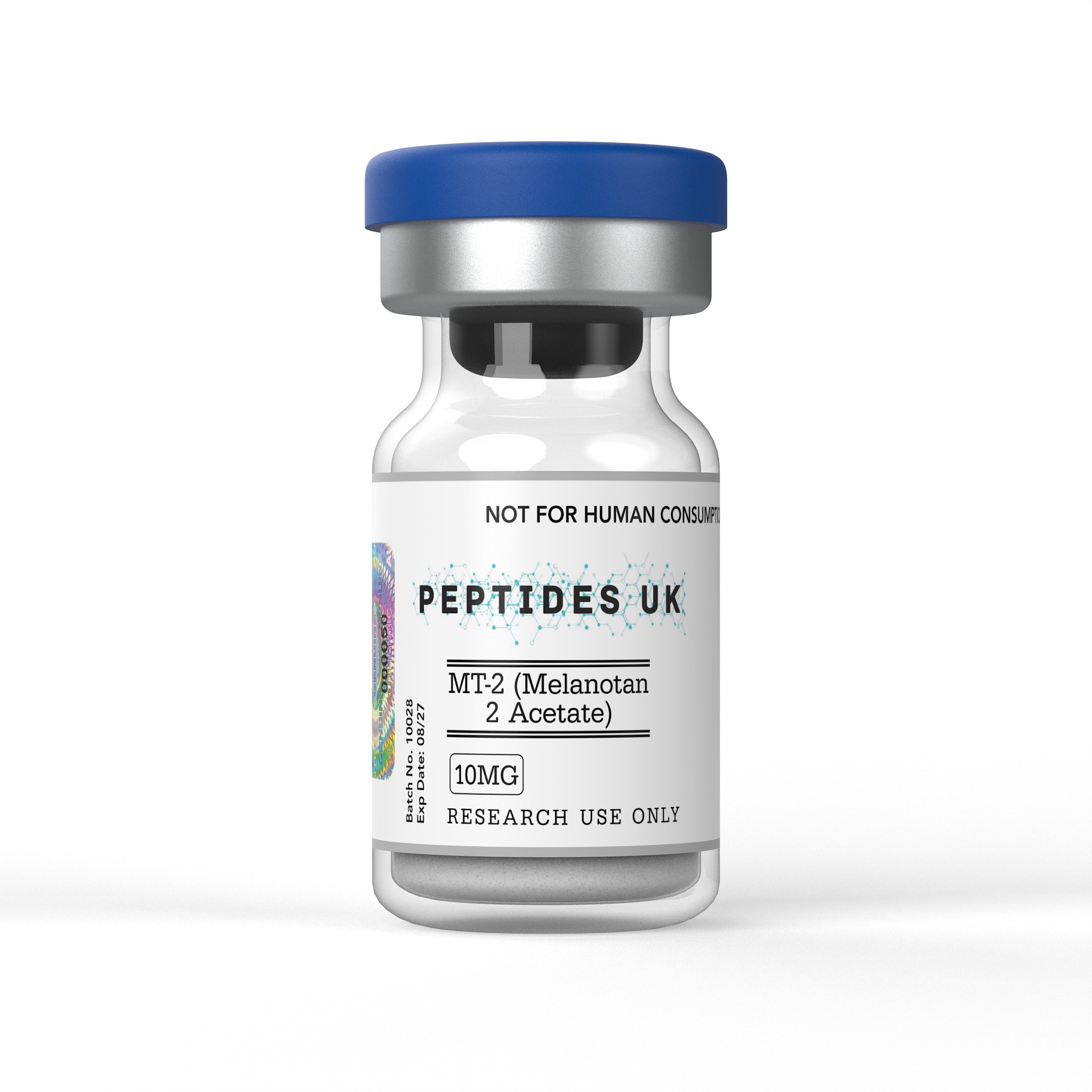
Buy MT-2 (Melanotan 2 Acetate) Peptide in UAE – In Stock & Ready to Ship
MT-2 (Melanotan 2 Acetate) is a widely researched peptide known for its role in melanocortin receptor binding and skin pigmentation studies. Each batch is independently verified at ≥99% purity and comes with a full Certificate of Analysis (COA) and HPLC testing documentation — giving UAE research teams the confidence they need when sourcing peptides for serious work.
For research use only. Not intended for human or veterinary use.

Melanotan 2 Acetate (MT-2) is one of the most extensively studied and broadly acting synthetic melanocortin peptides available to laboratories in the UAE — a cyclic heptapeptide acetate salt analogue of alpha-MSH that activates MC1R, MC3R, and MC4R simultaneously, producing a uniquely broad melanocortin receptor engagement profile that simultaneously drives melanogenesis through peripheral MC1R, modulates sexual behaviour circuits through central MC4R, and influences energy homeostasis and appetite regulation through hypothalamic MC3R/MC4R — making it the most pharmacologically comprehensive melanocortin research tool for studying multi-receptor melanocortin biology, comparative receptor subtype contributions, and the full spectrum of POMC-derived peptide signalling. Researchers and institutions across the UAE, Dubai, Abu Dhabi and the wider GCC can source verified, research-grade Melanotan 2 Acetate with fast international dispatch and full batch documentation included.
✅ ≥99% Purity — HPLC & Mass Spectrometry Verified
✅ Batch-Specific Certificate of Analysis (CoA)
✅ Sterile Lyophilised Powder | GMP Manufactured
✅ Fast International Dispatch to UAE & GCC
Melanotan 2 Acetate — MT-2 Acetate — is the acetate counter-ion salt form of Melanotan 2, a synthetic cyclic heptapeptide analogue of alpha-Melanocyte Stimulating Hormone (α-MSH) developed at the University of Arizona through systematic structure-activity relationship studies aimed at producing a metabolically stable, potent melanocortin receptor agonist with improved research practicality over native α-MSH. The acetate salt designation indicates pairing of the MT-2 peptide cation with an acetate counter-ion — providing superior aqueous solubility, faster and cleaner reconstitution, and enhanced lyophilised powder stability compared to the free base form — while having no effect whatsoever on melanocortin receptor binding or downstream pharmacology.
Melanotan 2’s structural distinction from both native α-MSH and Melanotan 1 is its cyclic architecture — a disulphide-like cyclisation between Asp and Lys residues that constrains the peptide into a specific bioactive conformation — combined with incorporation of a D-phenylalanine residue at position 7 that dramatically enhances receptor binding affinity and metabolic stability. This cyclic constrained structure produces a peptide significantly more potent and metabolically stable than the linear α-MSH analogues, with a substantially extended half-life that makes it a more practical research tool for in vivo and extended in vitro protocols.
The pharmacological profile that makes Melanotan 2 uniquely significant in melanocortin research is its broad multi-receptor activity — binding with high affinity to MC1R on peripheral melanocytes driving melanogenesis, MC3R and MC4R in the hypothalamus and limbic system influencing energy homeostasis and motivational circuits, and producing downstream autonomic responses through central MC4R activation. This simultaneous multi-receptor engagement produces overlapping and interacting biological effects that make MT-2 the most comprehensive single-compound research tool for studying the full spectrum of melanocortin receptor biology — while also making careful receptor subtype attribution an important consideration in research protocol design.
In laboratory settings, Melanotan 2 Acetate research spans melanocyte biology, central nervous system pharmacology, energy homeostasis, and autonomic regulation given its broad multi-receptor activity profile. Research applications include:
Its broad simultaneous MC1R, MC3R, and MC4R engagement — combined with the acetate salt form’s superior aqueous reconstitution — makes Melanotan 2 Acetate the most pharmacologically comprehensive melanocortin research compound for studying multi-receptor melanocortin biology. All applications are for research use only.
Melanotan 2 has accumulated one of the most extensive and cross-disciplinary research profiles among synthetic melanocortin peptides — spanning dermatology, neuroscience, and metabolic biology:
SAR development research established Melanotan 2’s foundational pharmacological profile — with systematic studies at the University of Arizona characterising how cyclic constraint and D-Phe7 incorporation dramatically enhanced receptor binding affinity, metabolic stability, and in vivo potency compared to linear α-MSH analogues. These studies established the cyclic constrained D-amino acid substitution strategy as one of the most effective approaches to melanocortin peptide optimisation and positioned Melanotan 2 as the benchmark high-potency melanocortin research compound against which subsequent analogues were developed and characterised.
Melanogenesis research has documented Melanotan 2’s potent MC1R-mediated stimulation of eumelanin synthesis in melanocyte models and pre-clinical pigmentation studies — with studies characterising the cAMP-PKA-MITF signalling cascade activation, tyrosinase upregulation, and increased melanin production and transfer following MT-2 administration. Comparative studies between MT-2 and Melanotan 1 have examined how the cyclic structure’s enhanced potency translates to differences in melanogenic response magnitude and duration — establishing the two compounds as complementary reference tools in melanocyte biology research.
Sexual behaviour and MC4R neuroscience research has extensively characterised Melanotan 2’s central effects — with pre-clinical studies in both male and female rodent models documenting dose-dependent effects on appetitive and consummatory sexual behaviour components through hypothalamic MC4R activation in the paraventricular nucleus and medial preoptic area. These studies have examined the dopaminergic circuit interactions through which MC4R activation produces motivational behaviour changes and have positioned MT-2 as the original reference compound for central melanocortin sexual behaviour research — preceding and informing the development of the more MC4R-selective PT-141.
Energy homeostasis research has characterised Melanotan 2’s MC3R and MC4R-mediated effects on feeding behaviour and body weight in pre-clinical models — with studies documenting dose-dependent reductions in food intake and body weight alongside changes in energy expenditure parameters. These findings have contributed to the broader understanding of how hypothalamic melanocortin receptor activation regulates the energy balance circuit and have informed subsequent development of more MC4R-selective agonists for metabolic research applications.
Comparative receptor selectivity research has used MT-2 alongside Melanotan 1, PT-141, and selective MC4R agonists to dissect the relative contributions of each melanocortin receptor subtype to the full biological profile of broad melanocortin activation — with studies examining how selective vs non-selective receptor engagement influences melanogenic, behavioural, and metabolic outcomes. This comparative pharmacology literature has established MT-2 as the essential broad-spectrum reference compound in melanocortin receptor selectivity research.
Anti-inflammatory and nociception research has examined MT-2’s effects across MC1R and central melanocortin receptor-mediated anti-inflammatory pathways — with studies documenting modulation of inflammatory cytokine profiles, NF-κB pathway suppression, and pain modulation through melanocortin receptor activation. These findings have expanded MT-2’s research relevance beyond melanogenesis and sexual behaviour into inflammatory biology and pain neuroscience research.
| Compound | Type | MC1R | MC3R | MC4R | Melanogenic | Central Activity | Research Profile |
|---|---|---|---|---|---|---|---|
| Melanotan 2 Acetate | Cyclic heptapeptide — acetate | High | High | High | Strong | Strong | Extensively studied |
| Melanotan 1 (Afamelanotide) | Linear tridecapeptide | High | Low | Low | Strong | Minimal | Extensively studied |
| PT-141 (Bremelanotide) | Cyclic heptapeptide | Low | Moderate | High | Minimal | Strong | Well-documented |
| α-MSH (native) | Endogenous tridecapeptide | Moderate | Moderate | Moderate | Moderate | Moderate | Extensively studied |
| Setmelanotide | MC4R selective agonist | Minimal | Low | High | Minimal | Moderate | Growing |
| MTII | Cyclic melanocortin agonist | High | High | High | Moderate | Strong | Well-documented |
| Parameter | Melanotan 2 Acetate | Melanotan 2 Base |
|---|---|---|
| Counter-ion | Acetate | None |
| Aqueous solubility | Superior | Good |
| Reconstitution consistency | Excellent | Good |
| Lyophilised stability | Enhanced | Standard |
| MC1R binding | Identical | Identical |
| MC3R/MC4R binding | Identical | Identical |
| Full pharmacological profile | Identical | Identical |
| Published literature form | Primary referenced form | Secondary |
| Preferred for | In vitro assays, precise dose-response | General research |
| Parameter | Detail |
|---|---|
| Type | Synthetic Cyclic Heptapeptide — Acetate Salt |
| Also Known As | MT-2 Acetate, Melanotan II Acetate |
| Parent Peptide | α-MSH — cyclic constrained analogue |
| Key Structural Features | Cyclic constraint + D-Phe7 substitution |
| Salt Form | Acetate counter-ion |
| Primary Receptors | MC1R + MC3R + MC4R |
| Chain Length | 7 Amino Acids (cyclic) |
| Purity | ≥99% |
| Verification | HPLC & Mass Spectrometry |
| Form | Lyophilised Powder |
| Solubility | Sterile water or bacteriostatic water — superior dissolution |
| Storage | -20°C, protected from light and moisture |
| Intended Use | Research use only |
Every order dispatched to the UAE and GCC includes:
Yes. We supply research-grade Melanotan 2 Acetate with international dispatch to the UAE, Dubai, Abu Dhabi, Sharjah and across the GCC. All orders include full batch documentation and are packaged to maintain peptide integrity throughout transit. This compound is supplied strictly for laboratory research use only.
The pharmacological activity of Melanotan 2 Acetate and Melanotan 2 base is completely identical — both contain the same cyclic heptapeptide sequence with the same MC1R, MC3R, and MC4R binding characteristics and downstream pharmacology. The acetate salt form pairs the MT-2 peptide with an acetate counter-ion that dissociates completely in aqueous solution — improving aqueous solubility, reconstitution consistency, and lyophilised powder stability without affecting receptor pharmacology. The acetate form is the primary form referenced in published research literature and is the preferred choice for in vitro assays and precise dose-response protocols requiring consistent aqueous concentration preparation.
Melanotan 1 and Melanotan 2 differ in three fundamental research-relevant ways. First, structure — Melanotan 1 is a linear tridecapeptide while Melanotan 2 is a cyclic heptapeptide, with the cyclic constraint conferring substantially higher receptor binding affinity and potency. Second, receptor selectivity — Melanotan 1 has relative MC1R selectivity with minimal central activity, while Melanotan 2 activates MC1R, MC3R, and MC4R with high affinity producing both peripheral melanogenic and strong central nervous system effects simultaneously. Third, research application — Melanotan 1 is the preferred tool for studying MC1R-specific peripheral melanocyte biology and photoprotection without central confounds, while Melanotan 2 is the preferred tool for studying the full multi-receptor melanocortin system simultaneously or for comparative receptor contribution research.
Melanotan 2’s cyclic constraint — combined with D-Phe7 substitution — produces three key research-relevant improvements over linear melanocortin peptides. First, dramatically enhanced receptor binding affinity through conformational pre-organisation into the bioactive receptor-binding geometry — reducing the entropic cost of receptor binding. Second, substantially improved metabolic stability through resistance to exopeptidase degradation and reduced proteolytic susceptibility conferred by the cyclic architecture. Third, extended duration of receptor engagement in biological systems — enabling sustained receptor activation in pre-clinical protocols requiring consistent melanocortin receptor stimulation over extended experimental timeframes. Together these properties make Melanotan 2 a significantly more potent and research-practical melanocortin agonist than linear α-MSH analogues.
Extensive pre-clinical research has characterised Melanotan 2’s central MC4R-mediated effects — with studies in rodent models documenting dose-dependent effects on sexual behaviour, appetite, and autonomic regulation through hypothalamic MC4R activation. Research examining the neuroanatomical basis of these effects has identified the paraventricular nucleus, medial preoptic area, and ventromedial hypothalamus as primary sites of MT-2’s central activity. Dopaminergic circuit interaction studies have examined how MC4R activation in these hypothalamic regions interfaces with mesolimbic reward signalling — providing insights into how the melanocortin system modulates motivational circuitry through hypothalamic-limbic circuit interactions. MT-2’s role as the original reference compound for central melanocortin research has made it foundational to the subsequent development of more selective central melanocortin research tools including PT-141.
The incorporation of D-phenylalanine — the D-amino acid mirror image of natural L-phenylalanine — at position 7 of Melanotan 2’s sequence was identified through systematic SAR studies as one of the most potency-enhancing modifications achievable in melanocortin peptide design. D-Phe7 contributes to the bioactive conformational constraint that positions the pharmacophore residues optimally for melanocortin receptor engagement — contributing alongside the cyclic architecture to MT-2’s dramatically enhanced receptor binding affinity compared to native α-MSH. D-amino acid incorporation also improves metabolic stability by disrupting recognition by stereospecific proteolytic enzymes. The D-Phe7 substitution strategy identified in Melanotan 2’s development has become a widely adopted principle in cyclic melanocortin peptide medicinal chemistry and SAR research.
Allow the vial to reach room temperature before opening. Add sterile or bacteriostatic water slowly down the vial wall and swirl gently without shaking. The acetate salt form dissolves rapidly and cleanly in aqueous media — prepare at your protocol’s required concentration. The cyclic structure provides improved solution stability compared to linear peptides. Aliquot and store at -80°C to minimise freeze-thaw degradation and maintain peptide integrity between experimental sessions. Protect reconstituted solutions from prolonged light exposure as standard peptide handling protocol.
Orders are dispatched promptly via tracked international courier. Delivery to the UAE typically takes 3–5 working days, with packaging designed to maintain peptide stability and integrity throughout transit.
Melanotan 2 Acetate is supplied exclusively for legitimate scientific research conducted within licensed laboratory environments. This product is not intended for human consumption, self-administration, or any therapeutic or veterinary application. It must be handled solely by qualified researchers in compliance with applicable UAE regulations and institutional ethics guidelines. By purchasing, you confirm this compound will be used exclusively for approved in vitro or pre-clinical research purposes.
WhatsApp us
Receive News
