
PRODUCTS SOLD ON PEPTIDESLABUAE.COM ARE FOR RESEARCH PURPOSES ONLY AND ARE NOT FOR HUMAN OR VETERINARY USE.
£169.99
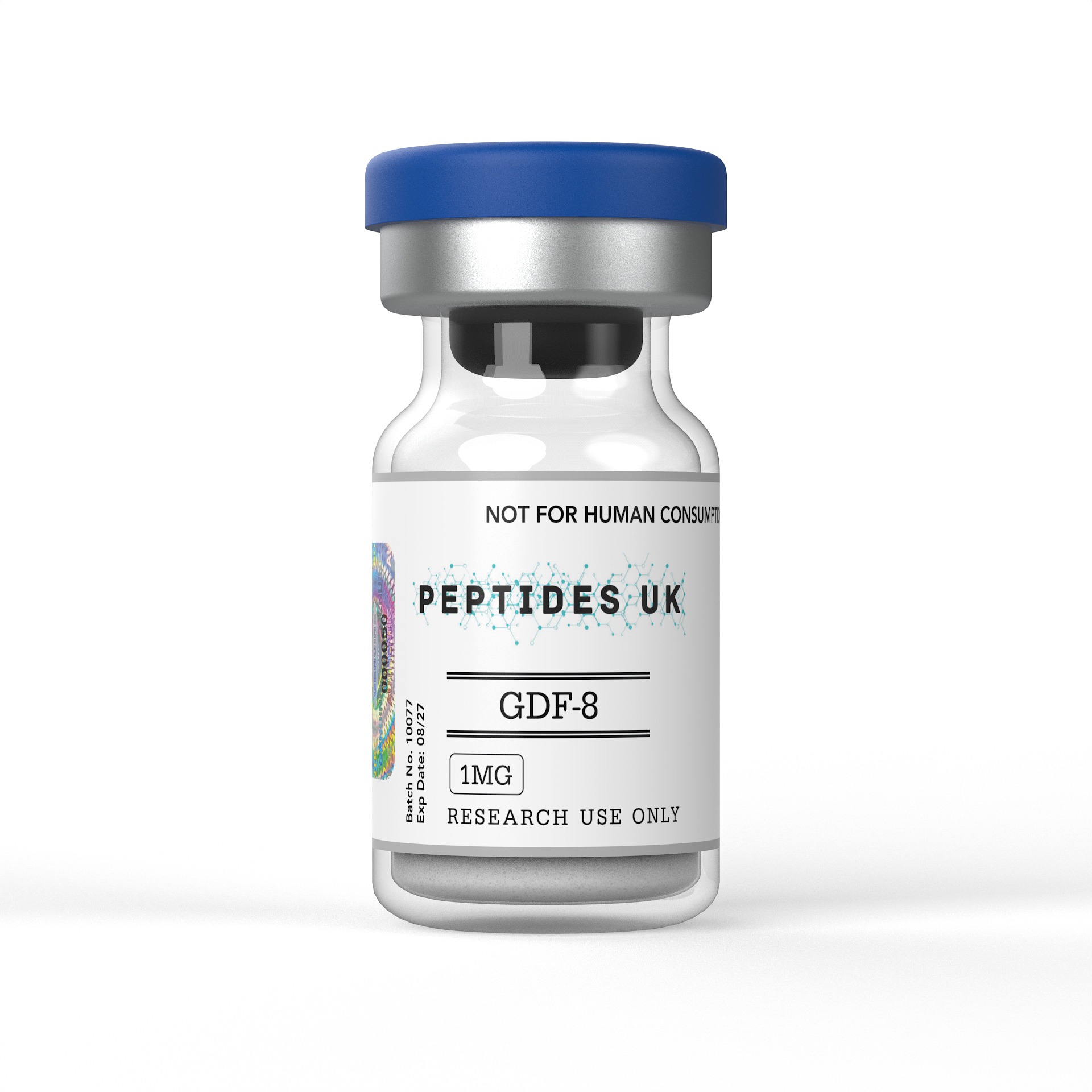
Buy GDF-8 Peptide in UAE – In Stock & Ready to Ship
GDF-8 (Myostatin) is a widely researched peptide known for its role in muscle growth regulation and skeletal muscle development studies. Each batch is independently verified at ≥99% purity and comes with a full Certificate of Analysis (COA) and HPLC testing documentation — giving UAE research teams the confidence they need when sourcing peptides for serious work.
For research use only. Not intended for human or veterinary use.

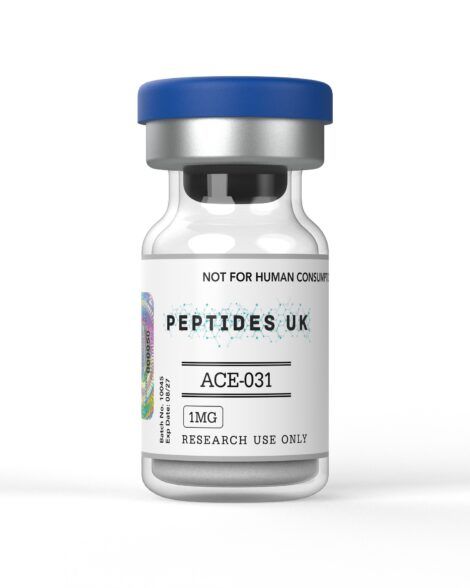
GDF-8 (Growth Differentiation Factor 8), more widely known as Myostatin, is one of the most extensively studied negative regulators of skeletal muscle mass available to laboratories in the UAE — a TGF-β superfamily member that acts as a potent endogenous inhibitor of muscle growth by suppressing satellite cell activation, inhibiting myoblast proliferation and differentiation, and limiting myofibre hypertrophy, making it the most important research tool for studying muscle mass regulation, satellite cell biology, and the molecular mechanisms that define the upper limits of skeletal muscle development. Researchers and institutions across the UAE, Dubai, Abu Dhabi and the wider GCC can source verified, research-grade GDF-8 with fast international dispatch and full batch documentation included.
✅ ≥99% Purity — HPLC & Mass Spectrometry Verified
✅ Batch-Specific Certificate of Analysis (CoA)
✅ Sterile Lyophilised Powder | GMP Manufactured
✅ Fast International Dispatch to UAE & GCC
GDF-8, universally known in research as Myostatin, is a secreted growth and differentiation factor belonging to the Transforming Growth Factor-beta (TGF-β) superfamily — a large family of structurally related signalling proteins that regulate cell growth, differentiation, and tissue homeostasis across virtually every organ system. Myostatin is produced primarily in skeletal muscle tissue, where it acts in an autocrine and paracrine manner as a potent negative regulator of muscle mass — essentially functioning as the body’s built-in muscle growth brake.
Myostatin is synthesised as a precursor protein that undergoes proteolytic processing to generate a mature, biologically active C-terminal dimer. The mature dimer signals through a specific receptor complex — binding with high affinity to Activin Receptor Type IIB (ActRIIB) on the surface of muscle cells, which recruits the co-receptor ALK4 or ALK5 and activates intracellular SMAD2/3 signalling. SMAD2/3 activation drives transcription of genes that suppress muscle cell proliferation and differentiation while simultaneously inhibiting the IGF-1/Akt/mTOR anabolic signalling pathway — effectively blocking the primary molecular driver of muscle protein synthesis and hypertrophy.
The biological significance of Myostatin as a research subject was dramatically illustrated by the discovery of natural Myostatin loss-of-function mutations — producing extraordinary muscle hypertrophy phenotypes in cattle (Belgian Blue and Piedmontese breeds), sheep, dogs, and notably in rare human cases — providing compelling genetic evidence that Myostatin is the primary endogenous constraint on skeletal muscle mass across mammalian species. These natural knockout observations established GDF-8 as one of the most important targets in muscle biology research and drove enormous interest in Myostatin inhibition as a research strategy for studying muscle growth regulation.
In laboratory settings, GDF-8 research is centred on its role as the primary endogenous muscle growth inhibitor and the downstream signalling consequences of ActRIIB/SMAD pathway activation. Research applications include:
Its status as the primary endogenous negative regulator of skeletal muscle mass makes GDF-8 the essential reference protein for any research examining muscle growth biology — both as a direct research subject and as the target against which Myostatin inhibitors, neutralising antibodies, and receptor antagonists are studied. All applications are for research use only.
GDF-8 has accumulated one of the most extensive and biologically significant research profiles in muscle biology and TGF-β superfamily science:
Myostatin discovery and characterisation research established GDF-8 as a dedicated negative regulator of skeletal muscle mass — with the original knockout mouse studies documenting dramatic muscle hypertrophy in Myostatin-deficient animals, characterising increases in both muscle fibre number (hyperplasia) and individual fibre size (hypertrophy) that together produced approximately twice the skeletal muscle mass of wild-type controls. These foundational studies established GDF-8 as the most important endogenous constraint on muscle mass in mammalian biology and launched a major research field.
Natural loss-of-function research has documented extraordinary muscle hypertrophy phenotypes across multiple species carrying natural Myostatin mutations — with Belgian Blue and Piedmontese cattle, Texel sheep, whippet dogs, and rare human cases all displaying dramatically increased muscle mass without Myostatin signalling. These natural genetic experiments provided compelling translational evidence for the conserved and primary role of Myostatin as a muscle mass regulator across mammalian species — strengthening the research rationale for studying Myostatin biology in the context of muscle wasting conditions.
ActRIIB signalling research has characterised the molecular mechanism of Myostatin’s inhibitory effects — with studies documenting SMAD2/3 activation, transcriptional suppression of MyoD and myogenin, inhibition of satellite cell activation, and suppression of the IGF-1/Akt/mTOR pathway. These mechanistic studies have mapped the complete signalling cascade through which Myostatin limits muscle growth and provided molecular targets for Myostatin inhibition research strategies.
Muscle atrophy and cachexia research has examined Myostatin upregulation in conditions of muscle wasting — with studies documenting elevated Myostatin expression in models of cancer cachexia, disuse atrophy, glucocorticoid-induced atrophy, and age-related sarcopenia. These findings have established Myostatin as a central mediator of pathological muscle loss and made GDF-8 a key research tool for studying the molecular drivers of muscle wasting across multiple atrophy models.
Myostatin inhibitor research has used GDF-8 as the essential reference protein for evaluating inhibitory compounds — with studies examining neutralising antibodies, soluble receptor decoys, small molecule antagonists, and endogenous inhibitors including follistatin and FSTL3. Research characterising follistatin’s high-affinity Myostatin binding and neutralisation has established the follistatin-Myostatin axis as one of the most important endogenous regulatory systems in muscle mass homeostasis.
Cardiac and metabolic research has examined Myostatin expression and signalling beyond skeletal muscle — with studies characterising Myostatin’s role in cardiac hypertrophy regulation, cardiac fibrosis, adipose tissue biology, and glucose metabolism. These findings have expanded GDF-8’s research relevance beyond muscle biology into cardiovascular and metabolic research contexts.
| Compound | Type | Receptor | Effect on Muscle | Primary Research Focus | Research Profile |
|---|---|---|---|---|---|
| GDF-8 (Myostatin) | TGF-β superfamily member | ActRIIB / ALK4/5 | Negative regulator — inhibits growth | Muscle mass regulation, atrophy | Extensively studied |
| GDF-11 | TGF-β superfamily member | ActRIIB / ALK4/5 | Negative regulator | Ageing biology, muscle vs GDF-8 | Well-documented |
| Follistatin | Endogenous antagonist | Myostatin binding / neutralisation | Positive — blocks Myostatin | Myostatin inhibition, muscle growth | Extensively studied |
| Activin A | TGF-β superfamily member | ActRIIB / ALK4 | Negative regulator | Muscle wasting, cachexia | Well-documented |
| BMP-7 | TGF-β superfamily member | BMPRII / ALK2/3 | Context-dependent | Bone biology, metabolic research | Well-documented |
| IGF-1 | Growth factor | IGF-1R | Positive — promotes growth | Anabolic signalling, muscle growth | Extensively studied |
| Parameter | Detail |
|---|---|
| Type | TGF-β Superfamily Growth Factor |
| Also Known As | Myostatin, GDF-8 |
| Primary Receptor | Activin Receptor Type IIB (ActRIIB) |
| Co-Receptor | ALK4 / ALK5 |
| Intracellular Signalling | SMAD2/3 pathway |
| Biological Role | Primary negative regulator of skeletal muscle mass |
| Purity | ≥99% |
| Verification | HPLC & Mass Spectrometry |
| Form | Lyophilised Powder |
| Solubility | Sterile water or suitable laboratory buffer |
| Storage | -20°C, protected from light and moisture |
| Intended Use | Research use only |
Every order dispatched to the UAE and GCC includes:
Yes. We supply research-grade GDF-8 (Myostatin) with international dispatch to the UAE, Dubai, Abu Dhabi, Sharjah and across the GCC. All orders include full batch documentation and are packaged to maintain protein integrity throughout transit. This compound is supplied strictly for laboratory research use only.
GDF-8 (Myostatin) and GDF-11 are closely related TGF-β superfamily members that share approximately 90% sequence homology in their mature domains and both signal through ActRIIB. GDF-8 is predominantly expressed in skeletal muscle and functions as the primary negative regulator of muscle mass. GDF-11 is more broadly expressed and has been studied in the context of ageing biology — with contested research examining whether GDF-11 levels change with age and how this relates to age-associated tissue changes. Their high sequence similarity makes receptor selectivity and comparative pharmacology studies between the two proteins an important area of research for disentangling their distinct biological roles.
Myostatin binds to ActRIIB on muscle cell surfaces, recruiting ALK4 or ALK5 co-receptors and activating intracellular SMAD2/3 transcription factors. SMAD2/3 activation drives expression of genes that suppress satellite cell activation, inhibit MyoD and myogenin transcription factors essential for myoblast differentiation, and simultaneously downregulate the IGF-1/Akt/mTOR signalling pathway — the primary anabolic growth pathway in muscle cells. Through this dual suppression of muscle stem cell activation and anabolic protein synthesis signalling, Myostatin effectively maintains a molecular ceiling on skeletal muscle mass under normal physiological conditions.
Myostatin knockout mouse studies produced the most visually dramatic phenotype in muscle biology research — animals lacking Myostatin develop approximately twice the skeletal muscle mass of normal mice through combined increases in muscle fibre number and fibre size. Natural Myostatin loss-of-function mutations observed in Belgian Blue cattle, Texel sheep, whippet dogs, and rare human cases have provided compelling cross-species validation of Myostatin’s conserved role as the primary muscle mass constraint across mammals. These natural genetic experiments remain some of the most referenced findings in muscle biology and have provided the foundational research rationale for studying Myostatin inhibition strategies.
Follistatin is an endogenous high-affinity Myostatin binding protein that neutralises Myostatin activity — functioning as a natural antagonist that counterbalances Myostatin’s muscle-inhibiting effects. Research has characterised the Follistatin-Myostatin interaction as one of the most important endogenous regulatory axes in skeletal muscle mass homeostasis. Follistatin overexpression in pre-clinical models produces muscle hypertrophy — the mirror image of Myostatin knockout phenotypes — confirming that endogenous Follistatin-mediated Myostatin neutralisation is a physiologically relevant regulatory mechanism. Studies examining the Follistatin-Myostatin balance have provided important insights into how muscle mass is regulated through competing inhibitory and activating signals.
Research has documented Myostatin upregulation in multiple muscle wasting conditions — with studies showing elevated Myostatin expression in cancer cachexia models, disuse atrophy, glucocorticoid-induced muscle loss, and age-related sarcopenia. These findings position elevated Myostatin signalling as a contributing mechanism to pathological muscle loss and have made GDF-8 a central research tool for studying the molecular drivers of muscle wasting. Research examining Myostatin inhibition strategies in atrophy models has explored whether reducing Myostatin signalling can attenuate muscle loss in these conditions — establishing a significant research area in muscle wasting biology.
Allow the vial to reach room temperature before opening. Add sterile water or appropriate laboratory buffer slowly down the vial wall and swirl gently without shaking. GDF-8 is a disulphide-bonded dimeric protein — avoid reducing agents in reconstitution buffers as these will disrupt the native disulphide bonds essential for biological activity. Prepare at your protocol’s required concentration and aliquot promptly. Store at -80°C to minimise freeze-thaw degradation and preserve protein integrity between experimental sessions.
Orders are dispatched promptly via tracked international courier. Delivery to the UAE typically takes 3–5 working days, with packaging designed to maintain protein stability and integrity throughout transit.
GDF-8 (Myostatin) is supplied exclusively for legitimate scientific research conducted within licensed laboratory environments. This product is not intended for human consumption, self-administration, or any therapeutic or veterinary application. It must be handled solely by qualified researchers in compliance with applicable UAE regulations and institutional ethics guidelines. By purchasing, you confirm this compound will be used exclusively for approved in vitro or pre-clinical research purposes.

WhatsApp us
Receive News
