PRODUCTS SOLD ON PEPTIDESLABUAE.COM ARE FOR RESEARCH PURPOSES ONLY AND ARE NOT FOR HUMAN OR VETERINARY USE.
£51.99
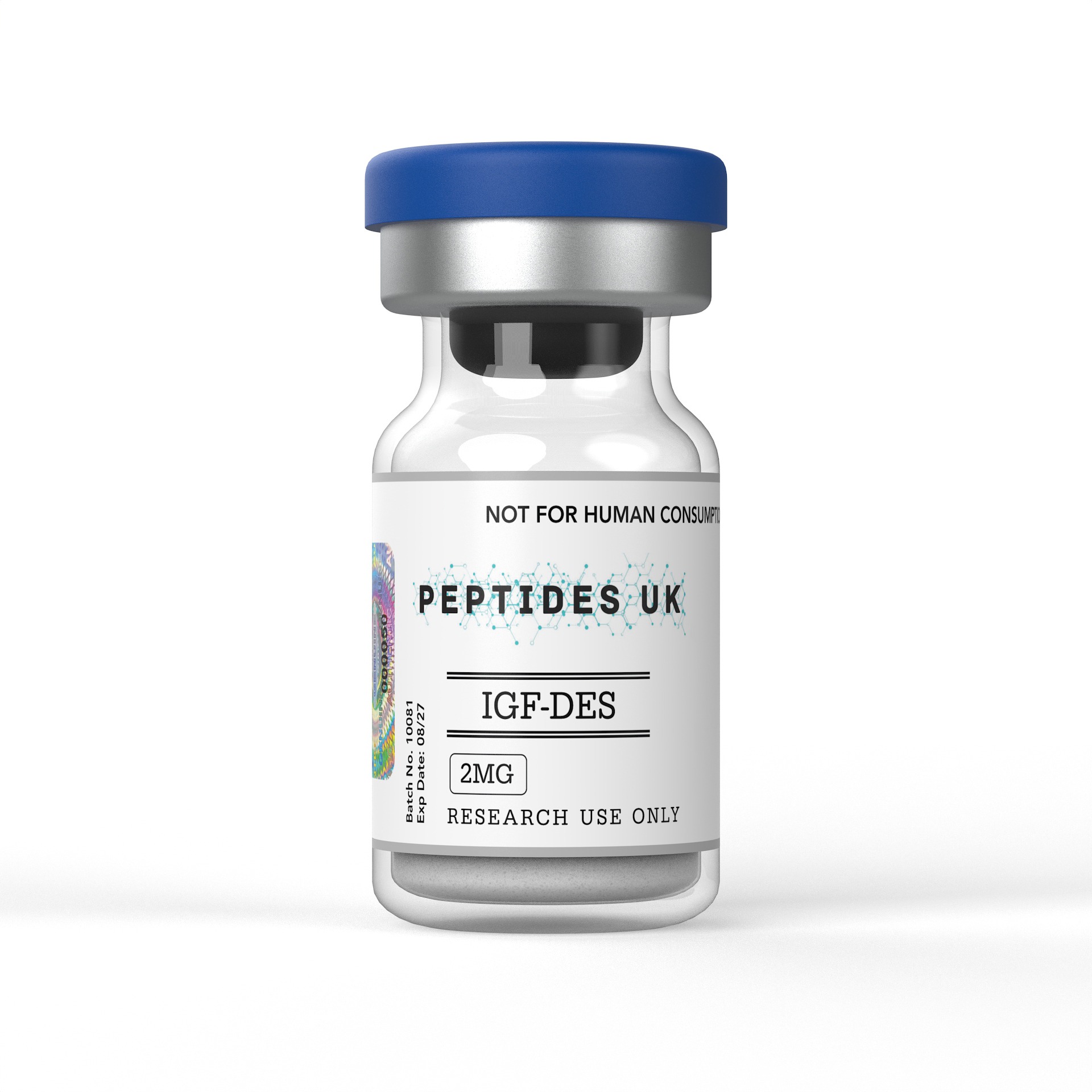
Buy IGF-DES Peptide in UAE – In Stock & Ready to Ship
IGF-DES (Des(1-3) IGF-1) is a widely researched peptide known for its role in localised cellular growth and muscle tissue studies. Each batch is independently verified at ≥99% purity and comes with a full Certificate of Analysis (COA) and HPLC testing documentation — giving UAE research teams the confidence they need when sourcing peptides for serious work.
For research use only. Not intended for human or veterinary use.

IGF-1 DES(1-3) — commonly known as IGF-DES — is a naturally occurring truncated variant of Insulin-Like Growth Factor-1 that lacks the first three amino acids of the native IGF-1 sequence, studied in cellular biology research for its dramatically reduced binding to IGF binding proteins and resulting hyper-potency at the IGF-1 receptor — making it one of the most locally active and receptor-accessible growth factor research tools available in pre-clinical science. Researchers and institutions across the UAE, Dubai, Abu Dhabi and the wider GCC can source verified, research-grade IGF-DES with fast international dispatch and full batch documentation included.
✅ ≥99% Purity — HPLC & Mass Spectrometry Verified
✅ Batch-Specific Certificate of Analysis (CoA) Included
✅ Sterile Lyophilised Powder | GMP Manufactured
✅ Fast International Dispatch to UAE & GCC
IGF-1 DES(1-3) is a naturally occurring truncated form of Insulin-Like Growth Factor-1, produced endogenously in the brain and gut through proteolytic cleavage that removes the first three amino acids (glutamate, proline, and threonine) from the N-terminus of standard IGF-1. This seemingly minor structural modification has profound consequences for the peptide’s biological behaviour — primarily through its dramatically reduced affinity for IGF Binding Proteins (IGFBPs).
In normal physiology, the majority of circulating IGF-1 is bound to IGFBPs — proteins that sequester IGF-1, extend its half-life in circulation, and regulate how much free IGF-1 is available to bind receptors at any given time. IGF-DES binds IGFBPs with approximately 100-fold lower affinity than standard IGF-1, meaning it remains largely free and available for immediate receptor engagement. This gives IGF-DES significantly greater potency at the IGF-1 receptor on a molar basis compared to native IGF-1 and even IGF-1 LR3 in certain experimental contexts — particularly in local tissue environments where IGFBPs are abundant.
This distinct pharmacological profile makes IGF-DES a highly valuable and complementary research tool to IGF-1 LR3, providing a different window into IGF-1 receptor signalling that reflects local tissue-level IGF-1 activity rather than systemic circulation. Research demand from institutions across the UAE and GCC continues to grow alongside expanding interest in growth factor biology, muscle cell research, and metabolic signalling science.
In controlled laboratory and pre-clinical research settings, IGF-DES has been studied across several focused cellular and growth factor biology applications:
IGF-1 Receptor Activation Research: IGF-DES engages the IGF-1 receptor (IGF-1R) with high affinity and activates the same downstream signalling cascades as native IGF-1 — including PI3K/Akt and MAPK/ERK pathways. Studies use IGF-DES to examine IGF-1R pharmacology in environments where IGFBP sequestration would limit the activity of standard IGF-1, providing insights into receptor-level signalling that standard IGF-1 cannot deliver in IGFBP-rich experimental conditions.
Local Tissue Growth Factor Research: Because IGF-DES is naturally produced in specific tissues including the brain and gut — and because its reduced IGFBP binding is thought to support localised rather than systemic IGF-1 activity — research has used it to study how growth factor signalling operates in local tissue environments where paracrine rather than endocrine IGF-1 activity is the focus.
Cell Proliferation Studies: Research has examined IGF-DES’s effects on cell division and growth across multiple cell type models — including muscle cells, intestinal epithelial cells, and neural cells — exploring how its high local receptor availability influences proliferative signalling compared to standard IGF-1 in the same models.
Muscle Cell Biology: Studies have used IGF-DES in skeletal muscle cell models to examine myocyte proliferation, satellite cell activation, and protein synthesis signalling — reflecting interest in how locally produced IGF-1 variants influence muscle tissue responses at the cellular level.
Intestinal Research: IGF-DES is naturally produced in significant quantities in the gut, and research has examined its role in intestinal epithelial cell growth, mucosal repair, and gut tissue biology — making it relevant for laboratories studying gastrointestinal biology and mucosal regeneration.
Neural Research: Brain tissue produces IGF-DES locally, and studies have examined its effects on neuronal cell behaviour, neural progenitor activity, and neuroprotective signalling — contributing to research on how locally produced IGF-1 variants support brain tissue maintenance.
IGFBP Competition Studies: IGF-DES is used as a research tool in binding competition assays to study IGFBP biology — its dramatically reduced IGFBP affinity makes it a useful probe for understanding how IGFBPs regulate growth factor availability and receptor access in different tissue environments.
Comparative IGF-1 Variant Research: Studies frequently compare IGF-DES alongside native IGF-1 and IGF-1 LR3 in parallel experimental protocols — providing a three-point comparison of how IGFBP binding affinity affects receptor activation, downstream signalling, and cellular outcomes in the same experimental system.
All applications listed are research-based only. IGF-DES is not approved for human therapeutic use.
IGF-DES has developed a focused and well-characterised pre-clinical research profile centred on its distinctive IGFBP-independent activity:
Binding studies have thoroughly characterised IGF-DES’s dramatically reduced IGFBP affinity compared to native IGF-1 — with research documenting approximately 100-fold lower binding to the major IGF binding proteins — validating it as a research tool that provides largely IGFBP-independent IGF-1R access in experimental systems where IGFBPs are present. Cell proliferation research has documented IGF-DES’s high local potency in IGFBP-containing cell culture environments, with studies reporting significantly greater receptor activation and proliferative effects compared to equivalent concentrations of standard IGF-1 under conditions where IGFBPs would sequester a substantial proportion of the native growth factor. Intestinal research has examined IGF-DES’s effects on gut epithelial cell models, with studies documenting its influence on intestinal cell proliferation and mucosal repair processes — reflecting its natural production in gastrointestinal tissue and its apparent role in local gut biology. Neural research has explored IGF-DES in brain cell models, with studies examining how locally produced IGF-1 variants support neuronal function and survival — contributing to a broader understanding of how tissue-specific growth factor processing influences local neural biology. Comparative studies positioning IGF-DES alongside IGF-1 LR3 and native IGF-1 have provided valuable insights into how IGFBP binding profiles determine the practical potency of growth factor variants in complex biological environments — with IGF-DES consistently demonstrating superior local receptor engagement in IGFBP-rich conditions.
| Feature | IGF-DES | IGF-1 LR3 | Native IGF-1 |
|---|---|---|---|
| Amino Acids | 67 (truncated — missing first 3) | 83 (extended N-terminus + R3) | 70 |
| IGFBP Binding | ~100x lower than native | Greatly reduced | High |
| Receptor Potency (local) | Very high (IGFBP-independent) | High (extended half-life) | Limited by IGFBPs |
| Half-Life | Short | Extended | Short |
| Natural Occurrence | Yes (brain, gut) | No (synthetic) | Yes (systemic) |
| Best Research Use | Local tissue / IGFBP-rich models | Cell culture / sustained studies | Reference / systemic models |
| Mechanism Distinction | IGFBP bypass | IGFBP resistance + extended activity | Standard IGF-1R agonism |
| Parameter | Specification |
|---|---|
| Full Name | IGF-1 DES(1-3) — Des(1-3)IGF-1 |
| Structure | Truncated IGF-1 — first 3 AA removed |
| Amino Acids | 67 |
| Modification | N-terminal truncation (Glu-Pro-Thr removed) |
| Purity | ≥99% (HPLC & MS Verified) |
| Form | Sterile Lyophilised Powder |
| Solubility | 0.1% acetic acid, sterile water |
| Storage (powder) | -20°C, protect from light |
| Storage (reconstituted) | 2–8°C, use within 2–4 weeks |
Every order of IGF-DES dispatched to the UAE and GCC includes:
Can I buy IGF-DES in the UAE?
Yes. We supply research-grade IGF-1 DES(1-3) with international dispatch to the UAE, Dubai, Abu Dhabi, Sharjah and across the GCC. All orders include full batch documentation and are packaged to maintain peptide integrity throughout transit. This compound is supplied strictly for laboratory research use only.
What is the difference between IGF-DES and IGF-1 LR3?
Both are modified IGF-1 variants with reduced IGFBP binding compared to native IGF-1, but they achieve this through entirely different structural approaches and have distinct research profiles. IGF-1 LR3 adds an N-terminal extension and arginine substitution to dramatically reduce IGFBP binding while extending half-life — making it ideal for sustained cell culture studies. IGF-DES removes the first three amino acids to achieve IGFBP independence through truncation, reflecting a naturally occurring mechanism found in brain and gut tissue. IGF-DES has a shorter half-life than LR3 but provides a model of naturally occurring local IGF-1 activity, making it particularly relevant for studying tissue-level paracrine growth factor signalling.
Why does removing three amino acids make such a large difference to IGF-DES’s activity?
The first three amino acids of native IGF-1 — glutamate, proline, and threonine — contribute to the region of the molecule that interacts with IGF binding proteins. Removing these residues disrupts this interaction site, reducing IGFBP binding affinity by approximately 100-fold without significantly compromising IGF-1 receptor binding. The result is a variant that retains full receptor engagement capacity but bypasses the IGFBP sequestration that limits native IGF-1’s local receptor availability — producing dramatically higher effective receptor-level potency in tissue environments where IGFBPs are present.
Why is IGF-DES found naturally in the brain and gut?
The natural production of IGF-DES in specific tissues reflects the body’s use of localised growth factor processing to create tissue-specific signalling variants. In the brain and gut — tissues where local cell proliferation and maintenance are important ongoing processes — producing a locally active, IGFBP-resistant IGF-1 variant allows these tissues to maintain paracrine growth factor signalling independently of systemic IGF-1 availability. This natural tissue-specific production makes IGF-DES particularly relevant for research examining how local growth factor processing influences tissue biology in these organs.
What purity is required for IGF-DES research?
A minimum of ≥98% is considered research grade, though ≥99% is strongly preferred for sensitive receptor binding assays, cell proliferation studies, and signalling pathway experiments. All our IGF-DES is independently verified to ≥99% purity with full batch documentation.
How is IGF-DES reconstituted for laboratory use?
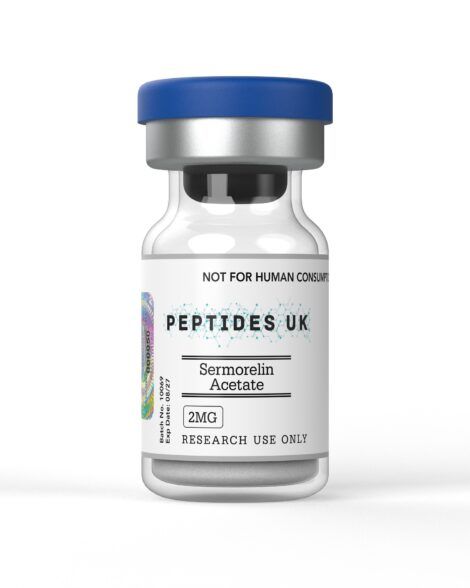
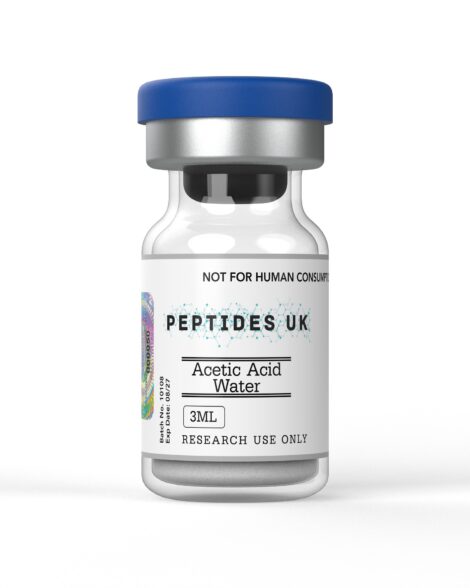
Allow the vial to reach room temperature before opening. Add 0.1% acetic acid solution slowly down the vial wall and swirl gently without shaking — acetic acid is the preferred initial solvent for IGF-DES to ensure complete dissolution before further dilution in aqueous buffers or culture media. Aliquot immediately and store at -80°C for longer-term use to preserve growth factor activity across multiple experimental sessions.
How quickly is IGF-DES delivered to UAE?
Orders are dispatched promptly via tracked international courier. Delivery to the UAE typically takes 3–5 working days, with packaging designed to maintain peptide stability throughout transit.
Research Disclaimer: IGF-1 DES(1-3) (IGF-DES) is supplied exclusively for legitimate scientific research purposes conducted within licensed laboratory environments. This product is not intended for human consumption, self-administration, or any therapeutic application. It must be handled by qualified researchers in compliance with applicable UAE regulations and institutional ethics guidelines. Handling should only be performed by qualified laboratory professionals in controlled research settings with appropriate institutional authorisations in place. By purchasing, you confirm that this compound will be used solely for approved in-vitro or pre-clinical research purposes.
WhatsApp us
Receive News
