
PRODUCTS SOLD ON PEPTIDESLABUAE.COM ARE FOR RESEARCH PURPOSES ONLY AND ARE NOT FOR HUMAN OR VETERINARY USE.
£27.99
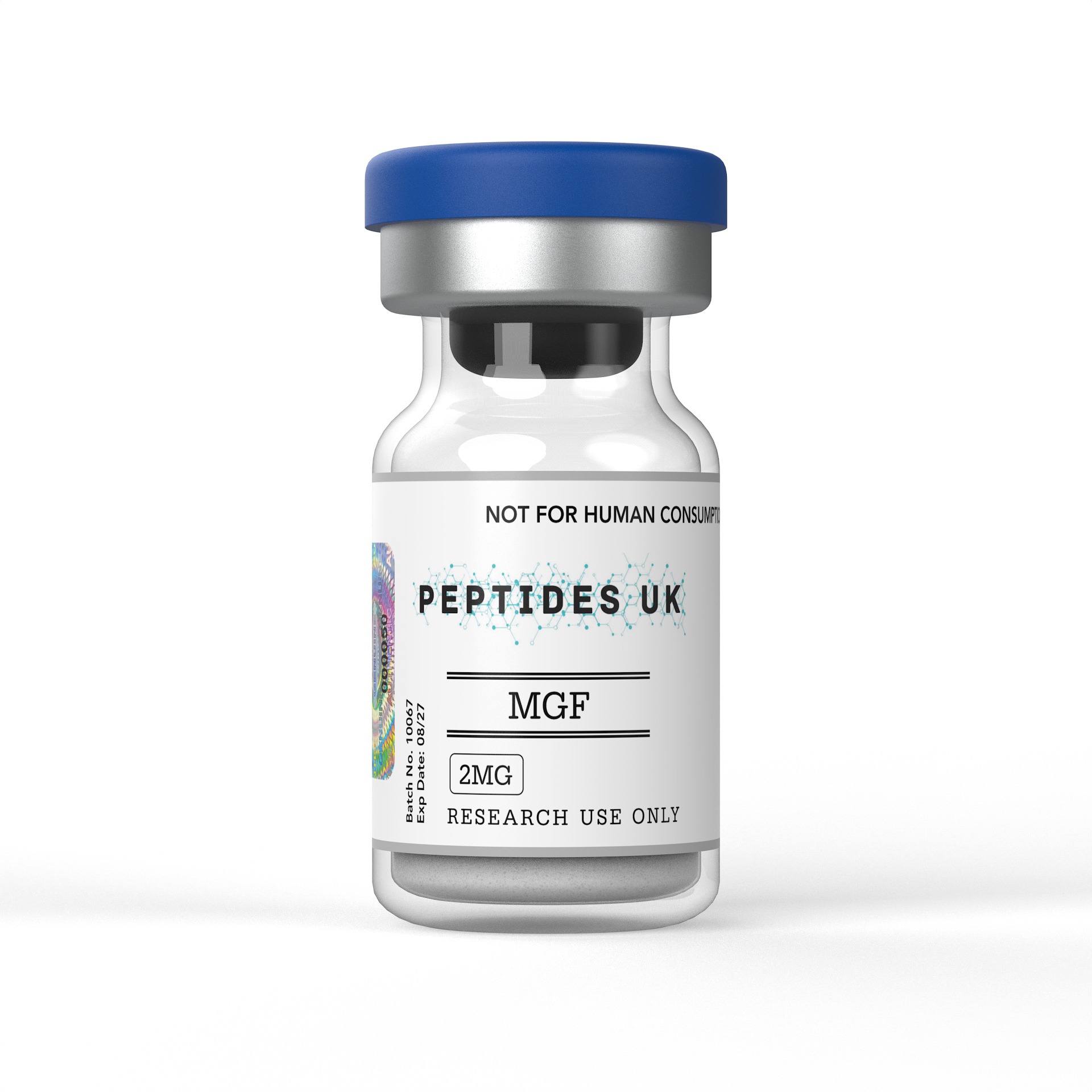
Buy MGF Peptide in UAE – In Stock & Ready to Ship
MGF is a widely researched peptide known for its role in muscle repair and localised tissue regeneration studies. Each batch is independently verified at ≥99% purity and comes with a full Certificate of Analysis (COA) and HPLC testing documentation — giving UAE research teams the confidence they need when sourcing peptides for serious work.
For research use only. Not intended for human or veterinary use.

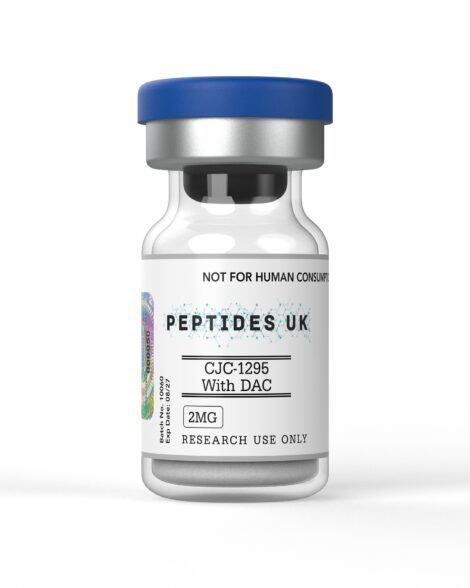
MGF (Mechano Growth Factor) is one of the most specifically studied splice variants of Insulin-like Growth Factor 1 (IGF-1) available to laboratories in the UAE — a locally expressed isoform produced in response to mechanical stress and tissue damage that activates resident stem cells, stimulates myoblast proliferation, and initiates tissue repair signalling through mechanisms entirely distinct from systemic IGF-1, making it a uniquely targeted research tool for studying muscle biology, satellite cell activation, and mechano-sensitive tissue repair pathways. Researchers and institutions across the UAE, Dubai, Abu Dhabi and the wider GCC can source verified, research-grade MGF with fast international dispatch and full batch documentation included.
✅ ≥99% Purity — HPLC & Mass Spectrometry Verified
✅ Batch-Specific Certificate of Analysis (CoA)
✅ Sterile Lyophilised Powder | GMP Manufactured
✅ Fast International Dispatch to UAE & GCC
Mechano Growth Factor (MGF) is a splice variant of the IGF-1 gene — specifically IGF-1Ec in humans and IGF-1Eb in rodents — produced locally in mechanically stressed or damaged tissue rather than systemically by the liver. While systemic IGF-1 is primarily produced in the liver under growth hormone stimulation and circulates throughout the body, MGF is expressed locally at the site of tissue stress or injury, where it acts in an autocrine and paracrine manner to initiate a rapid, localised repair and regeneration response.
The defining structural feature of MGF is its unique E-domain peptide extension at the C-terminus — a distinct sequence not present in other IGF-1 isoforms that is responsible for MGF’s unique biological activity profile. Research has established that this E-domain peptide acts independently of the IGF-1 receptor, engaging separate signalling pathways that are specifically associated with satellite cell activation and myoblast proliferation — the first critical steps in skeletal muscle repair following mechanical damage.
MGF is therefore studied as a mechanosensitive tissue repair signal — a locally produced molecule that bridges the gap between mechanical tissue stress detection and the cellular repair machinery response. Its distinct mechanism from systemic IGF-1, its localised expression pattern, and its specific role in satellite cell biology have made it one of the most referenced isoforms in muscle biology, tissue repair, and mechano-transduction research.
In laboratory settings, MGF research is centred on its role as a mechano-sensitive tissue repair signal and its distinct effects on satellite cells, myoblasts, and local tissue repair machinery. Research applications include:
Its locally acting autocrine/paracrine mechanism — distinct from the endocrine action of systemic IGF-1 — makes MGF a uniquely valuable research tool for studying tissue-specific repair responses that cannot be replicated using full-length IGF-1 or systemic growth factor administration. All applications are for research use only.
MGF has developed a well-characterised and broad research profile across muscle biology, tissue repair, and growth factor signalling:
Satellite cell biology research has firmly established MGF’s role as a primary activator of muscle satellite cells following mechanical stress — with studies documenting that MGF expression is rapidly upregulated in mechanically loaded or damaged muscle tissue, preceding the satellite cell activation and proliferation phase of muscle repair. These studies have positioned MGF as one of the earliest and most important signals in the muscle repair cascade, operating upstream of the differentiation signals that ultimately drive myofibre reconstruction.
MGF E-domain peptide research has characterised the independent biological activity of MGF’s unique C-terminal extension — establishing that the E-domain peptide can activate satellite cells and stimulate myoblast proliferation through IGF-1 receptor-independent pathways. This finding has significant implications for understanding how MGF’s full biological profile differs from other IGF-1 isoforms and has driven interest in the E-domain peptide as a distinct research tool within MGF biology.
Comparative IGF-1 isoform studies have examined how MGF’s localised, mechano-sensitive expression pattern produces a fundamentally different tissue response compared to systemic IGF-1 — with research documenting that MGF preferentially drives myoblast proliferation while systemic IGF-1 tends to promote differentiation, suggesting the two isoforms play complementary but temporally and functionally distinct roles in the muscle repair sequence.
Cardiac research has explored MGF expression in mechanically stressed cardiac tissue — with pre-clinical studies examining its role in cardiomyocyte protection and repair following ischaemic stress, documenting cytoprotective effects on cardiac muscle cells and opening a significant research area into MGF’s tissue-protective functions beyond skeletal muscle. Neuroprotection research has investigated MGF expression in neural tissue following injury — with studies characterising its expression in mechanically stressed neurons and examining its potential role in neural repair signalling, reflecting the broader tissue-protective profile suggested by MGF’s localised repair mechanism.
Age-related muscle biology studies have examined how MGF expression and satellite cell responsiveness change with ageing — documenting reduced MGF upregulation in response to mechanical stress in aged muscle tissue compared to young tissue, providing a mechanistic research framework for studying age-related declines in muscle repair capacity and satellite cell function.
| Compound | Type | Expression | Receptor | Primary Research Focus | Research Profile |
|---|---|---|---|---|---|
| MGF | IGF-1 splice variant (Ec/Eb) | Local — mechanical stress | IGF-1R + E-domain independent | Satellite cell activation, muscle repair | Well-documented |
| IGF-1 LR3 | IGF-1 analogue | Systemic (modified) | IGF-1R | Systemic growth, anabolic signalling | Extensively studied |
| IGF-1 DES | IGF-1 truncated variant | Local tissue | IGF-1R (high affinity) | Local tissue growth, receptor binding | Well-documented |
| Systemic IGF-1 | Endogenous hormone | Liver — systemic | IGF-1R | Growth regulation, metabolism | Extensively studied |
| PEGylated MGF | Modified MGF | Extended half-life form | IGF-1R + E-domain | Extended half-life MGF research | Growing |
| Follistatin | Endogenous protein | Multiple tissues | Activin/myostatin binding | Myostatin inhibition, muscle biology | Well-documented |
| Parameter | Detail |
|---|---|
| Type | IGF-1 Splice Variant Peptide |
| Full Name | Mechano Growth Factor (IGF-1Ec) |
| Expression Pattern | Local — mechanical stress / tissue damage |
| Key Feature | Unique C-terminal E-domain peptide |
| Purity | ≥99% |
| Verification | HPLC & Mass Spectrometry |
| Form | Lyophilised Powder |
| Solubility | Sterile water or suitable laboratory buffer |
| Storage | -20°C, protected from light and moisture |
| Intended Use | Research use only |
Every order dispatched to the UAE and GCC includes:
Yes. We supply research-grade MGF with international dispatch to the UAE, Dubai, Abu Dhabi, Sharjah and across the GCC. All orders include full batch documentation and are packaged to maintain peptide integrity throughout transit. This compound is supplied strictly for laboratory research use only.
While both MGF and systemic IGF-1 are products of the IGF-1 gene, they differ fundamentally in their expression pattern, mechanism, and biological effects. Systemic IGF-1 is produced in the liver under GH stimulation and circulates throughout the body, acting primarily through IGF-1 receptors to promote growth and differentiation. MGF is produced locally in mechanically stressed or damaged tissue, acts in an autocrine/paracrine manner, and carries a unique E-domain peptide that activates satellite cells through IGF-1 receptor-independent pathways. Research using MGF examines this localised, mechano-sensitive repair signalling that cannot be replicated with systemic IGF-1 administration.
The E-domain is the unique C-terminal peptide extension that distinguishes MGF from other IGF-1 isoforms. Research has established that this domain carries independent biological activity — capable of activating satellite cells and stimulating myoblast proliferation through signalling pathways that do not require IGF-1 receptor engagement. This IGF-1 receptor-independent activity is what gives MGF its distinct biological profile compared to other IGF-1 variants, and the E-domain peptide has become a significant research focus in its own right within MGF biology studies.
Satellite cells are muscle stem cells that reside beneath the basal lamina of muscle fibres in a quiescent state under normal conditions. Following muscle damage or mechanical stress, they become activated, proliferate as myoblasts, and ultimately fuse to repair damaged muscle fibres or form new ones. MGF research has established that MGF is one of the primary signals responsible for initiating satellite cell activation following mechanical stress — making it a central subject in muscle stem cell biology, tissue repair mechanism research, and studies examining the molecular triggers of the muscle regeneration cascade.
Studies have documented that MGF upregulation in response to mechanical stress declines with age in pre-clinical models — with aged muscle tissue showing reduced MGF expression following mechanical loading compared to young tissue. This age-associated reduction in MGF responsiveness has been proposed as a contributing mechanism to the reduced muscle repair capacity observed in ageing, making MGF a significant research tool for studying the molecular basis of age-related changes in muscle satellite cell biology and mechanosensitive repair signalling.
Beyond skeletal muscle, pre-clinical studies have examined MGF expression and activity in cardiac tissue — documenting cytoprotective effects in cardiomyocyte stress models and opening research into MGF’s role in cardiac repair signalling. Neural tissue research has also identified MGF expression following mechanical nerve injury, with studies examining its potential role in neuroprotective signalling. These findings reflect the broader tissue-protective profile of MGF’s localised repair mechanism and have expanded its research relevance beyond muscle biology into cardiac and neural tissue protection research.
Allow the vial to reach room temperature before opening. Add sterile water or appropriate laboratory buffer slowly down the vial wall and swirl gently without shaking. Prepare at your protocol’s required concentration. Note that MGF has a relatively short half-life in aqueous solution — aliquot promptly and store at -80°C to minimise degradation. For protocols requiring extended stability, PEGylated MGF variants are available as an alternative research tool.
Orders are dispatched promptly via tracked international courier. Delivery to the UAE typically takes 3–5 working days, with packaging designed to maintain peptide stability and integrity throughout transit.
MGF (Mechano Growth Factor) is supplied exclusively for legitimate scientific research conducted within licensed laboratory environments. This product is not intended for human consumption, self-administration, or any therapeutic or veterinary application. It must be handled solely by qualified researchers in compliance with applicable UAE regulations and institutional ethics guidelines. By purchasing, you confirm this compound will be used exclusively for approved in vitro or pre-clinical research purposes.
WhatsApp us
Receive News
