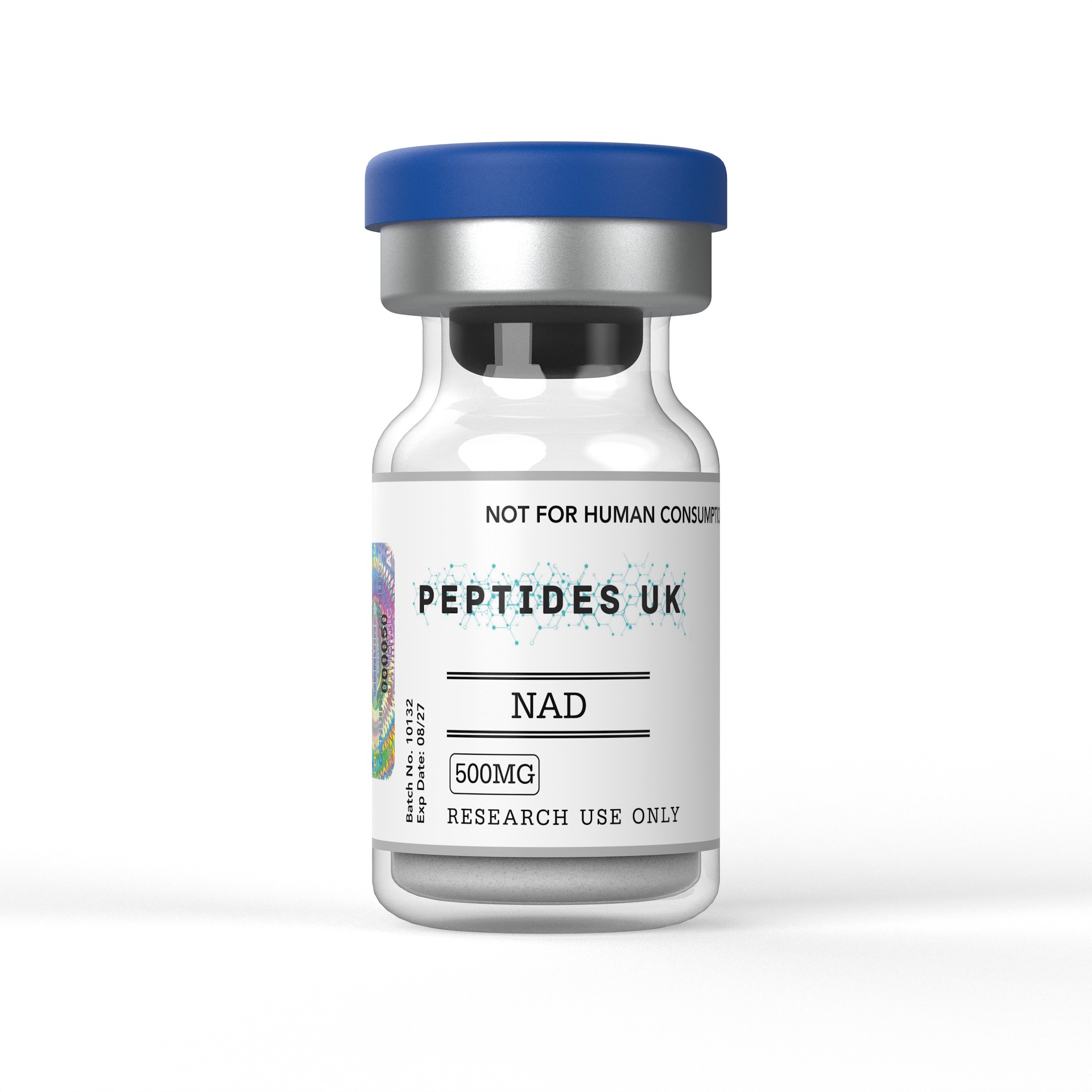
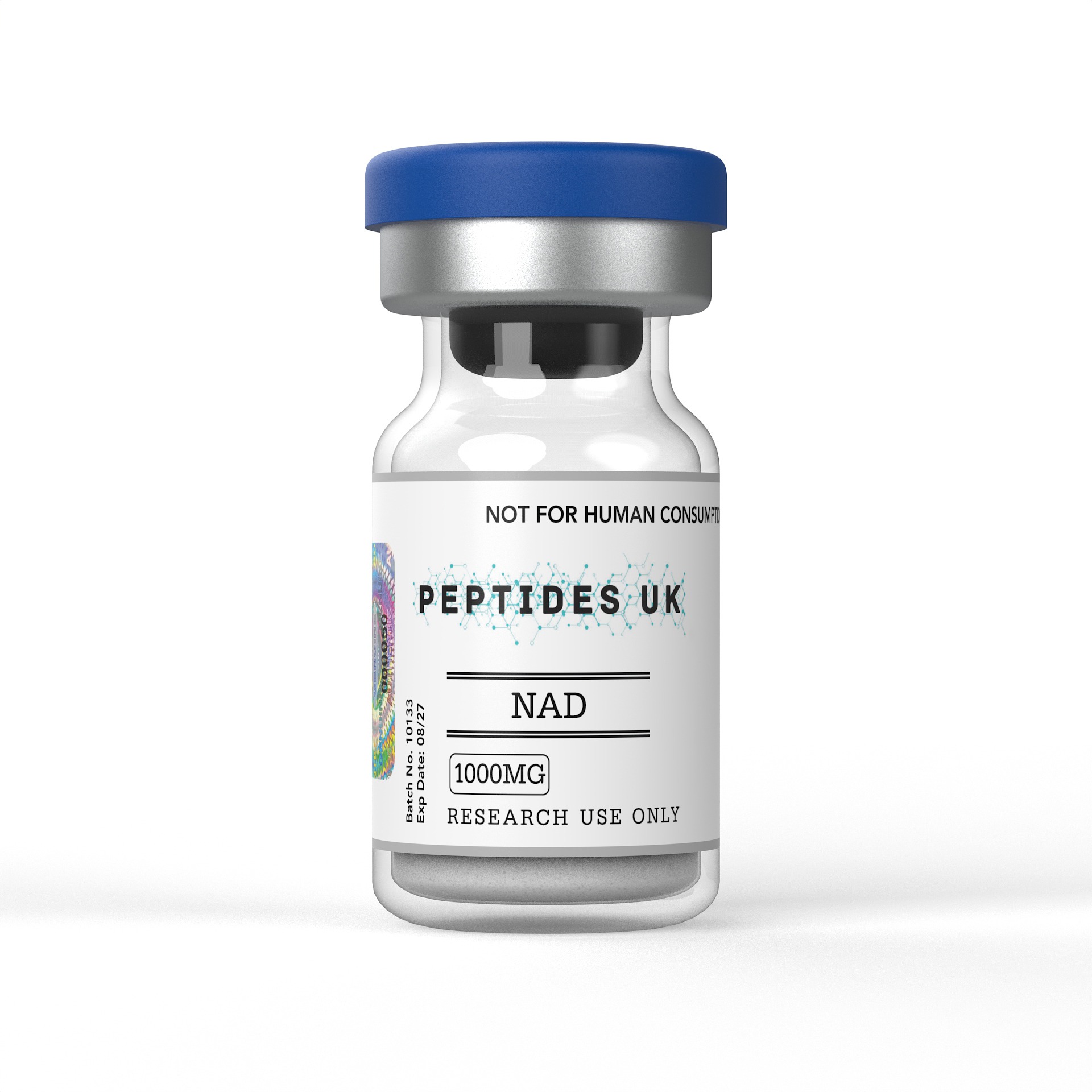
NAD+ UAE | Buy Research-Grade Nicotinamide Adenine Dinucleotide | ≥99% Purity
NAD+ (Nicotinamide Adenine Dinucleotide) is one of the most extensively researched coenzymes in cellular biology available to laboratories in the UAE — a critical molecule found in every living cell that plays a central role in energy metabolism, DNA repair signalling, and sirtuin activation, making it one of the most important research tools for studying cellular ageing, mitochondrial function, and metabolic regulation. Researchers and institutions across the UAE, Dubai, Abu Dhabi and the wider GCC can source verified, research-grade NAD+ with fast international dispatch and full batch documentation included.
✅ ≥99% Purity — HPLC & Mass Spectrometry Verified
✅ Batch-Specific Certificate of Analysis (CoA)
✅ Sterile Lyophilised Powder | GMP Manufactured
✅ Fast International Dispatch to UAE & GCC
What is NAD+?
Nicotinamide Adenine Dinucleotide (NAD+) is a dinucleotide coenzyme present in all living cells, composed of two nucleotides joined by phosphate groups — one containing adenine and one containing nicotinamide. It exists in two primary forms: NAD+ (oxidised) and NADH (reduced), cycling between these states as it shuttles electrons through metabolic pathways.
NAD+ is not simply a metabolic intermediate — it functions as a critical signalling molecule and substrate for several classes of enzymes that regulate fundamental biological processes. It serves as the essential substrate for sirtuins (SIRT1–SIRT7), a family of NAD+-dependent deacylases that regulate gene expression, stress response, and mitochondrial biogenesis. It is also the substrate for PARP enzymes (poly-ADP-ribose polymerases), which are central to DNA damage detection and repair signalling. This dual role — as both a metabolic electron carrier and a regulatory signalling substrate — makes NAD+ uniquely important across multiple areas of cellular biology research.
NAD+ levels naturally decline with age in pre-clinical models, and this decline has become a central focus of longevity and metabolic research. The compound’s involvement in so many fundamental cellular processes has made it one of the most studied molecules in modern biology.
What Does NAD+ Do in Research?
In laboratory settings, NAD+ research spans multiple disciplines given its involvement in core cellular processes. Research applications include:
- Mitochondrial function and oxidative phosphorylation studies
- Sirtuin (SIRT1–SIRT7) activation and NAD+-dependent deacylase pathway research
- PARP enzyme activity and DNA damage repair signalling studies
- Cellular energy metabolism and redox biology investigations
- Ageing biology and senescence pathway research
- Metabolic regulation studies including glucose and lipid metabolism
- CD38 NADase activity and NAD+ consumption pathway analysis
- NMN and NR precursor conversion pathway studies
- Circadian rhythm regulation research via SIRT1/CLOCK interactions
Its involvement across energy metabolism, epigenetic regulation, DNA repair, and cell survival signalling makes NAD+ one of the most versatile research compounds in cellular and molecular biology. All applications are for research use only.
What Do Studies Say About NAD+?
NAD+ has one of the most expansive and rapidly growing research profiles in modern biology, spanning metabolic science, ageing research, and cellular stress response:
Research into NAD+-dependent sirtuin activation has firmly established the link between cellular NAD+ availability and SIRT1-mediated regulation of mitochondrial biogenesis, fatty acid oxidation, and stress resistance pathways — with studies documenting that NAD+ availability directly gates sirtuin activity, positioning it as a master regulator of metabolic adaptation at the cellular level.
PARP biology research has characterised NAD+ as the essential substrate consumed during DNA damage repair responses — with studies establishing that significant genotoxic stress can rapidly deplete cellular NAD+ pools through PARP hyperactivation, creating a mechanistic link between DNA damage, NAD+ depletion, and downstream metabolic dysfunction that has become a major focus of cellular stress research.
Pre-clinical ageing studies have consistently documented age-associated NAD+ decline across multiple tissue types in animal models, with research exploring how this decline relates to mitochondrial dysfunction, increased inflammatory signalling, and reduced cellular stress resilience — establishing NAD+ repletion as a major research area in longevity biology.
Metabolic research has explored NAD+’s role in regulating key metabolic enzymes and pathways including glycolysis, the TCA cycle, and oxidative phosphorylation — with studies examining how NAD+/NADH ratios influence cellular energy sensing and metabolic flexibility. CD38 research has identified this NADase enzyme as a primary driver of age-related NAD+ decline, with studies characterising how CD38 upregulation in ageing tissue creates a persistent drain on NAD+ pools — opening a significant area of research into NAD+ homeostasis regulation.
NAD+ vs Related NAD Metabolism Research Compounds
| Compound |
Type |
Relation to NAD+ |
Half-Life |
Research Focus |
Research Profile |
| NAD+ |
Coenzyme |
Direct form |
Short (extracellular) |
Core metabolism, sirtuins, PARP |
Most studied |
| NMN |
Precursor |
NAD+ biosynthesis via NMNAT |
~minutes (plasma) |
NAD+ repletion, ageing |
Rapidly growing |
| NR |
Precursor |
NAD+ biosynthesis via NRK |
~hours (plasma) |
NAD+ repletion, metabolism |
Well-documented |
| NADH |
Reduced form |
Electron carrier pair |
N/A |
Redox biology, ETC research |
Well-documented |
| Niacin (NA) |
Precursor |
Preiss-Handler pathway |
Variable |
NAD+ biosynthesis research |
Well-documented |
Product Specifications
| Parameter |
Detail |
| Type |
Dinucleotide Coenzyme |
| Full Name |
Nicotinamide Adenine Dinucleotide (oxidised) |
| Molecular Function |
Electron carrier, sirtuin substrate, PARP substrate |
| Purity |
≥99% |
| Verification |
HPLC & Mass Spectrometry |
| Form |
Lyophilised Powder |
| Solubility |
Sterile water or suitable laboratory buffer |
| Storage |
-20°C, protected from light and moisture |
| Intended Use |
Research use only |
Buying NAD+ in UAE — What’s Included
Every order dispatched to the UAE and GCC includes:
- Batch-specific Certificate of Analysis (CoA)
- HPLC Chromatogram
- Mass Spectrometry Confirmation
- Sterility & Endotoxin Testing Reports
- Reconstitution Protocol
- Technical Research Support
Frequently Asked Questions — NAD+ UAE
Can I Buy NAD+ in the UAE?
Yes. We supply research-grade NAD+ with international dispatch to the UAE, Dubai, Abu Dhabi, Sharjah and across the GCC. All orders include full batch documentation and are packaged to maintain compound integrity throughout transit. This compound is supplied strictly for laboratory research use only.
What is the Difference Between NAD+, NMN and NR in Research?
NAD+ is the active coenzyme form, while NMN (Nicotinamide Mononucleotide) and NR (Nicotinamide Riboside) are biosynthetic precursors that cells convert into NAD+ through distinct enzymatic pathways. Research using NAD+ directly examines the coenzyme’s immediate effects on enzyme activity and cellular signalling, while NMN and NR studies focus on precursor bioavailability, conversion efficiency, and indirect NAD+ repletion effects. Each serves a distinct purpose depending on whether the research is examining NAD+ biology directly or NAD+ biosynthesis pathway dynamics.
Why is NAD+ Central to Ageing Research?
Pre-clinical studies have consistently documented that NAD+ levels decline with age across multiple tissue types, and that this decline correlates with reduced mitochondrial function, impaired DNA repair capacity, and increased inflammatory signalling. Because NAD+ sits at the intersection of energy metabolism, sirtuin-mediated gene regulation, and PARP-dependent DNA repair — all processes that deteriorate with age — it has become one of the most studied molecules in longevity and cellular ageing research.
What is the Relationship Between NAD+ and Sirtuins?
Sirtuins (SIRT1–SIRT7) are NAD+-dependent enzymes that can only function when sufficient NAD+ is available — NAD+ is consumed as a co-substrate during each catalytic cycle. Research has established that sirtuin activity is therefore directly sensitive to cellular NAD+ availability, meaning NAD+ levels effectively gate the activity of these key regulators of mitochondrial biogenesis, fatty acid oxidation, stress response, and epigenetic regulation. This relationship is a central focus of metabolic and longevity research.
What is CD38 and Why Does It Matter for NAD+ Research?
CD38 is an enzyme (NADase) that consumes NAD+ as part of calcium signalling pathways. Research has identified CD38 as a primary driver of age-related NAD+ decline — its expression increases significantly with age and chronic inflammation, creating a persistent drain on cellular NAD+ pools. Studies examining CD38 activity and its relationship to NAD+ homeostasis have become an important area of research for understanding why NAD+ declines with age and how this decline might be modulated in experimental models.
How is NAD+ Reconstituted for Laboratory Use?
Allow the vial to reach room temperature before opening. Add sterile water or appropriate laboratory buffer slowly and swirl gently without shaking. Prepare at your protocol’s required concentration and use promptly, as NAD+ in solution is subject to hydrolysis. Aliquot and store at -80°C to minimise degradation between experimental sessions.
How Quickly is NAD+ Delivered to the UAE?
Orders are dispatched promptly via tracked international courier. Delivery to the UAE typically takes 3–5 working days, with packaging designed to maintain compound stability and integrity throughout transit.
Research Disclaimer
NAD+ (Nicotinamide Adenine Dinucleotide) is supplied exclusively for legitimate scientific research conducted within licensed laboratory environments. This product is not intended for human consumption, self-administration, or any therapeutic or veterinary application. It must be handled solely by qualified researchers in compliance with applicable UAE regulations and institutional ethics guidelines. By purchasing, you confirm this compound will be used exclusively for approved in vitro or pre-clinical research purposes.