
PRODUCTS SOLD ON PEPTIDESLABUAE.COM ARE FOR RESEARCH PURPOSES ONLY AND ARE NOT FOR HUMAN OR VETERINARY USE.
£22.99 – £39.99Price range: £22.99 through £39.99
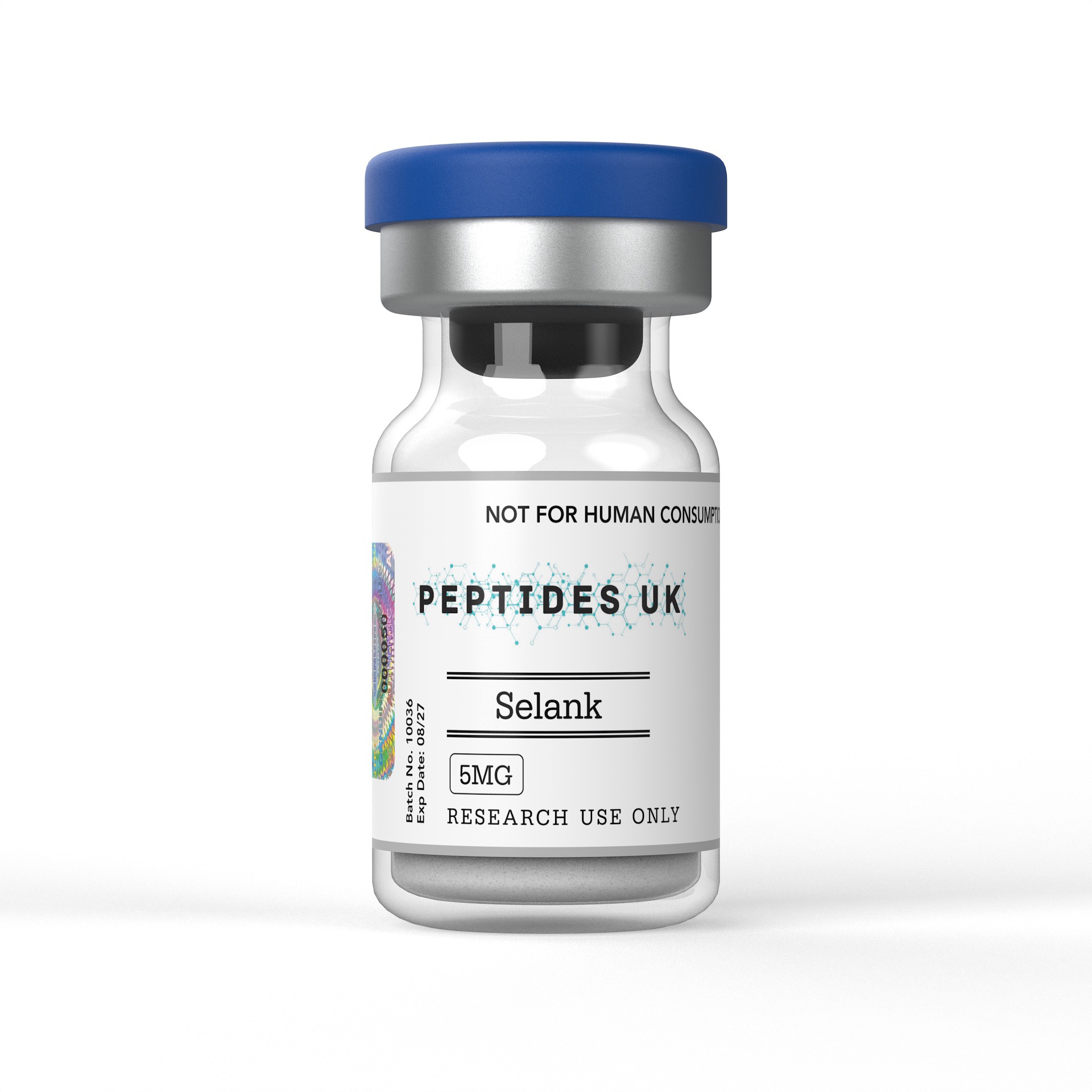
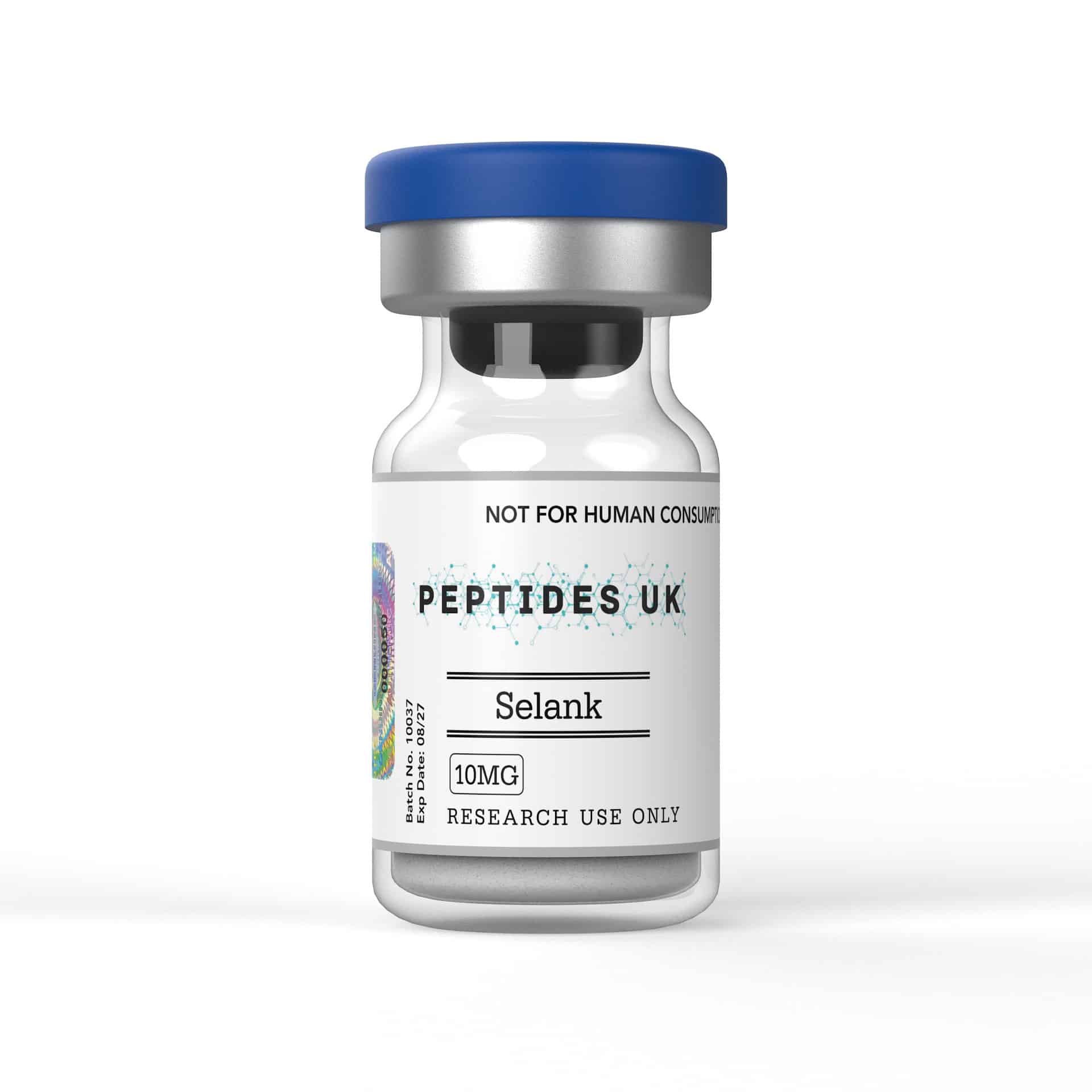
Buy Selank Peptide in UAE – In Stock & Ready to Ship
Selank is a widely researched peptide known for its role in anxiolytic function and cognitive enhancement studies. Each batch is independently verified at ≥99% purity and comes with a full Certificate of Analysis (COA) and HPLC testing documentation — giving UAE research teams the confidence they need when sourcing peptides for serious work.
For research use only. Not intended for human or veterinary use.

Selank is one of the most specifically studied synthetic anxiolytic neuropeptides available to laboratories in the UAE — a heptapeptide analogue of the endogenous immunomodulatory peptide Tuftsin that produces anxiolytic, nootropic, and neuroprotective effects in pre-clinical models through multiple neurotransmitter systems simultaneously, making it a uniquely targeted research tool for studying anxiety pathway biology, GABAergic and serotonergic modulation, cognitive enhancement mechanisms, and neuroinflammation in controlled laboratory settings. Researchers and institutions across the UAE, Dubai, Abu Dhabi and the wider GCC can source verified, research-grade Selank with fast international dispatch and full batch documentation included.
✅ ≥99% Purity — HPLC & Mass Spectrometry Verified
✅ Batch-Specific Certificate of Analysis (CoA)
✅ Sterile Lyophilised Powder | GMP Manufactured
✅ Fast International Dispatch to UAE & GCC
Selank is a synthetic heptapeptide — a seven amino acid sequence — developed by the Institute of Molecular Genetics of the Russian Academy of Sciences as a stabilised analogue of Tuftsin, a naturally occurring tetrapeptide (Thr-Lys-Pro-Arg) derived from the Fc region of IgG immunoglobulin. Tuftsin itself has known immunomodulatory and anxiolytic properties, but its very short half-life due to rapid enzymatic degradation limits its research utility. Selank incorporates the Tuftsin sequence with an additional tripeptide extension (Pro-Gly-Pro) that significantly improves metabolic stability — extending its active research window while retaining and expanding Tuftsin’s biological activity profile.
Selank’s research significance stems from its unusually broad neurobiological activity profile relative to its small size. Unlike classical anxiolytic compounds that act through a single primary mechanism — benzodiazepines through GABA-A receptor potentiation, SSRIs through serotonin reuptake inhibition — Selank has been characterised as a pleiotropic neuropeptide that simultaneously modulates GABAergic, serotonergic, dopaminergic, and enkephalinergic neurotransmitter systems, alongside producing immunomodulatory effects through its Tuftsin-derived sequence and upregulating BDNF and other neurotrophic factors.
This multi-system neurobiological activity profile — producing anxiolytic effects without the sedation, cognitive impairment, or dependence potential associated with classical GABAergic anxiolytics — has made Selank a highly referenced research tool for studying anxiety pathway biology, cognitive function under stress, and how neuropeptide-based modulation of multiple neurotransmitter systems simultaneously differs mechanistically from single-target anxiolytic approaches.
In laboratory settings, Selank research spans anxiety neuroscience, cognitive biology, immunology, and neuroprotection given its multi-system activity profile. Research applications include:
Its multi-neurotransmitter system activity — simultaneously modulating GABAergic, serotonergic, dopaminergic, and enkephalinergic pathways while upregulating neurotrophic factors — makes Selank a uniquely broad-acting research tool for studying how simultaneous multi-system neuropeptide modulation differs from single-target pharmacological approaches in anxiety and cognitive biology. All applications are for research use only.
Selank has developed a well-characterised and distinctive research profile within neuropeptide pharmacology and anxiety neuroscience:
Anxiolytic mechanism research has characterised Selank’s modulation of GABAergic neurotransmission — with studies documenting effects on GABA-A receptor subunit expression and GABAergic tone in anxiety-relevant brain regions including the amygdala and hippocampus. Critically, research has distinguished Selank’s anxiolytic profile from classical benzodiazepine mechanisms — documenting anxiolytic effects in pre-clinical anxiety models without the sedative, amnestic, or motor-impairing effects associated with direct GABA-A receptor positive allosteric modulation, suggesting a more nuanced GABAergic interaction that preserves cognitive function alongside anxiety reduction.
Serotonin system research has examined Selank’s effects on serotonergic neurotransmission — with studies documenting modulation of serotonin turnover and 5-HT receptor expression in brain regions associated with mood and anxiety regulation. These serotonergic effects have been proposed as contributing to Selank’s anxiolytic profile through a mechanism complementary to but distinct from SSRI-type serotonin reuptake inhibition — providing a research framework for studying how simultaneous GABAergic and serotonergic modulation by a single neuropeptide produces anxiety reduction.
BDNF research has characterised Selank’s upregulation of Brain-Derived Neurotrophic Factor expression — with studies documenting increased BDNF levels in hippocampal and cortical tissue following Selank administration in pre-clinical models. Since BDNF is a central mediator of synaptic plasticity, neurogenesis, and cognitive function, its upregulation by Selank has been proposed as a contributing mechanism to the cognitive-enhancing effects observed alongside anxiolytic activity — connecting Selank’s neuropeptide pharmacology to neuroplasticity biology.
Enkephalin system research has examined Selank’s interaction with enkephalin metabolism — with studies documenting inhibition of enkephalin-degrading enzymes, leading to increased endogenous enkephalin availability. This interaction with the endogenous opioid peptide system has provided a third distinct mechanism through which Selank may produce anxiolytic effects — contributing to the multi-system mechanistic picture that distinguishes it from single-target anxiolytic research compounds.
Immunomodulatory research reflecting Selank’s Tuftsin-derived sequence has examined its effects on cytokine production and immune cell function — with studies documenting modulation of IL-6, IL-1β, and interferon signalling alongside effects on macrophage and lymphocyte activity. These immunological findings have expanded Selank’s research relevance beyond pure neuropharmacology into neuroimmunology — connecting its neuropeptide biology to the broader interface between immune function and neural activity.
Gene expression research using microarray and transcriptomic approaches has provided some of the most comprehensive characterisation of Selank’s neurobiological effects — with studies mapping gene expression changes across multiple neurotransmitter systems, neurotrophic signalling pathways, and immune-related genes in brain tissue following Selank administration, providing a systems-level view of its multi-pathway neurobiological activity.
| Compound | Type | Primary Mechanism | Cognitive Effects | Sedation | Research Profile |
|---|---|---|---|---|---|
| Selank | Synthetic heptapeptide | Multi-system — GABA, 5-HT, BDNF, enkephalin | Enhancing | None documented | Well-documented |
| Semax | Synthetic heptapeptide | BDNF / ACTH analogue | Strong enhancing | None | Well-documented |
| Diazepam | Benzodiazepine | GABA-A positive allosteric | Impairing | Significant | Reference compound |
| Buspirone | Azapirone | 5-HT1A partial agonist | Neutral | Minimal | Well-documented |
| PE22-28 | Synthetic heptapeptide | TREK-1 channel blockade | Neutral | None | Growing |
| Alnespirone | 5-HT1A agonist | Serotonergic | Neutral | Minimal | Research tool |
| Parameter | Detail |
|---|---|
| Type | Synthetic Heptapeptide Neuropeptide |
| Parent Compound | Tuftsin (tetrapeptide IgG fragment) |
| Sequence Extension | Pro-Gly-Pro stability addition |
| Chain Length | 7 Amino Acids |
| Primary Activity | Multi-system anxiolytic — GABA, serotonin, BDNF, enkephalin |
| Purity | ≥99% |
| Verification | HPLC & Mass Spectrometry |
| Form | Lyophilised Powder |
| Solubility | Sterile water or suitable laboratory buffer |
| Storage | -20°C, protected from light and moisture |
| Intended Use | Research use only |
Every order dispatched to the UAE and GCC includes:
Yes. We supply research-grade Selank with international dispatch to the UAE, Dubai, Abu Dhabi, Sharjah and across the GCC. All orders include full batch documentation and are packaged to maintain peptide integrity throughout transit. This compound is supplied strictly for laboratory research use only.
Tuftsin is a naturally occurring tetrapeptide (Thr-Lys-Pro-Arg) cleaved from the Fc region of IgG immunoglobulin, with known immunomodulatory and mild anxiolytic properties. Its research utility is limited by rapid enzymatic degradation producing a very short half-life. Selank incorporates the complete Tuftsin sequence with an additional C-terminal Pro-Gly-Pro tripeptide extension that protects against enzymatic degradation — substantially extending its active research window while retaining and expanding Tuftsin’s biological activity. The result is a more stable, more pharmacologically active, and more research-practical neuropeptide that has been far more extensively studied than native Tuftsin itself.
Benzodiazepines produce anxiolytic effects through direct positive allosteric modulation of GABA-A receptors — enhancing chloride ion conductance and producing broad GABAergic inhibition that reduces anxiety but simultaneously causes sedation, cognitive impairment, motor coordination deficits, and dependence potential. Selank modulates GABAergic tone through a more indirect and nuanced mechanism that research has associated with anxiolytic effects without sedation or cognitive impairment — alongside simultaneously modulating serotonergic, dopaminergic, and enkephalinergic systems and upregulating BDNF. This multi-system profile without classical benzodiazepine side effects makes Selank a distinct and valuable comparative research tool for studying anxiolytic mechanisms beyond direct GABA-A receptor modulation.
BDNF (Brain-Derived Neurotrophic Factor) is the primary neurotrophin regulating synaptic plasticity, hippocampal neurogenesis, and cognitive function in the adult brain — and its upregulation is associated with antidepressant and cognitive-enhancing effects across multiple research paradigms. Selank’s documented upregulation of BDNF expression in hippocampal and cortical tissue models provides a neuroplasticity-based mechanism that may contribute to both its anxiolytic effects — since reduced BDNF is associated with anxiety and stress vulnerability — and its cognitive-enhancing properties. This BDNF connection links Selank’s neuropeptide pharmacology to the broader neuroplasticity research framework shared with antidepressant and nootropic compound biology.
Selank and Semax are both synthetic heptapeptides developed by the Russian Academy of Sciences with nootropic and neuroprotective properties, and both upregulate BDNF. Their primary distinction is in emphasis — Selank’s research profile is more strongly characterised by anxiolytic activity alongside cognitive enhancement, while Semax’s profile is more strongly characterised by cognitive enhancement and neuroprotection with less emphasis on anxiety modulation. Semax is derived from the ACTH4-10 sequence rather than Tuftsin, giving it a different receptor interaction profile. Research using both compounds provides complementary insights into how different neuropeptide mechanisms can converge on BDNF upregulation and cognitive enhancement outcomes through distinct primary pharmacological pathways.
Reflecting its Tuftsin-derived sequence, Selank has been examined for immunomodulatory effects — with studies documenting modulation of cytokine production including IL-6, IL-1β, and interferon-gamma, alongside effects on macrophage activation and lymphocyte function. This immune biology dimension makes Selank a research tool at the interface of neuropharmacology and neuroimmunology — relevant for studies examining how neuropeptide systems interact with immune function and how the nervous and immune systems communicate through shared molecular mediators. These immunological findings complement the purely neurological research profile and expand Selank’s applicability across neuroimmunology research protocols.
Allow the vial to reach room temperature before opening. Add sterile water or appropriate laboratory buffer slowly down the vial wall and swirl gently without shaking. Prepare at your protocol’s required concentration. Aliquot and store at -80°C to minimise freeze-thaw degradation and maintain peptide integrity between experimental sessions. Selank’s Pro-Gly-Pro extension provides improved enzymatic stability compared to Tuftsin — but standard peptide handling protocols should still be followed to preserve biological activity.
Orders are dispatched promptly via tracked international courier. Delivery to the UAE typically takes 3–5 working days, with packaging designed to maintain peptide stability and integrity throughout transit.
Selank is supplied exclusively for legitimate scientific research conducted within licensed laboratory environments. This product is not intended for human consumption, self-administration, or any therapeutic or veterinary application. It must be handled solely by qualified researchers in compliance with applicable UAE regulations and institutional ethics guidelines. By purchasing, you confirm this compound will be used exclusively for approved in vitro or pre-clinical research purposes.
WhatsApp us
Receive News
